Woo to the hoo! Creative Freedom Season 8 launches next week!... and we are kicking things off with the most frustrating yet important topic I could ever share with you! You don't want to miss it, so stay tuned!
Special thanks to our Patrons for your continued support.
"About Damn Time" is a parody of "About Damn Time", originally recorded by Lizzo. Parody lyrics by Lisa Robbin Young.
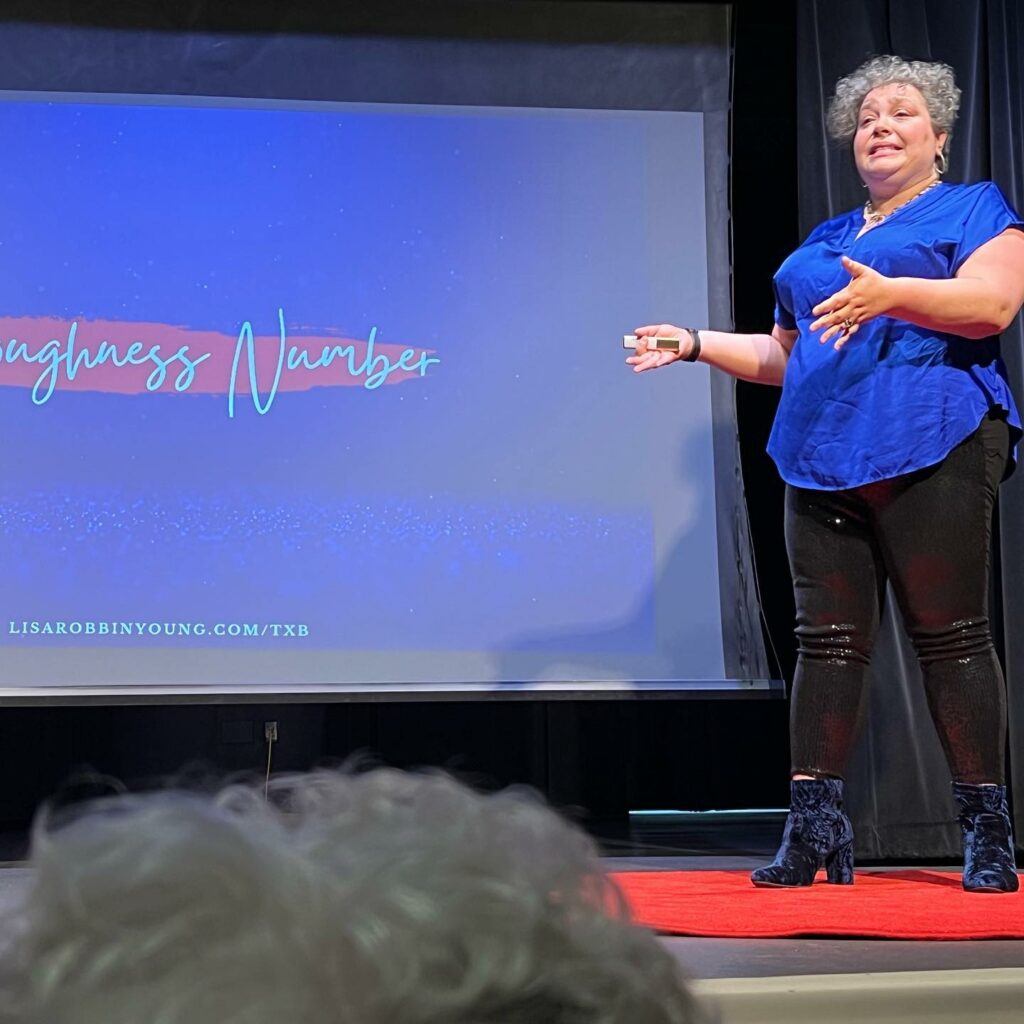
At the end of March, I had the honor of speaking at the TEDxBloomington Salon and it was amazing.
Salons are generally smaller scale TED-style events that are locally curated, like any TEDx event. Unlike a larger, full-day event where the talks can range pretty widely, Salons are generally on a more focused topic. Our topic was (sustain)ABILITY.
The theme still lends itself to some pretty wide-ranging topics, including a sonnet on sustainability, the importance of preserving indigenous language for future generations (and the tech to make it accessible to everyone), how kindness and generosity can sustain us, the 3 steps to find healing in business, and more. I look forward to sharing the talks once they're all uploaded, but for now, I can share my talk on How the Marginalization Tax impacts finding Enoughness for micro businesses. You can also access the bonus resources for my TEDx talk here.
My life is a paradox. As a business coach and entrepreneur, I rely on Capitalism to keep food on the table. And I help my clients to do the same. But as a human being, I also rail against what it seems like Capitalism has become: a money-grubbing, soul-crushing free-for-all for the wealthy elite that would rather leave our big blue marble than invest in healing, protecting, and sustaining it.
About 40% of my clients are multiply marginalized, many with a chronic illness, disability, or other capacity-limiting constraints that have essentially forced them to leave traditional employment and go out on their own because it works for how they're built. Forced, because capitalism asks more of us than we can consistently give, and no one feels this quite as much as the marginalized people of the world.
Entrepreneurship then, becomes a way for them to "leverage" the capacity they DO have - but not everyone is equipped to meet the challenges of entrepreneurship.
The incessant invitation to grow for growth's sake is a siren's song that hypnotizes entrepreneurs into the trap of adding one more zero to our revenue… and then another… and then another. But that "MORE" doesn't include room for things like more rest, more play, more ease - unless you hustle your face off first. There's this persistent myth that if you just work hard enough long enough and do your best, you'll make it to that "some day" where you can retire in style.
But Capitalism asks for more than many of us can give. And it has a bad habit of moving the goal posts on us.

With so many companies shooting for the moon - both literally and figuratively, this incessant drive for "More" isn't a sustainable path. How do we find the sustainable path in business? We strive for Enoughness instead.
When we look to nature, a cactus can thrive on very little water and a lot of sun. That is Enoughness for the cactus. If you flood the desert, the cactus rots. If you take away the sun, the cactus starves.
So Enoughness looks different in different situations.
For the folks that I work with, Enoughness is a result of building a business that works for their unique situation.
They are not corporate behemoths. They are parents, artists, travelers, authors, healers, activists, and more. They want a living wage that allows them to retire a spouse or provide for their families, and be able to enjoy the fruits of their labors - even when Capitalism tries to ask more of them than they can give on their own.
For years, I've taught what I call your Enoughness Number. It's essentially the revenue your business needs to bring in on an annual basis in order to have an experience of Enoughness. Not excessive, but appropriate. Not just subsisting, like so many marginalized folks do, but thriving.
But then one of my non-normative clients pointed out that I had not taken into account the additional resources required to navigate a world that asks more of you than you can give. We dubbed this added cost The Marginalization Tax.
At that time I was still under the spell of meritocracy. Just work harder. Keep working, and eventually you'll get there…. however long THAT is. I had always been able to keep working… until the day I needed back surgery. For eleven days I was unable to walk, stand, or otherwise move my body without substantial pain and significant help.
I was lucky I had help at home and owned my own business. If I'd been in a traditional job, I probably would have been fired or forced to use all my time off. And then where would I be for the rest of the year?
This tax is a spectrum of disadvantage based on a number of things like skin color, religion, gender expression, geography, age, body shape, economic status, social status, and basically any circumstance where there's a power imbalance that puts one group of people at an advantage to the detriment of others.
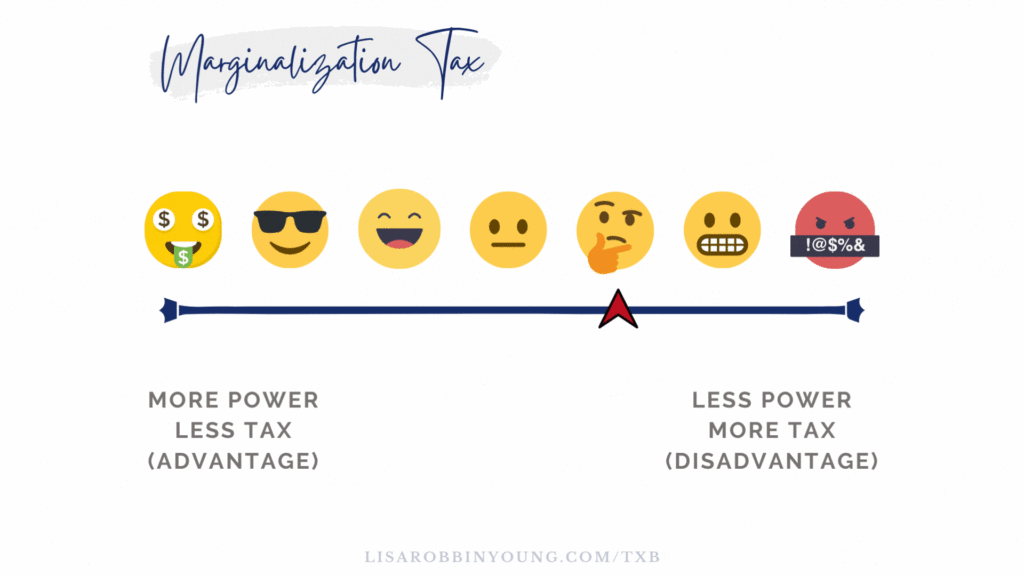
For example (and this isn't exhaustive, but you'll get the idea): I'm a cis, straight, neurodivergent, mixed-race, black woman that presents as white and able-bodied. I'm almost 50 and my body shape is not the socially accepted norm. I have a mix of privilege and disadvantage that impacts the resources I need. The more resources I need, the greater the marginalization tax I pay to participate in this world.
So let's look at what Enoughness looks like both with and without the Marginalization Tax applied so you can see how this works.
First, what are your total living expenses? Let's say $60k
Now add to that your growth. Maybe you've got a nice-to-have or a want that you'd like to see happen in the next year. That's your take-home pay requirement.
If you're a business owner, on top of your take home pay, what are the other "living expenses" of your business?
Then add your business growth to that. Maybe you want to launch a new offer and need to invest in infrastructure or support. Put it in your total.
Now add all that up and add a 10% cushion for unplanned surprises. They happen.
That's already a large number for a small business.
But, now we add the Marginalization Tax.
Based on where you fall on the spectrum, this could be anywhere from zero to as much as 50% of the total. Think that's steep? According to a 2021 report from the national women's law center, black women make a million dollars less over their career than white men. That's 37% less. That is the Marginalization Tax in action.
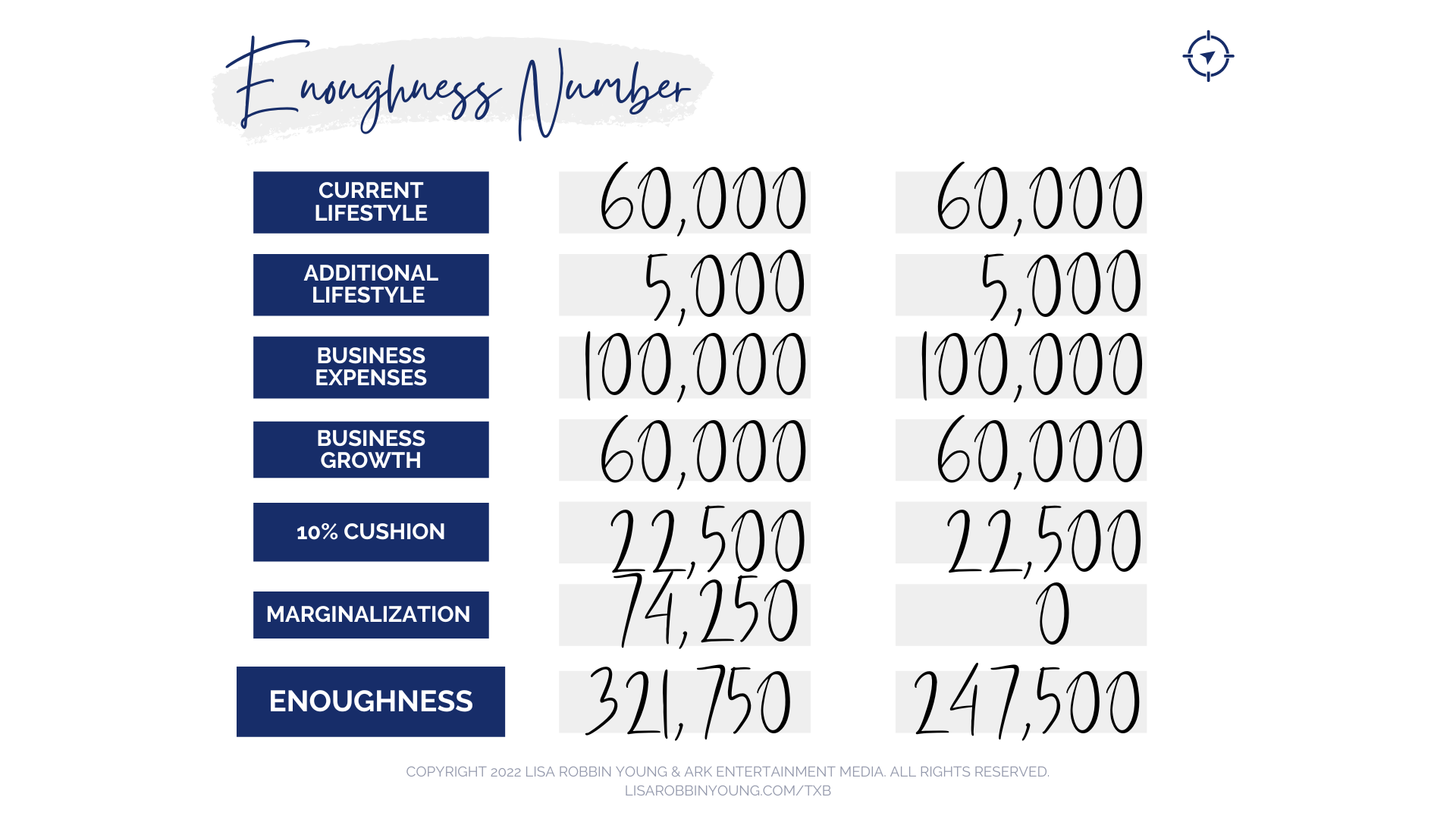
So we total this all up and there it is - one Enoughness Number that's drastically different than it would be if you didn't have to pay this tax.
Unlike the taxes you pay to your government each year, the bill for the Marginalization Tax comes due each day. This weekend my husband bought some cookies for $4. But I can't eat those cookies because some of the ingredients will hurt me. If I wanted to have a comparable amount of cookies that I can eat, I'd have to pay nearly 3 times as much - or I could spend just a few dollars more for all the ingredients and make them myself. Which would take an additional 45 minutes out of my day.
He can just open a package of cookies and go to town! The Marginalization Tax means I pay significantly more either in time or money - resources I may or may not have - just to enjoy a cookie.
Now you might say, "But Lisa, that's a cookie. A treat. You don't NEED a cookie. You can live without a cookie."
Yes, but why should I have to settle for less just because my body is built differently than yours?
But, let's say you're right and look at another case: One of my clients applied for medical disability long before we started working together. She had a profitable business that she'd built around her chronic illness which was so severe and variable that she never knew what her capacity to work would be like from one day to the next. Once she got approved for disability, she shut it all down. She said to me, "I can't jeopardize my disability payments. What if I go off disability and then my business has a down year? I'll have to re-apply and go through all of this all over again - and I might not survive!"
I don't blame her for wanting to protect herself and know that she can survive in a world that makes it hard for her to just exist. I blame the system where the deck is stacked against some of us and not others. That is the impact of the Marginalization Tax.
Everyone should be able to experience enoughness - a fully belly, a warm bed, and the safety of knowing they have what they need to thrive. There's certainly plenty on this planet to make it possible. But the playing field isn't level. What's worse, Capitalism keeps moving the goal posts.
But I believe that the best way to change a system is from the inside. That's why I'm a business owner. That's why I help other business owners - who aren't trying to hustle their face off to be a squijillionaire. They just want to find the balance that allows them to be paid well, within their capacity constraints, and have the time and energy to enjoy the fruits of their labors.
We don't need more rockets into space. We need more business owners striving for Enoughness for everyone.
When we have Enoughness it's… well, it's enough.
Like I said, it's a paradox.
I’ve been holding onto this episode for a long time. Decades, in fact. You may already know that I’ve been in the online space for nearly 30 years - back when it took 15 minutes for an animated gif to load - and we were actually excited about that!
I’ve seen the rise and fall of many an internet marketer in my time - and the cult-like followings and mythos that those gurus often created around themselves. In that time, I’ve learned a lot about what works and what doesn’t work. Which is why I’m still here.
So many folks were wooed by a “guru” promise only to find out they needed to invest more before they were really ready to step into that guru's big-ticket offer. They were sold on a dream of “success in their sleep” with images of fancy cars and exotic locations. Except that the guru’s “way of doing business” was a cookie-cutter formula, or an online success “blueprint” - no joke - that was an actual thing back in the day. Those formulas and blueprints were often high-level overviews or outlines that didn’t give you enough details to help you make real progress. They just kept you hamstrung - needing to invest more and more money with the guru in order to finally get the details that they’d been holding back from the beginning.
Blueprints and cookie-cutter concepts can only take you so far. Heck, we use them when we build business models. We start with the same framework for every person we work with. But, like a good builder, we don’t stop at the blueprint. That’s the "what". We also need the “how”. We take that model and help our clients implement it in ways that work for them.
And you can do that, too... You can do business outside the box! Listen along as I bust 4 myths so that you can feel at ease and start doing business YOUR WAY.
Inside this episode, we're talking about:
Rising Tide community members can login and access your free downloads here.
Not a member yet? It's free! When you register for the Rising Tide, you also get email updates, the FREE learning library, and access to episode transcripts, worksheets, and more!
Special thanks to our Patrons for your continued support.
Theme music: “Big Time” by Ikoliks, Artlist.io
It's finally Season 7! It has been a long road to get here, and I’m so excited to be digging into the new content this season - all around helping you overcome the Passed Over Paradox and step more confidently into your Great Work. To be that star in your market, instead of a best-kept secret.
Last season I talked about increasing your brand visibility by showing up, giving people a reason to pay attention and by collaborating with colleagues. But that third point - collaborating with colleagues - deserves an episode all to itself.
This episode is about building a community network and finding the right moments and opportunities to tap into those communities for business growth and visibility.
Inside this episode, we're talking about:
Rising Tide community members can login and access your free downloads here.
Not a member yet? It's free! When you register for the Rising Tide, you also get email updates, the FREE learning library, and access to episode transcripts, worksheets, and more!
Special thanks to our Patrons for your continued support.
Theme music: “Big Time” by Ikoliks, Artlist.io
Every successful business needs a driven leader that’s going to direct their team to greatness. But without the skills to do so, you’re going to have a very hard time. While some people are born with the skills to lead, there are a lot of things that you can learn to become a better leader - both in your work and your life. Leading yourself, your family, and your community are just as important (if not more so) as leading at work.
No matter what you're up to, there’s always room to better yourself. Being open to learning is an essential skill that everyone should have.

I'm not talking "high vibes only" (ick!). Instead, I'm asking you to be aware of workplace morale - whether you're a team of one or a team of many. An environment of empowerment necessary if you’re going to keep people motivated to get their work done efficiently. If everyone’s spirits are low while they work, the job is much more difficult and miserable. Being able to live and work in a space where it's easier to keep your own spirits high will have an effect on the rest of your team.
There are going to be times when it’s hard to keep your cool, but as the leader, you have the responsibility to maintain the morale.
Sometimes you have to take a page out of another person’s book, and that means accepting that you’re not perfect in your role. Whether you're learning from guys like Charles Zsebik on Medium, or reading the classics on leadership, a good leader knows learning is a lifelong activity in the pursuit of excellence.
As mentioned before, being in the role of the leader, there are going to be times when things get tough. Deadlines failed ventures, all of these things are stressful - not many people would blame you for having a negative attitude. However, you need to be able to maintain your demeanor if you want to keep people working to their best standards.
The more you know about your team, the better you can use them to their best abilities. In a diverse work group it pays to know the strengths and challenges of your team. Finding the right role fit for each person matters. Tools like the Creative Freedom Entrepreneur Type Assessment can help you learn more about how your folks are best wired to work. Then, you can set them on tasks that are a better fit for their unique strengths and challenges. And if you have a situation where you've got a square peg in a round hole, just realize it will be more draining for them to do that work. Be sure to bake in some extra time for recovery after difficult or demanding assignments.
These may seem like obvious ideas, but they are all too often overlooked - especially in smaller organizations. Create an environment of empowerment for yourself, be a role model to your team, and make it easier on yourself and them by finding the right people for the right roles. That can go a long way toward making your life easier as a leader AND being seen in a better light by the members of your organization.
This is the LAST episode of season 6! I am ready to CELEBRATE with this week's episode where we dig into the questions I recommend asking yourself before you decide you are ready for coaching.
I have been a business coach for - coming up on - 20 years now. I helped thousands of people find their right way to making a profitable, sustainable business. In that time, I’ve learned the difference between coaching, consulting, and mentoring. I can be any or all of those things, depending on what my client needs.
I’ve also found that folks don’t always know what they need. They’ve hit a wall, they’re feeling stuck, and they’ve heard that somebody hired a so-called "business coach" and that seemed to help them. So, that’s what they look for.
Not so fast! Coaching - for Instagram or anywhere else - is not a magic pill that cures all ills. In fact, many of my clients will recount the times they’ve sat with me and cried or told me to eff-the-eff-off because they didn’t like the hard truth they were facing in the moment. Truths that they ultimately HAD to face if they wanted to move forward.
You’ve got to be ready for coaching. If you’re still standing around wanting someone to tell you what to do or be your boss, then that’s not what coaches do. In order to know whether or not a business coach is your right next step, these four things must be true:
Think about these four things. Listen to the episode. And then, reach out and let me know if you think a business coach is the right next step for your business.
Inside this episode, we're talking about:
Rising Tide community members can login and access your free downloads here.
Not a member yet? It's free! When you register for the Rising Tide, you also get email updates, the FREE learning library, and access to episode transcripts, worksheets, and more!
Special thanks to our Patrons for your continued support.
Theme music: “Welcome to the Show” by Kevin MacLeod, incompetech.com. Music licensed under creativecommons.org/licenses/by/3.0/
There are a lot of things that go into being a successful entrepreneur. Time management. Organizational skills. Being able to make confident decisions under pressure. Your self-improvement work never really ends. Someone once said that entrepreneurship is one of the toughest personal development programs in the world, and I don't think they were wrong.
While it seems a little obvious to work on your so-called "weaknesses", most of the time it's actually better to stay in your zone of excellence and continue to refine your life and work there. But sometimes, when we get stuck, we need to look at those challenge areas in order to break through an old pattern or habit and continue to progress. Here are a few places to look:

Photo: Pexels.com - The Lazy Artist Gallery
Making a plan and setting aside consistent time to work on improving yourself both mentally and physically is a simple place to start. It can be anything from reading self-help books or blogs, working out, meditating, or attending workshops and seminars. What helps you grow as a person will likely also help you grow as an entrepreneur. Remember: when you're a solopreneur, problems in your business often create problems in your life and vice versa. When you are consistently working on becoming a better version of yourself, it will show in your life and work.
If you want to focus on personal growth, there are a few key areas you should concentrate on. When I work with my clients to help them build annual plans, we talk about fitness in terms of what's in the container (that is, your body) and what's being contained within that container (your energy, spirit, etc.). Things like this:
– Mental Health: Make sure to take care of your mental health! Entrepreneurship can be a very stressful journey, so it is essential to find ways to relax and de-stress. What does your mind need to feel nourished, fulfilled, and challenged appropriately?
– Physical Health: Just as important as mental health is physical health! When you are physically healthy and have lots of energy, it will show in your work. What are you doing to help keep your container healthy and well so it can hold all your awesomeness for years to come?
– Emotional Intelligence: One of the most essential skills for entrepreneurs is emotional intelligence. This means being able to understand and navigate your emotions, as well as those of others. This may look like planning time away, deepening your connections with others, or letting go of some relationships in order to set, and honor your boundaries.
Another great way to better yourself as an entrepreneur is to focus on education. This doesn’t necessarily mean going back to school, although that is an option. There are plenty of other ways to continue learning and growing as a business person. You can read blogs and books on entrepreneurship, attend seminars workshops for business owners. You can do courses specifically to hone your craft, get a specialty certification (AtHomePrep is one example) or to improve your business skills. You can even turn your car into a mobile classroom by listening to business podcasts. The important thing is that you are regularly learning new things and growing your knowledge base. In business, if you're not learning, you're falling behind.
This isn't just an invitation to read or take classes. Education comes in a variety of ways:
These are just a few ways you can better yourself as an entrepreneur. If you want to be successful in business, it is essential to focus on personal growth, education, and expanding your horizons through connecting with others. Need some support? Depending on where you're at in business, the Creative Freedom Incubator or my Star Power program may be exactly what you're looking for. Both are open for enrollment and have limited capacity. You can also dip your toe into an upcoming workshop to learn more!
Our money stories shape our choices, which shape our money stories.
While it’s easy to look outside yourself at what other people are doing and make judgements about “good” or “bad”, “right” or “wrong”. I want to invite you to hold a mirror up and see if your own money choices or stories might be harboring a few blocks of your own. Because YOU are the only person you can do anything about them anyway.
Today, I’m sharing the biggest money blocks for each creative type. Because, while we’re all unique, we do carry a few patterns in our types that can put up BIG roadblocks to our business growth and success. While each type may have symptoms that look the same (feeling stuck, hitting a plateau), the thoughts that are at the root of these issues are often different, depending on your type.
If you haven’t already taken our free quiz to discover your creative type, you’ll want to do that in order to know your type. Head on over to LisaRobbinYoung.com/quiz to get your results.
There’s no opt-in required to get your results but if you DO opt in, you get a guide that unpacks all the different creative types so that you can learn about more than just your own creative type.
After you get your result, or before, tune in below to learn how to adjust your money choices.
Inside this episode, we're talking about:
Rising Tide community members can login and access your free downloads here.
Not a member yet? It's free! When you register for the Rising Tide, you also get email updates, the FREE learning library, and access to episode transcripts, worksheets, and more!
Special thanks to our Patrons for your continued support.
Theme music: “Welcome to the Show” by Kevin MacLeod, incompetech.com. Music licensed under creativecommons.org/licenses/by/3.0/
There comes a time - or maybe even multiple times - in your business when you’re done with the income you’re currently making and it’s time for more. Most of the time, you don’t want to be DOING more to get there. That’s when you need to strategically consider how to increase your profits - your profitability, the money that stays inside the business - to achieve the freedom goals that you have.
That profitability begets sustainability. Because that means you can pay yourself more. You can pay your team more and still have money in the business for growth.
There are lots of potential ways to do that, but today I’m focusing on the 3 things that most directly impact your profitability and help you experience true creative freedom.
Inside this episode, we're talking about:
Rising Tide community members can login and access your free downloads here.
Not a member yet? It's free! When you register for the Rising Tide, you also get email updates, the FREE learning library, and access to episode transcripts, worksheets, and more!
Special thanks to our Patrons for your continued support.
Theme music: “Welcome to the Show” by Kevin MacLeod, incompetech.com. Music licensed under creativecommons.org/licenses/by/3.0/
In 2007, Consumer Reports did a taste test with McDonald’s coffee and Starbucks. The Consumer Reports Coffee Taste Test showed that McDonald’s plain black coffee edged out Starbucks and other fast food chains and had the best tasting black coffee of them all.
Then in 2009, a more informal Starbuck’s taste test was held to look at some of the flavored coffees. This was a bit less scientific, but still a blind taste test. The result? McDonald’s wins again!
But here’s the point I thought was interesting: everyone still preferred the Starbucks environment, even though the McDonald’s coffee is better.
McDonald’s charges less for their comparably - and purportedly better - flavored coffees than the Seattle coffee giant, but people happily pay more because of the experience of shopping at Starbucks. This is a great illustration of how pricing is subjective and based, at least in part, on the story you’re trying to tell.
There are also a lot of “feels” that come up around pricing. Today, I want to tackle one of the most common concerns I hear from entrepreneurs with an existing book of business: How do I raise my rates so that I don’t lose my current clients or come off looking like I’m only in it for the money?
Listen in below!
Inside this episode, we're talking about:
Rising Tide community members can login and access your free downloads here.
Not a member yet? It's free! When you register for the Rising Tide, you also get email updates, the FREE learning library, and access to episode transcripts, worksheets, and more!
Special thanks to our Patrons for your continued support.
Theme music: “Welcome to the Show” by Kevin MacLeod, incompetech.com. Music licensed under creativecommons.org/licenses/by/3.0/
I have an Incubator client right now that’s working on building their business, and they don’t have a large audience. Between fits of frustration around wanting to go faster and inspired ideas that need execution, we’ve been having conversations around who they serve and how to talk to them to stimulate sales without coming off as sleazy. As nice as it would be to just jump from a great business idea to loads of sales, it just very rarely works that way.
Could she walk up to every person she meets, introduce herself and offer her services? Sure. But she’d likely end up with more folks running screaming for the hills than she would new customers.
There’s probably nothing people hate more than to be sold to. And maybe you’re even thinking to yourself:
"I don’t want to be that slick, sleazy salesperson and have to push, push, push all the time just to keep my nose above water."
What can you do? Listen in below to find out!
Inside this episode, we're talking about:
Rising Tide community members can login and access your free downloads here.
Not a member yet? It's free! When you register for the Rising Tide, you also get email updates, the FREE learning library, and access to episode transcripts, worksheets, and more!
Special thanks to our Patrons for your continued support.
Theme music: “Welcome to the Show” by Kevin MacLeod, incompetech.com. Music licensed under creativecommons.org/licenses/by/3.0/
In our last episode we talked about how to find folks and I intimated a little bit about the need to talk TO them, not AT them. But we didn’t get into specifics of how to do that - what to say, etc.
I don’t want to leave you hanging. So, that’s what this episode is all about. This episode will be useful regardless of how well connected you are with this audience. Whether you’re just getting started with them or you’ve got clients, or the start of an audience but not many Raving Fans, I’m going to save you the two by four to the head.
Because it’s not enough to know who they are, you’ve also got to reach and connect with - engage with - them. Listen to the show below to become "coffee worthy".
Inside this episode, we're talking about:
Rising Tide community members can login and access your free downloads here.
Not a member yet? It's free! When you register for the Rising Tide, you also get email updates, the FREE learning library, and access to episode transcripts, worksheets, and more!
Special thanks to our Patrons for your continued support.
Theme music: “Welcome to the Show” by Kevin MacLeod, incompetech.com. Music licensed under creativecommons.org/licenses/by/3.0/
A moment of truth telling: Finding your audience is actually more about them finding you. Being a lighthouse, in many respects, for your right people who need a safe harbor from the storms of their world.
What kind of a light are you shining out there? Where does that light come from?
There was a time in the big bad world of business, where you could pretty much sell anything and people would buy it. You didn’t need to persuade people about the benefits of choosing you because you were the only game in town. They either bought what you were selling or they went without. Period.
But buyers are smarter, do more research, and have a LOT more options at their fingertips. It takes more than just “buy my stuff, it’s great” to encourage a buyer to say yes.
But even in a world where a whole lot of people MIGHT say yes to your offer, you need to practice a little discernment.
Today, I want you to understand the principles behind finding your target audience - how to determine if you’re talking to the right people in the first place, and if not, what may need to shift so that you can actually FIND these folks.
Inside this episode, we're talking about:
Rising Tide community members can login and access your free downloads here.
Not a member yet? It's free! When you register for the Rising Tide, you also get email updates, the FREE learning library, and access to episode transcripts, worksheets, and more!
Special thanks to our Patrons for your continued support.
Theme music: “Welcome to the Show” by Kevin MacLeod, incompetech.com. Music licensed under creativecommons.org/licenses/by/3.0/
Pivot! It was one of the biggest buzzwords of 2020, thanks to the pandemic that shall not be named putting a monkey wrench into EVERYONE’S plans!
Not to brag, but I’ve been pivoting since before it was cool. I’ve probably done the pivot 5 or 10 times in my nearly 30 years online. I mean, nothing lasts forever and the only constant is change, right?
Last episode I talked about how Taylor Swift pivoted to a new music genre...and she’s not the only one. Fine artist Henri Matisse and lots of companies have started down one path, decided it’s not working for them (or has stopped working for them), and turned to something new.
So yes, pivots are a thing, and they absolutely CAN be done successfully, but how do you know if it is, in fact, time to pivot? Listen in to find out today.
Inside this episode, we're talking about:
Rising Tide community members can login and access your free downloads here.
Not a member yet? It's free! When you register for the Rising Tide, you also get email updates, the FREE learning library, and access to episode transcripts, worksheets, and more!
Special thanks to our Patrons for your continued support.
Theme music: “Welcome to the Show” by Kevin MacLeod, incompetech.com. Music licensed under creativecommons.org/licenses/by/3.0/
In my hometown, there’s a concrete pump house situated between the train tracks and a T intersection by one of our high schools.
I’m pretty sure it’s a defunct building now because the hatch on the top has been painted shut for decades. You couldn’t get into it if you wanted to… although some folks have tried, and there are still a few citizens of the town who HAVE gone in there at some point in the past and lived to tell the tale.
We call it “the rock” - and we called it that long before Dwayne Johnson started wrestling in the 90s. It was first painted by students of that high school - “SWP Oh yeah!” That was the start of over 50 years of community building - through vandalism.
We used to joke that the rock must have originally been only a few feet wide, but years of paint had made it ginormous. A few years back, several inches of paint actually peeled off the rock, revealing layers of work from years past. The rock is so popular, it has its own facebook page.
So the question of the day: How does a rock get its own facebook page? Tune in below to find out!
Inside this episode, we're talking about:
Rising Tide community members can login and access your free downloads here.
Not a member yet? It's free! When you register for the Rising Tide, you also get email updates, the FREE learning library, and access to episode transcripts, worksheets, and more!
Special thanks to our Patrons for your continued support.
Theme music: “Welcome to the Show” by Kevin MacLeod, incompetech.com. Music licensed under creativecommons.org/licenses/by/3.0/
I LOVE me some thrift store shopping! If you have the patience and enjoy treasure hunts, you can come up with some fantastic finds!
As a kid though, I didn’t see the attraction. I grew up in a welfare family, so hand-me-downs constituted the bulk of my wardrobe - and I was the oldest girl, so I was handing them down again! To me, thrift stores were full of hand-me downs, and cheap-o, secondhand crap. Why would I want to be there?
But now? I actually enjoy browsing the shelves, looking for those hidden gems that will make my life better. Like I said, you just never know when you’ll find something that can change your life.
I’ve bought and used all kinds of second-hand treasures. Many of which I later donated again for someone else to enjoy.
Why am I prattling on about thrift stores on a business podcast? Because you can do the same thing with your content! You can uncover the hidden gems in your existing content by doing a treasure hunt of sorts and sharing those golden nuggets with the world.
We call it content repurposing, and you can get a lot more mileage from one piece of long-form content if you do it.
Together we're going to walk you through how you can uncover the hidden gems in your existing content by doing a treasure hunt of sorts and sharing those golden nuggets with the world.
Ready to get started? Listen in below!
Inside this episode, we're talking about:
Rising Tide community members can login and access your free downloads here.
Not a member yet? It's free! When you register for the Rising Tide, you also get email updates, the FREE learning library, and access to episode transcripts, worksheets, and more!
Special thanks to our Patrons for your continued support.
Theme music: “Welcome to the Show” by Kevin MacLeod, incompetech.com. Music licensed under creativecommons.org/licenses/by/3.0/
We're back with our first **official** episode of our Season 6 re-launch. Our bonus episode last week gave you the explanation for that.
Our earlier episodes of Season 6 laid the groundwork for what we’re talking about today: your content strategy. If you’ve missed those or you need a refresher, you may want to pop back to the beginning of Season 6 to see what you’ve missed. We’ve talked about how to make sure your content strategy is sustainable, and how to narrow in so you’re actually getting some visibility. This episode, we’re gonna teach you how to build out your strategy.
Listen in to the episode below to get started!
Inside this episode, we're talking about:
Rising Tide community members can login and access your free downloads here.
Not a member yet? It's free! When you register for the Rising Tide, you also get email updates, the FREE learning library, and access to episode transcripts, worksheets, and more!
Special thanks to our Patrons for your continued support.
Theme music: “Welcome to the Show” by Kevin MacLeod, incompetech.com. Music licensed under creativecommons.org/licenses/by/3.0/
The Creative Freedom Show is back!
This time, I'm re-starting Season 6 with something special. A "bonus" episode that breaks down how 2021 went.
Tune in as I go through a month-by-month breakdown of the highlights of what happened last year both personally and professionally, and end the episode with insight around what the changes we are making at Creative Freedom HQ that were inspired by 2021's rollercoaster.
Check out the show to get started.
Inside this episode, we're talking about:
Rising Tide community members can login and access your free downloads here.
Not a member yet? It's free! When you register for the Rising Tide, you also get email updates, the FREE learning library, and access to episode transcripts, worksheets, and more!
Special thanks to our Patrons for your continued support.
Theme music: “Welcome to the Show” by Kevin MacLeod, incompetech.com. Music licensed under creativecommons.org/licenses/by/3.0/
Nickelback. That band everyone loves to hate. Well, thanks to a lot of stock video footage, their rock anthem is now a parody of what it takes to get more visibility in your creative business.
Want to remind your customers of your creative business and develop a sustainable marketing strategy? Check out Episode 6 of the Creative Freedom Show today.
Special thanks to our Patrons for your continued support.
"How I'll Remind You" is a parody of "How You Remind You", originally recorded by Nickelback. Parody lyrics by Lisa Robbin Young.
If your business is running you ragged and your clients are a PITA, this video is for you!
This is the full version of the musical parody for episode 3 of Creative Freedom Season 6.
Inside this episode, we're taking a closer look at how each creative entrepreneur type can take advantage of different business models. Sure, you can have any business model you want, but each creative type needs to focus on doing business in a way that's in alignment with their strengths.
Check out the episode to learn more.
Special thanks to our Patrons for your continued support.
"Do What Comes Natural" is a parody of "Natural", originally recorded by Imagine Dragons. Parody lyrics by Lisa Robbin Young.