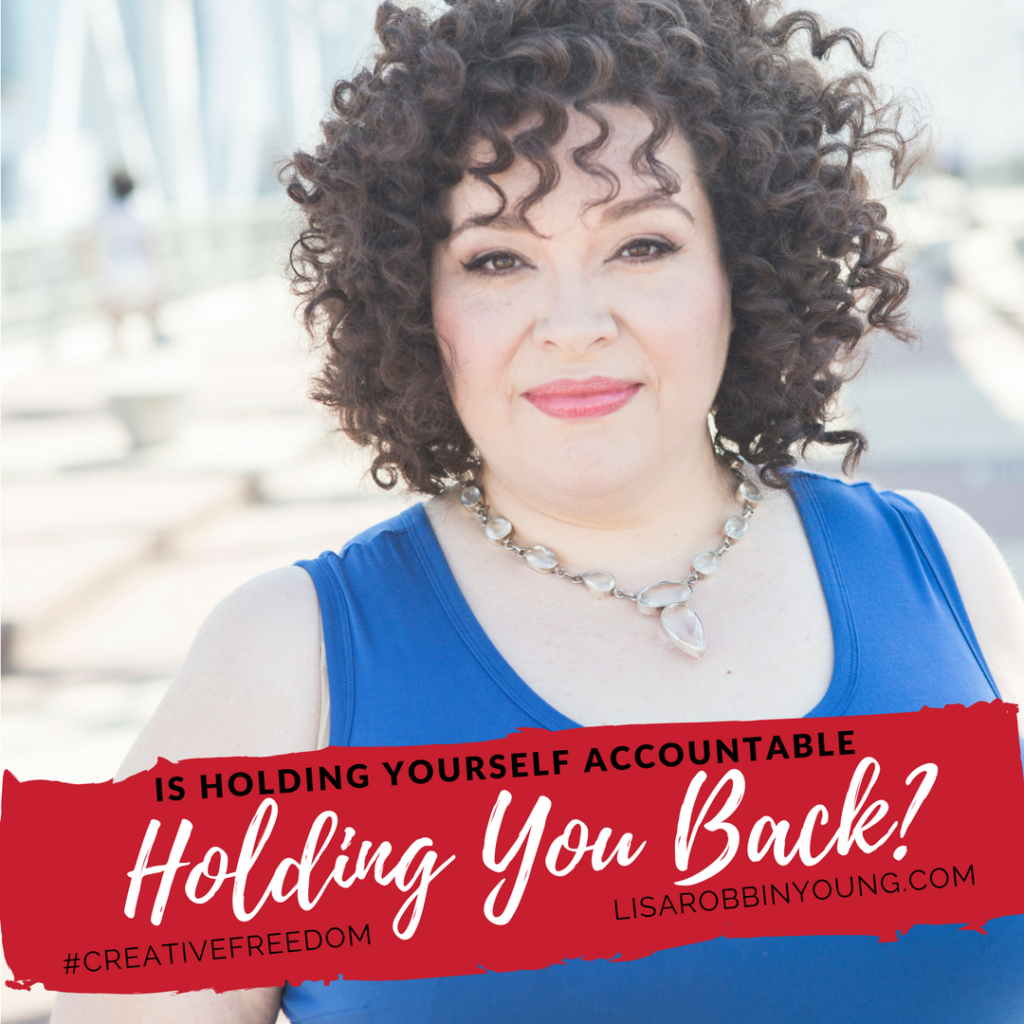
If you're like most creative entrepreneurs, you started your career wearing all the hats. Along with that came a sense of responsibility for all the parts and pieces of your growing enterprise. That's logical. After all, if the business isn't making money, you're not making money, and that's a problem!
But a bigger problem I've found in my years of working with creatives across the spectrum, is that as the business grows, you're still trying to do too much. You're trying to hold yourself accountable to things that are just too hard to handle on your own.
There's a time and a place for self-accountability. There's also a time to know when to let go and get help. (Tweet this)
Creatives want to be independent. Chaotics see themselves as free-thinkers and free spirits. Fusions almost always have a better way to do something, and Linears don't want to be hampered by too many cooks in the kitchen. Holding yourself accountable is efficient and effective.
Until it's not.
Simply put, you can't manage it all, and you shouldn't try to do it for long. Humans just aren't wired that way. Okay, maybe SOME humans are, but they are the exception, not the rule, and even they need help from someone else at some point.
So why do we hold out so long when it comes to self-accountability?
Fear.
According to Mark Samuel & Sophie Chiche, authors of the book "The Power of Personal Accountability", there are three fears that come into play when you try to hold yourself accountable for everything.
When I was a kid, it was my job to dust the living room. I hated dusting. We had a coffee table that frequently had rings because people wouldn't use a coaster. It was tough to keep clean. There were several instances where I got in trouble because someone else came along and left a ring after I had cleaned, but before Mom had inspected. No matter how spotless the rest of the room was, she would often point out how I "missed a spot" on the coffee table.
One time I got so mad I yelled at my Mom. "Don't blame me. I did my job!"
According to Mark & Sophie, "We associate accountability with blame. We fear that if we're accountable for something, we'll be the one to get blamed if it goes wrong."
Sometimes, we do get blamed - like with that infernal coffee table. But more times than not, we don't. And, as I learned with the coffee table, sometimes there are smarter ways to do things. One of my siblings finally suggested I do the coffee table last - just before Mom got home. That way, she'd see me working on it, and nobody would have time to put anything on it before she inspected.
It was a simple solution that I couldn't see for myself. I just wanted to be DONE with it, so I could check it off the list. I was afraid that I wouldn't get it done if I waited, and I let fear drive the bus. I've talked before about unconscious self-sabotage, driven by fear. We get triggered by feelings of inadequacy and decide to do nothing instead. It takes that outside eye to help us see things differently.
 I have a friend who really struggles with this one. Simple requests get rejected, for fear of letting someone down. I remember asking him if he would remind me to do something later in the day - something we both needed complete. He said "I'll try to remember". He never texted, and the thing didn't get done. When I asked why he didn't text me, he said "I never promised I would."
This was a recurring theme in our friendship. When I finally confronted him about it, he confessed that he didn't want to make a promise he wasn't absolutely sure he could keep, because he'd feel like a failure if he let me down and didn't follow through.
I told him, "It's a text message, not a kidney transplant!"
This fear of failure stems from not wanting to feel incompetent or look bad in the eyes of others. "To avoid feeling that way," the authors state, "we play it small. We stay in what is familiar. We don't challenge ourselves with bigger choices, so we don't have to ever feel inadequate."
We worked together to "game the system" in his brain. We looked for what Teresa Ambile calls a "small win", and re-trained his brain to focus there. I reminded him that "trying to remember" was also a commitment. That he couldn't just blow it off without even trying to remember to text me... that he would be lying to me. Integrity is a HUGE deal to him, and he recognized how he's be letting us both down (double trouble!). It was a small change in his thinking, but it opened his eyes to a new way of honoring the commitments he was making and gave him a chance to build his confidence with small wins first.
Taking risks can lead to mistakes, or even (GASP!) failure in the short term. But is also leads to learning. Learning means we might not get it right the first time. But knowing you've got a safe space to take those risks takes the edge off a bit. It's hard to create that safe space by yourself. Instead, you stay stuck in the echo chamber in your mind.
It's time for me to resurrect that Marianne Williamson quote. You know the one. "Our deepest fear is not that we are inadequate. Our deepest fear is that we are powerful beyond measure. It is our light, not our darkness that most frightens us. "
To some, this may sound like a cop out. I know it did for me the first time I said it. All kinds of worthiness issues cropped up that kept me from moving forward on things I knew were important to me. I had to ask for help... sometimes from people I barely knew! That's hard, but certainly not any harder than staying stuck. Our authors give us more insights:
"If we increase accountability, we will accomplish more, and we know it. We will gain more responsibility. We will be expected to achieve at a higher level of performance. We will have to maintain excellence. We will have to deal with people's jealousy and our own guilty feelings for outperforming others. That is a lot of pressure. It is strangely easier to dream of success than to actually achieve it."
So yeah, I can see how that might feel like a cop out to some people (myself included). The reality, though, is that if you're feeling pressure, the last thing you want to do is create more pressure for yourself. You'll do anything to take the pressure off, if you can, which means doing less, or doing nothing, so that you're not feeling that pressure anymore. And there you are, right back at ground zero on those things you said were important to you.
Get others to help hold you accountable. If you're a technophile, maybe you'll use an app like MyFitnessPal. I struggle with apps because they require me to be attached to my device in order to stay consistent. That's not me. If it's not you either, you might try a more personal approach.
I've had an accountability partner for years now. Winnie has seen me through more ups and downs than all the roller coasters at Cedar Point. We meet once a week and debrief what happened since our last meeting, what we're working on, and where we're needing help. If you don't know who you could turn to, consider a group accountability program, where you've got the "hive mind" and power of the group behind you to celebrate your wins and help you navigate the rough spots.
Fear's not going away any time soon, so anyone who promises to eliminate fear should set off all kinds of red flags. You may not be able to eliminate it, but you can mitigate it. Here are a few ways that external accountability can help.
Eliminate blame - you'll have a safe space to practice. Members of Accountability Club (A-Club) will often ask how to handle a tricky situation before they try to handle it publicly. And if they do have a "facepalm moment" they know they're not alone, and can come to the group to talk it through, be encouraged, and regroup. It's a judgement free zone that safe for everyone to practice.
Focus on progress, not perfection - This takes the sting out of so-called "failure". By dropping the judgement and celebrating what DID get accomplished or what you learned, you've got a chance to make every opportunity into a teachable moment. Are you further along than you were before? That's progress. Celebrate it! By looking for and celebrating the small wins, you're re-programming your brain to train it for success.
Take the pressure off - Take your focus off just the "strike zone" and celebrate the tiny steps along the way. Focus more on the actions you can take and less on what other people might think. Put your attention firmly on the actionable steps on your to-do list that lead to your goal. That way, others lose their power over you. Guilt drops away because you can point to exactly what you did (and how they could do the same thing to get comparable results).
 It isn't about you being "magical" or feeling guilty about your hard-won progress. You did the work, dangit! This also keeps you clear on what's really possible for you. If your plate is full of action steps, you simply CAN'T take on more. There's no room! You can start learning new skills - like delegation, and team building.
Can you do these things for yourself? Sure. And sometimes you have to. I've been there. But even as a self-starter that loneliness and isolation can be tough. Not to mention the echo chamber of thoughts that start rattling in your head. That's when trying to hold yourself accountable can start holding you back. You simply can't manage it all by yourself all the time. It's just too hard.
If you're ready to take the pressure off and get the support and accountability you need to move forward, the doors are open to Accountability Club. Enrollment is only open a few times a year, so now's the time to get on board! Not sure if you're ready? Join us for our free monthly training call this weekend. We're talking with Becky Mollenkamp about how to use LinkedIn to grow your audience of Raving Fans. You can listen live at no cost, but the recording is only available to members of A-Club. As long as you're on my mailing list, you'll get an email with all the details.
"What does a fish know about the water in which he swims all his life?"
Einstein was talking about how the very things that are crucial to our existence are very often the things to which we're totally oblivious. They're everywhere around us, we're so entrenched in them, that they've become part of our life's scenery. We've assigned them to the pile of things we "don't know we don't know", without even realizing it.
But we'd miss them if they weren't there.
If that sounds a little convoluted, bear with me while I untangle this mess.
See, each of us has blind spots. Things in our lives and work that we take for granted, or assume that anyone can do just as well as us.
These erroneous assumptions (because that's really what they are) can come in a variety of forms, and we don't even realize the ways they shape how we show up in the world.
I admit that I have blind spots like these in my life and work - though I'm getting better at them. These assumptions are your "water". You swim around in them every day, and if they were suddenly taken from you, the world would be strange and painful.
Not so fast, my "fishy" friend!
There are blind spots unique to your work, they way you were raised, and also your creative entrepreneur type. This week's episode of Creative Freedom reveals the top blind spot of each of the three primary creative types. Which type are you? Take the quiz, then check out the episode and tell me if it resonates with you.
Some of our assumptions help us be better people and do better work. Assuming that you're great at planning and strategy helps Linear creatives get impressive results. But assuming that planning and strategy are all you need keeps Linears from enjoying the results they get. Likewise, Chaotics can walk away from planning and strategy without losing sleep - something that's important to see the bigger picture of life, but assuming that plans and strategies aren't necessary keeps Chaotics from seeing some of the results they most desire.
Assuming that every creative is just like you is another death knell for your business. Linears and Chaotics don't often understand each other because they're swimming in different "water". Fusions have a better time of understanding and "translating" because they have tendencies on both ends of the spectrum, but that can often make them appear wishy-washy, or like a Jack-of-all-trades that is good at a lot of things, but not GREAT at anything (which isn't true).
Until you understand your creative blind spots, you'll just keep treading water. (Tweet This)
Take a moment to reflect on how the things you take for granted (and the assumptions you make in your life) might be coloring the work you do - or how you show up in the world. What are some of the benefits? What are some of the downsides? Share your thoughts in the comments and let's be a rising tide for everyone!
=====
UPDATE: Great news about the Creative Freedom Incubator! Applications are now being reviewed and accepted through August 31 for an October start date. If you're ready to get help working in and on your creative business, download the application today.
First things first:
I'm THRILLED to announce that the Creative Freedom Entrepreneur Types made their public debut this week over at Charlie Gilkey's Productive Flourishing blog. If you're a creative and you're not familiar with Charlie's work, I highly recommend checking him out.
My guest post is an excerpt from my book, detailing the 3 different types of creative entrepreneurs, along with the process I used to get clear on my target market (which is what started me on this research journey in the first place). Please take a moment to stop in and leave a comment or share the post. The more creatives that we can reach with this message, the better the world will be. I truly believe that.
Also, my accountability partner, Winnie, just posted my interview for her podcast, where we dive into the nature of assessments in general, and why self-awareness is a powerful tool in building your business. The Let's Talk Tech Show takes the mystery out of all the tech-y tools, platforms, apps, and software that solo-preneurs deal with as they grow their business. If you're a Chaotic creative - or otherwise feel overwhelmed by the tech stuff, Winnie's show is a great place to get some basic understanding in plain English.
Okay, on to this week's episode...
I've known Mike Michalowicz for years now. First as a fan of his work, then as a member of his book launch team, then as an editor of his last book, and one of the first certified Profit First business coaches in the world. Now, I think it's safe to say we're friends. And he's an interesting dude. Like me, he's a guinea pig for all the methods he teaches. As a Linear Cusp creative, he's great at creating and implementing systems, but he's got just enough Fusion in him to make it fun and easy to learn what he teaches. Mike's new book, "Surge: Time the Marketplace, Ride the Wave of Consumer Demand, and Become Your Industry's Big Kahuna," is the next installment of his guinea pig adventures. Using surfing as his framework, SURGE is actually an acronym for the steps you need to take to find and ride your own wave of business success.
Does it work? Watch the episode, then read on:
If you read the book, you'll see plenty of case studies supporting Mike's process - including examples from his own business. As I mentioned in the video, I was a smidge disappointed about the lack of specifics around the "cool kids" strategy, until I realized I did it myself, without really trying.
I've been doing the research on the Creative Freedom Entrepreneur Type spectrum for about 18 months. Interviewing creatives from around the world, analyzing the data, and testing theories. Back in April, Charlie posted on Facebook saying he didn't resonate with particular a social media platforms. I said that it made perfect sense to me because his creative entrepreneur type wasn't a good fit for those platforms. That got him (and a few others) curious, so I explained a little about the research I was doing. Charlie was intrigued enough to have an email convo with me that led to this week's guest post on his blog (and with a little luck, an interview on his podcast later this year).
Luck is where preparation meets opportunity - which typically looks like work! (Tweet this)
Charlie has a solid track record in the realm of creative entrepreneurship. He's one of the "cool kids" in the marketplace. But I had no idea how to get on his radar until HE said something where I had an opening.
There are a couple of things that you need to understand:
This was an organic way to "reach the cool kids" - and it worked. Will it continue to work? Well, I have a few more "cool kids" to check out before I can let you know!
One of my favorite shows on PBS is "Finding Your Roots" hosted by Henry Louis Gates, Jr. It's always fun to learn about the ancestors and personal histories of some of the most well-known people of our time. I really enjoy getting to know how these people came to be who they are through the stories of their ancestors.
I believe that who we are is largely colored by the choices we make, and that includes the choices of our ancestors, since without some of the choices they made, we might not be alive today. Those immigrants, tireless workers, and visionary family members made a way for us in the world. It's important that we recognize and honor that part of them that lives on in us.
So when Nely Galan asked me to be part of her book launch team, how could I refuse? Nely is a Cuban-born immigrant who made a name for herself as the first Latina president of a U.S. television network. Her book, Self Made: Becoming empowered, self-reliant, and rich in every way is now a New York Times best-seller, and in it, she shares not only the story of her success, but also the stories of dozens of other women who are creating their own way through the power of entrepreneurship.
This week's episode is a new segment I'm trying out this season - book reviews. I read a LOT, so it seemed fitting to share some of what I'm reading in a meaningful way (and save you a headache or two if the book is a bomb). I'm sharing the highlights and lowlights of Nely's new book, along with some childhood photos, of every stage, including the time when do babies talk properly (and yes, a baby picture, too).
In short, Self Made is an excuse-buster of a book. Nely gives you every angle on how to carve out a space for yourself as an entrepreneur, using case studies from other entrepreneurs who are doing it themselves. She even includes a fun story about Jeremy Renner (#TeamCap). If you'd like to win a copy of Self Made, just answer one of these questions in the comments:
I'll compile all the comments from Facebook, Twitter, YouTube, and my blog, and randomly select one winner, who will be notified via email.
"You can't win if you don't play."
Mom used this sentence to justify a lot of behavior when I was a kid: learning to ride a bike, auditioning for plays, joining the cross country team (I took 11th place in the city meet). And yes, mom played the lottery. She had a winning streak where, with a little help from technology and lottery dream books, she won several days each week for a few weeks. Naturally, those words rang through my head every time I was faced with a risk-reward decision.
Until this week.
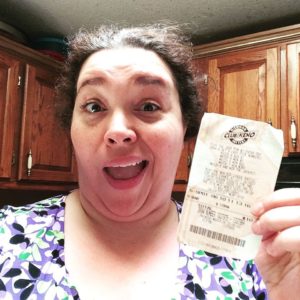
If you follow me on Facebook or Twitter, you may have already heard about how I found this lottery ticket on the ground while I was on a field trip with my kid. I thought it was trash (LITTERBUGS! ARGH!), so I picked it up to throw away when we got to the car.
But when I saw it was a lottery ticket, I figured I'd check the numbers when I got home, just in case.
I won the BIG money, honey! TWO WHOLE DOLLARS! WOO HOO!!
Every morning, I sit down to do The PEACE System (a process I created to help clear my head and prioritize my day). Because field trips can be stressful - particularly with a special needs kid - I made a point of setting the intention to look for miracles.
Frankly, a well-behaved child would have qualified as a miracle in my book. I certainly wasn't expecting free money to fall at my feet. But hey, I'll take it!
I asked for (and was looking for) a miracle, and I got it. And the kid behaved, too!
You've probably heard stories about people who say "I won the lottery and it changed my life." Never did I think I'd be one of those people, since I don't play the lottery.
But winning those two bucks most certainly changed my life. If you want to test out your luck as well, you can go to sites like 바카라 사이트, for example.
"You can't play if you don't win" is a double-edged sword. In a way, I did "play" because I picked up the ticket and cashed it in. But in a way I didn't play, because I didn't actually buy the ticket. It wasn't even given to me (in the traditional sense). And the person that dropped the ticket probably thought it was a "loser" because they played $10 and "only" won $2. They lost money on the deal.
But from my perspective, I was $2 richer!
The last 18 months have been arduous and hard for me on a lot of fronts. At some point, I probably faced down some depression, though I was never clinically diagnosed. I've done a LOT of questioning my worth, my value, and why I'm really on this planet in the first place.
Two dollars won't even buy me a soda at my local restaurant, let alone pay my rent, but it was a sign. A clear sign that miracles are there if we are looking for them. I know that sounds kind of mystical and metaphysical, but it's true. I found that money because I was looking for it.
Well, I was looking for a miracle, and I chose to see this "win" as a miracle.
You have to have your eyes open and show up.
You have to be willing to go for what matters to you - even if it seems unreasonable. Even if it seems impossible. If it's in your heart to have it, you have to be courageous enough to show up for it. And keep showing up consistently.
In that respect, Mom was right: you can't win if you don't play.
But she was also wrong. I won without playing "the game" (by society's rules, at least). That little lottery ticket opened a Pandora's box of questions about the "teaching" that's been passed down through my family for generations. The "lessons" and "stories" that, in a previous era, had to be true for survival no longer serve the person I'm becoming in this era of creative entrepreneurship.
In the past, if you didn't "play by the rules", you wouldn't be taken seriously, and you probably wouldn't even get a foot in the door, let alone win. There were gatekeepers, expectations, and unwritten "rules" that were foisted on you by your industry, society and "the world". These rules were designed to keep certain people out, and to protect the survival of others. You had to play their way, or you simply couldn't play.
Now, you have a lot more latitude to define success on your own terms and not just survive, but thrive. You can create your own career, doing what you love, and make good money doing it - without selling your soul. That's the entire premise of how I help my clients!
Those old stories that once served to protect, inspire, and motivate me, had been holding me back from the life and career I was meant to have. I couldn't see that until I won the lottery.
What thoughts, beliefs, and stories do you hold as true, that might actually be limiting your success without you even realizing it? Untangling those beliefs and thought patterns can be tough, but the rewards far outweigh the risks.
But here's the other thing that rattled my brain. I won $2. Winning anything was contingent upon someone else. Somebody else played the game, bought the ticket, left it on the ground. At least three other people walked right past the ticket before I picked it up. In short, I had no control over the outcome. All I could do was be in the right place at the time of the miracle.
Miracles are awesome, and they can feel magical. But they are, in many ways, unpredictable - even if you're looking for them. You don't know when they'll arrive, or in what form, and sometimes it's hard to know if it even is a miracle until well after the fact. Sometimes the worst thing that ever happened to you is actually a blessing in disguise... a miracle you won't see until years later.
In life, we can wait for others to open doors for us, or we can make a plan and get sh*t done. (Tweet This)
Waiting around for miracles is the snail's path to success. Can it happen? Sure! I just won the lottery, for crying out loud! But, I only won $2, because that's all the ticket was worth. Someone else got to dictate the terms of my success. I could only win what they played and paid for.
I don't want someone else to dictate how successful I can be. I don't want someone else to have that much influence over my success journey. I mean, I won't turn away blessings when they show up - even the $2 variety - and I'm not going out of my way to play the lottery, either.
I know I can't control everything - and some might say that control, like safety, is an illusion. But if I set an intention and follow it with consistent action, I'm going to move the ball further down the field more often than the guy standing around, waiting for a winning lottery ticket to fall at his feet.
Will there be setbacks? Most likely. As we all know, the so-called "overnight success" stories usually involve a lot more preparation and hardship than we realize. As Thomas Edison famously said, "opportunity is missed by most people because it is dressed in overalls and looks like work."
I'm no stranger to hard work, although I'd like to be. 🙂
There were other gems of discovery that I'm still unpacking, and I'm sure you could tease out a few lessons of your own from this story, but ultimately, while I welcome all the miracles and blessings coming my way, I'm not going to sit on the sidelines and wait for them. I'm going to keep showing up, sharing my Great Work, and defining success on my terms. Not my mom's terms, or the terms of my ancestors, or even the terms of my fans and clients.
My game is the only game that matters for me. It's a game I'm happy to play, and one I can't lose, because I make the rules.
[Note: This is an excerpt from my forthcoming book, Creative Freedom. If you'd like to be part of the advance team and get more sneak peeks of the book, contact me for more info.]
There's a quote often attributed to John Lennon:
"Everything will be okay in the end. If it's not okay, it's not the end."
Dreams are kind of like that. It sounds trite, I know, but the reality is that if something really matters to you, there are really only two things that will prevent you from pursuing it in some way:
1. Death (in which case, you're no longer dreaming).
2. Something else that matters more (in which case, it's no longer your dream).
Death is fairly self-explanatory, so we'll leave that here and explore option two.
When I was a kid, I fancied myself as the next Madonna or Paula Abdul. I was a pretty good singer, and I spent countless hours practicing dance routines for the world tour I imagined I would lead once I became a rock star. I studied music at college, got a degree, and even moved west in pursuit of that dream.
Then life happened: single motherhood, relocation, marriage, second kid, etc.
For years, while my dreams of professional achievement languished, I put my focus, energy, and money into being a wife and mom. That was my priority. I made it so. I chose that life over pursuing my dream.
There are all kinds of "reasons" I could give as to why I made that choice. Here are a few:
Ultimately, I let guilt, shame, and fear dictate my priorities. Choosing to be seen in a certain light (by my family, friends, and children) were more important to me than pursuing my dreams.
So I didn't.
 For more than a decade, my dreams sat in a metaphorical box on a shelf in the attic of my soul. I didn't touch my musical instruments (I owned seven). I didn't even play the radio much. Music was all but absent in my life, with one exception: community theater.
I was somewhat of a fixture at the local theater. Ted, the Artistic Director, knew I was talented and a hard worker, so I was practically guaranteed a role every season. Usually not the lead, but something that allowed me to be in the spotlight, share my gifts, and get me out of the house a few nights a week during the run of the show.
That was my "fix" and, for a while, it worked. I was happy to contribute and be part of something that gave me a small glimpse into the life I wasn't ambitious enough to pursue because of other "reasons".
A friend and I had approached Ted about doing a holiday musical revue. He loved the idea. As we began rehearsals, Ted told me that ours would be the last show produced at the theater. After 15 years, he was closing his doors.
At first, it didn't register how much I depended on Ted and this rag-tag bunch of musical misfits. We all had "other lives" that kept us busy - teachers, lawyers, service workers, college students - but on Ted's stage we were all equals. We were all craftsmen.
We were family - and Ted was breaking up the band, so to speak.
I didn't realize, until recently, how important that creative outlet was for me. It was my primary source of adult conversation and a safe space to practice my art. It was also a happy-medium for a married mom of two with responsibilities and "reasons" that kept me from pursuing my dream.
And then it was gone.
I briefly toyed with the notion of taking over the theater, but my life and financial situation at the time just couldn't swing it. That's when everything in my life started to unravel. My kid ran away and ended up in jail, we filed bankruptcy, I lost my car, my home, and I hit the skids - quite literally.
I was driving my husband's car on the freeway. As I started to change lanes, it spun out of control. I threw my hands into the air as the car swished and fishtailed across three lanes, landing in the ditch, facing oncoming traffic. I looked up just in time to feel the rush of wind as an 18-wheeler sped past.
Somehow, I was still alive. Unscathed. Awake. The car had stalled out, but was otherwise fine. A Freudian moment.
I reasoned with myself that I should probably be dead. The only reason I survived was because, as Lennon put it, it's not the end.
So why I was still alive? What was this wake-up call all about?
God talks to me in the voice of James Earl Jones - very deep, precise, and clear. Each morning for a few weeks, I posed the "why am I still alive?" question during my sacred practice. One day the notion to spend a year working on a new album crossed my mind. That thought led to doing 100 songs - just 2 songs a week. That's when Darth Vader boomed in.
"300 songs!"
I've learned not to argue when my inner Darth starts talking. So I started on the journey that has now become my 300 songs project.
Jim Rohn famously said "Become a millionaire not for the million dollars, but for what it will make of you to achieve it." About 100 songs into the project, it became clear that it was less about the number of songs, and more about who I was becoming in the process of making them.
I was unpacking my dusty box of dreams, recalling the value of these old treasures - some of which still had meaning for me, others from which I was finally ready to move on. I pulled out those old songs, those dance routines, and I had to decide what my dream really was.
See, your dream is relentless. It persists even when you don't want it to. You almost can't let it go because it keeps coming back to haunt you. Fantasies, on the other hand, are something that you can plow a lot of time, energy, and money into, but at the end of the day, you feel a relief to let it go.
Dancing was like that for me. I still love to dance, but I'm almost 100 pounds heavier than I was when I dreamed of being the next Paula Abdul. While I'm working on getting into better shape, the thought of re-conditioning my body to the level of a professional dancer feels like a punishment worse than death!
When I gave up on the dream of becoming a dancer, I felt unimaginable relief. Can I still dance? SURE, but on my terms - without the pressure of maintaining a dancer's body.
Becoming the next Paula Abdul or Madonna was my fantasy, entertaining and inspiring people is my dream.
In fact, I can't imagine my life without a spotlight and inspiration in some way, but if I could never dance again, I don't think I'd cry too much about it. As a kid, I believed that's what I should do, if I wanted to be famous. I should learn to sing, act, dance, and play an instrument - and be good at all of them. That way, I've got a much better chance at "stardom".
But as I unpack this box of dreams as an adult, it isn't about the "shoulds" of the world around me. I'm older now, and while I still care what people think of me, it matters far less than it did a decade ago when my roles defined me.
Those priorities don't matter like they used to. I stopped defining myself by what I couldn't have and began to shift my focus to what I really wanted - what truly mattered to me.
And that's the point. When something else - even fear - matters more than honoring the Divine call of your dream, you'll try to ignore it. But if it really matters to you, it will not remain silent. It will fight to be heard. It will wake you from your anesthetized way of living. It will violently shake you - with the force of an 18-wheeler - until you make a choice.
Then you will find a way to pursue it - in stolen moments while the kids are at school, or while waiting on hold with the power company. You'll get up early, stay up late, and make any excuse you can to take even the smallest step toward realizing your dream.
Or you will choose to let it go. No longer a priority. No longer the dream it once was. In which case, it's not your dream anymore, so it no longer needs pursuing.
Mourning the loss of a dream, or letting it go joyfully (your choice) is not uncommon. Kids do it every day, with much less drama and heartache. They find something new that captures their imagination, and they pursue it until it's not worth pursuing anymore. Everything they pick up and put down acts like a filter, helping them draw closer and closer to what it is that really matters to them.
For me, dance and drama led me to refine my skills as a storyteller, a performer, and to be more comfortable in my skin - critical skills that make me a better musician, author, and coach. For a time, I thought dancing was part of my dream. Dancing wasn't my dream, but it pointed the way.
Will your dreams always manifest the way you envisioned? Not likely. But that won't deter you if it's really your dream. Many are the stories of elderly men and women who found success with their dreams much later in life. Who cares how long it takes? The pursuit is part of the work of building the dream in the first place.
And should there come a time when other choices, other goals, other priorities truly do matter more than your dusty old dream, then pack it away for a time, pass it on, or simply let it go.
In the end, whatever you choose will be okay. And if it's not okay...
==========
Feeling stuck and unsure of your direction? I am honored to be co-hosting a webinar on May 12 with Tajci Cameron that might help. Tajci's a former Croatian pop star who left it all to try her hand at the American Dream, only to get stuck herself. Join us as we explore the steps she took to awaken to joy and purpose in her life and break the cycle of pain and fear that was holding her back. Click here to meet Tajci and register for this special event!
[ALBUM UPDATE: We've got about half the album recorded and I've approached a couple of engineers about mixing and mastering the project - one of whom has worked with artists like Clapton, BB King, and Rod Stewart. This is getting REAL, yo! If you haven't had a chance to pre-order your copy, there are only a few days left to do it before the first song goes out to sponsors!]
I've noticed a disturbing trend in business books recently: more and more crap books that are nothing more than thinly veiled sales pitches for the author's big-ticket program or service.
Now, I'm all for marketing inside your book. I think a strong call to action is important to get readers to join your list, become aware of the work you do, and eventually work more deeply with you.
But I don't want your ads "sprinkled" throughout the book. A book is not a live webinar. I can READ, for pity's sake, and I can go to the "references" section in the back of the book and find all the offers you have mentioned - if you've written your book properly in the first place.
And that's the problem. So many of these authors (and sadly, a LOT of them are internet/info marketers) capitalize on the size of their audience and their ability to sell a product to push out a book that isn't really all that good - leaving a lot of readers put out by how much advertising there is compared to the content. You can read hundreds of Amazon reviews about books that seem to be nothing more than a bad advertisement for their schlock, that is why the photography used for content and the reviews are so important.
Somebody started telling business people that a book is a great business card. They're WRONG.
A business card is designed to give you some information about a person: their profession, some contact information, and some of the more sophisticated marketers of the world even manage to slip an offer in there to get you to take action.
Here's the thing: I don't pay for your business card. I pay for information. Knowledge. I pay for your to give me the answer to my problem. And the answer isn't to pay you even MORE money to get the full answer. Sorry. That's crap.
If that's all your book does. STOP IT! Your book is NOT a business card!
A book is meant to disseminate information - helpful, useful information. Can you imagine getting a teacher's edition of a math book and having to opt-in or pay extra to get the answer keys? That's essentially what's happening here. They give you the problem, and a taste of the solution, but then hook you into coming back to them to get the real answer you were looking for in the first place.
This isn't an indictment of internet/infomarketers. There are some great books in the world. But a whole industry has risen up around creating your non-fiction book in 30 days and gaming the system so that you, too, can claim to be a best-selling author.
Which only waters down the effort and value of bona fide authors that put in the hours to craft a meaningful, useful book that actually serves the audience that buys it.
So after I found myself paying for and reading through another painful example of a best-selling author who didn't deserve the title, I couldn't help myself.
I got a little snarky. And I don't apologize one bit. I hope SOMEONE will prove me wrong, because what I'm seeing is a sad ripoff of people who genuinely want help - who actually pay money to get it - and are then sold a bill of goods.
I even called on TLC (the musical group) to make this point abundantly clear.
Let me hear from you. Have you paid for rotten books lately? What are some of the best business books you've ever read? Let's build a super-helpful reading list of must-read books and be a Rising Tide for everyone!
PLEASE SHARE THIS POST! If you know someone about to publish a book - or someone about to buy a book, do them a solid and share this video with them so we can curb the "crap book" population. 🙂
(NOTE: I'm just about finished with the Creative Freedom entrepreneur type quiz. If you're not already on my mailing list, subscribe [in that handy box above] and be the first to get access!)
This summer, I've been channeling my inner crafty woman. I'm a pretty good singer and speaker, but I never really thought of myself as creative - as in making things - until I married a guy who decorates our Christmas tree with origami cranes.
I fiddled around with drawing as a kid - but my cousin was a much better artist. In fact, I could pretty much guarantee that someone I knew was better at any crafty thing than I was.
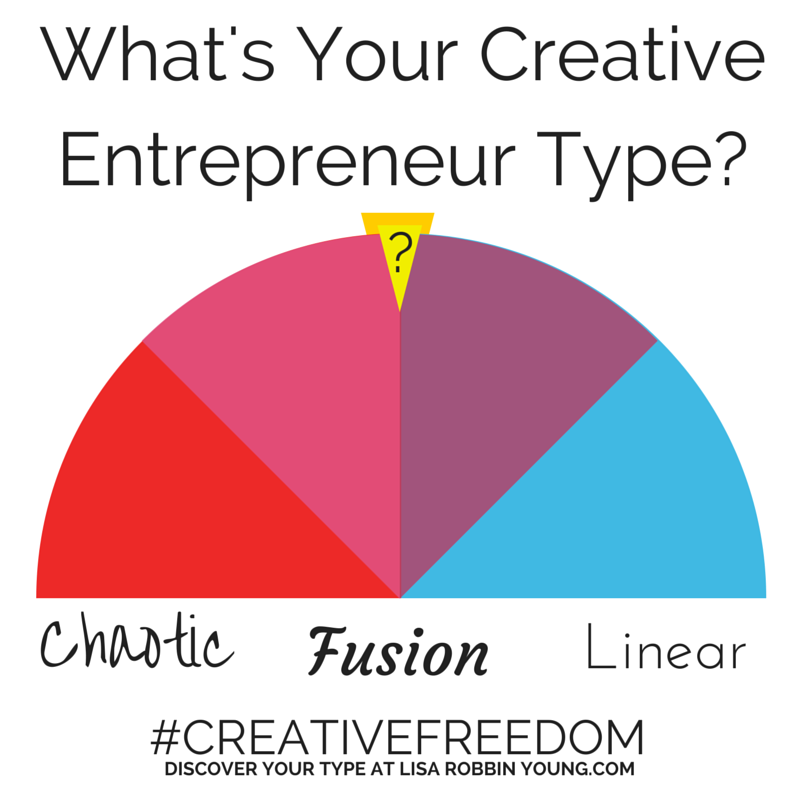
Turns out, that's part of my Creative Freedom type. I'm a Fusion, which means that I can always find someone more creative, more strategic, and more "better" than me if I look hard enough - but that's because my life is filled with a mix of awesome Chaotic and Linear Creatives, who will always be further along on the spectrum than I am. Fusions, on the other hand, sit right in the middle of the spectrum, which means we can do lots of things other people can't. It's why our analytical friends call us "the creative one" and our creative friends call us "the smart one."
This is just part of what I've been exploring in preparation for the launch of my new book "Creative Freedom." Once I learned I was a Fusion type, it gave me permission to embrace ALL the ways I'm crafty and creative. Finally, a place where I don't have to choose, I can just enjoy being me!
And I made an origami daffodil to prove it! It's my first attempt, and I used a plain sheet of paper instead of origami paper, so it's a little wonky, and I'm proud of it!
There's another reason I'm sharing this daffodil with you, and it has to do with a story that goes back about 20 years. You may have heard of it. It's called "The Daffodil Principle" by the late Jaroldeen Edwards.
But before I get there, let me tell you why I'm sharing this story.
I got an email from a reader who has been struggling with building her Noble Empire because of some stuff she's been dealing with in life: health, money, family... you know.. life stuff. She's a little frustrated and overwhelmed about wanting to be further along on her dream, but also stuck in the reality of where she's at.
Which brings me to the Daffodil story.
Jaroldeen's story is actually about a real garden in Running Springs, CA, designed and planted by Gene Bauer - a lifetime effort spanning more than 50 years. Every fall, at her vacation cabin, Gene would plan and plant each bulb by hand. When she started, she didn't even know which end was up.
Can you relate?
As creative entrepreneurs, sometimes we don't know what direction we're going - let alone if it's the right one or not. But Gene's an example of just showing up, year in and year out, and letting the creation unfold into a life's work. Most people don't know Gene was actually a teacher, and planting daffodils was just an interest, that became a hobby, that became a passion.
This week's video tells the rest of the story - the part that happened after Jaroldeen wrote her story - and I think it's probably even more powerful than the original, because of how the Bauers had to overcome adversity when fires besieged the property. Oh, and if you watch really closely, you'll get a quick glimpse of New Kids on The Block and a young Marky Mark Wahlberg before he got all grown up.
The more I researched the story, the more fascinated I became. That's part of why I learned to make an origami daffodil - since they're out of season right now (you can also make a stem if you'd like). Gene and Dale even compiled a history of the Running Springs property to give people some background on how the 5 acre plot of land came to be in their hands, and ultimately covered with so many varieties of daffodils.
THAT, to me, is what it means to build a Noble Empire.
What small step are you making? Share your thoughts and ideas in the comments and be part of the Rising Tide. Have a question you'd like to see featured? Hit me up! I love requests!
In my house, there's a never-ending battle that's almost as epic as the fight for the remote control.
The thermostat.
My husband likes it hot. He closes the vent in our room and bundles under at least two blankets even during Summer!
My son likes it cold. If it's warmer than 65, he'll turn the thermostat down to 50 because he thinks that'll make it colder faster.
Me? I like it in "the dead zone" - a comfortable 70-72 degrees. Not too hot, not too cold.
Needless to say, we've had a few arguments about this. In fact, hubby and I are finally switching sides of the bed this week because he's been sleeping closer to the vent (which is why he keeps closing it).
But...even more datstardly than our family fight for the house thermostat is the epic battle that's been going on between my ears for years with my metaphorical "success thermostat".
You may have heard it called an upper limit problem - that's a term Gay Hendricks used in his book "The Big Leap." Like a thermostat, our brains have a "success set-point" that keeps us comfortable. When we get too far below that set-point, we get uncomfortable, and start working to turn up the heat on our success. But I had a cap on what I believed I deserved. My "success ceiling" was a set-point that actually kept me earning poverty-level wages. No joke!
It was as if every time my money situation started improving, or things started going very well for me, invariably something would happen and things would start to fall apart. My success set-point kept trying to cool things off just as I was heating up!
In her book "Overcoming Underearning" Barbara Stanny says that "money is a metaphor" and that "under-earning is a symptom" - specifically a symptom of a lack of self-worth or self-love. It manifests differently for each person, but ultimately, it centers on a success ceiling/upper limit problem around what you think you deserve.
This week's episode of Creative Freedom revels how to know if you're a chronic under-earner, how I discovered my under-earning success ceiling, and how I've worked to eliminate my upper limit problem in my own life. Oh, and you'll hear bits of my U2/Journey mashup from the 300 songs project.
One look at the Symptoms of Underearning from Underearners Anonymous and you'll have a better idea of whether or not your current financial state is because of a conscious choice to live on less, a short-term slump, or a chronic condition that's due to something deeper.
1. See the truth and OWN it. Just like a real thermostat setting, we have to make adjustments if we want to see things change. For most of us, we can't just "flip a switch" and solve the problem. Further, the "temperature" of our situation will most likely change gradually. You can't go from 32 degrees to 70 degrees in a matter of seconds - it takes time to turn up the heat! Decide on your new direction. What's going to change for you? Then commit to it, and be willing to make small (even microscopic) changes as you move toward your new set-point. The smaller the better actually. It might feel more tedious and time consuming, but micro-commitments are more likely to stick and lead to lasting change because they don't activate the fear centers in your brain. It's the fear center that triggers the thermostat to go back to what's "comfortable" - clearly a relative term when it comes to success.
2. Be wary of people who aren't used to your new settings. They will be uncomfortable (so will you). I have a colleague that says "new level, new devil". Remember what I've taught you before - you train people how to treat you based on what you've come to accept from tehm and what they've come to expect from you. Changing your success thermostat means you're changing the expectations. Some people won't like that - get used to it. It happens. The key is to recognize when people are trying to change your settings and stay the course even if things start to get a little (okay, a LOT) uncomfortable.
3. Believe you are worth it and stay vigilant! This is where all the micro commitments make a difference. Trying to re-program your brain to overcome years of unconscious programming ain't easy. When you've believed for decades that you're not capable of achieving a certain level of success, your brain may have difficulty accepting new ideas that seem to fly in the face of that old understanding. You need to keep looking for evidence for the file clerk in your head that says you are capable. Celebrate your wins even if they seem "small" or "insignificant" - the file clerk doesn't judge.
Eventually, the new set-point will feel comfortable. It takes time and patience, but it's totally doable.
Under-earning is one of the most prevalent problems of the creative community. From working for "exposure" to donating our time and offerings to way too many worthy causes, creative entrepreneurs need to reclaim their money making power! If you've overcome an upper-limit problem, we'd love to hear about it! Share your stories in the comments and be part of the Rising Tide community!
At the beginning of every year, I sit down with my Dreamblazing program and set my goals - then I review them each quarter.
But they also say that "life happens every 6 months" - and here we are at the middle of the year. It's a great time to make sure you're still on track, and if you aren't here's a reader's digest version of my planning process - including a sneak peek into how Dreamblazing makes it easy.
To help you lay the foundation, I've also included the worksheets from the first day of the Dreamblazing program so that YOU can take stock and do a little review of your own - and set the stage for your future success. Oh, and Hall & Oates help me out with a special "guest spot" - sing along if you know the words!
Whether you use my Dreamblazing process you some other method of planning, make the commitment to complete the entire process - especially if it feels uncomfortable. I see a lot of entrepreneurs (creatives in particular) that start planning, and when things get tough or they feel stuck, they quit. It's fine to take a break and come back to it later, just make sure you actually do come back to it later. Dreamblazing is elxible enough to complete in a single
It's hard to know where you're going if you don't know where you are. It's hard to know your trajectory, if you don't know where you've been. A lot can happen in a year. I lost count of all the awesome surprises that happened to me each year, so I started keeping track, and using the "Evaluate and Celebrate" section of Dreamblazing to remind me of just how awesome my life and work can be. That's particularly helpful when I'm in the middle of a funk, or things aren't going as well as I want them to in the moment.
Evaluation also allows me to see where I missed the mark and need to tighten my focus - or re-calibrate if a goal is no longer applicable.
In my book, The Secret Watch, I lay out the 5 Key Areas (Faith, Family, Fitness, Fortune, and Freedom) - but the way you define them is entirely up to you - which, again, gives you the flexibility you need to develop D.U.M.B. goals. Hone in on what will give you the most cause for celebration at the end of the next 12 months in each of these areas, then you can begin to set milestones along the way to help you know if you're on track to hit them.
If you're following the Dreamblazing program, you'll pick 6 goals to drive for the year, but you've also got to prioritize them. It's better to do that NOW before there's a conflict, because "life happens when you're busy making other plans" as John Lennon famously said. If you don't prioritize your goals, then when an opportunity arises that pits one goal against another, you'll be forced to choose. In the heat of the moment, sometimes we choose what's urgent, rather than what's really important. Prioritizing your goals gives you a filter to run all your decisions through.
And if you change your priorities later, that's fine too.
It takes a little time to develop a solid strategic plan, but it's worth the effort. Whether you use a tool like Dreamblazing or develop your own method of annual planning, it's important to make the plan. Eisenhower once said that "plans are useless", but "planning is everything" - and I think he's right. While many of my plans go awry not long after making them, the fact that I took the time to actually sit down, clear my head, and focus on what really matters to me keeps me moving in the right direction. It also keeps me agile so that when life throws me a curve ball (and it happens more times than I'd care to count), I'm able to respond thoughfully, instead of react in a knee-jerk way.
Plans may go awry, but planning keeps your head in the game when life throws you a curve. (Tweet this)

First an exciting announcement: A few weeks ago, I happily celebrated 500,000 views on my YouTube channel. THIS week, I'm celebrating 300 subscribers (click here to subscribe instantly)!
Confetti! Fireworks! Hooray! Huzzah!
This has been a goal of mine for several years, and I'm beyond thrilled that it's finally happened. It was a lot more challenging than I expected, and I've learned a lot along the way. As my channel grows I've developed a love and strong respect for the YouTube community. If you're on YouTube, please say hi and spread the love. Your awesomeness makes this show possible.
THANK YOU.
I was on a coaching call with a client this week and we spent a good amount of time talking about how hard it can be to shine brightly when everyone around you is complaining about your light.
"You're too bright."
"Can you turn it down a little?"
"You're always so enthusiastic about [topic]. I'm tired of it."
While occasional constructive criticism is important (when you work with me, I'm not afraid to give it to you straight), it's also important to remember that you've got Divinely-given gifts that are uniquely yours to bring into the world.
Shout it out! Tell everyone about your brand. Heck, have your brand name printed out onto face masks, hoodies, pens or mugs if necessary. Don’t hide them away; be proud of who you are and what you have achieved.
Often times, we're put down, or we feel guilty about being so awesome. And even if you're shy and reserved, it can be tough to deal with the criticism and "baggage" others want to foist on you when you're sharing your gift with the world. It often results in being overgenerous as a means to counter the criticism, to be liked, or to "apologize" for your existence.
Been there, done that.
You don't need to apologize for being awesome. We all shine in our own way, and yes, some of us are called to shine "brighter" or to a "bigger" audience (remember: size is relative. If it's your dream, it's big. Period.). That doesn't make us any more (or less) needed in the world.
Sometimes we're put in a position where we shine brighter than the folks around us because they need to get used to having more light in their lives. This isn't a statement of arrogance. Most of the awesomely talented people I know didn't ask to be awesome. They just are. But the amount of guilt they feel and crap they take for being so shiny is overwhelming. I'm reminded of the crawdads in a bucket that keep pulling each other back down so that no one escapes.
You don't have to make your light any less bright. That's what sunglasses and window shades are for. People can choose to be around you and they can choose to leave. This is a lesson I'm learning myself. For YEARS I have felt the need to dim my own light because the people around me couldn't deal with how shiny I am. I never asked to shine. I was born with these gifts, and while I've honed them over the years, it was never in an attempt to be better than anyone other than myself.
It's not your job to diminish your light. Your job is to shine your light into the world. (Click to tweet this)
There are plenty of people in the world who are afraid of the light. Heck, even Plato wrote about it in his Allegory of the Cave. But here's the thing:
Just because other people are afraid of the light, or judge the light, or shun the light, doesn't mean that you need to take it personally.
When I walk into my bedroom and flip on the light, sometimes my husband grumps about it. My light bulb doesn't get all defensive and start apologizing for being bright. That's what light bulbs do, for pity's sake! And while I might apologize for causing my husband pain, I rarely apologize for turning on the light because I needed the light to see. Don't apologize for your needs. Apologizing for your needs equates to saying "I'm not worthy of having my needs met. I'm sorry for my existence."
Word choices can be tricky, eh? But I've said this many times in the past: you train people how to treat you based on what you've come to accept from them and what they've come to expect from you. If you're constantly apologizing for your existence, then, Houston, YOU have a problem.
Katy Perry sang an inspiring song that confirms that the only way to shine is to ignite yourself:
"You just gotta ignite the light and let it shine
Just own the night like the 4th of July"
I think it's safe to say that if you don't ignite yourself - and let yourself shine - it's improbable that anyone else will do it for you.
On the surface, Independence Day is about celebrating my country's establishment as a sovereign nation. It's become the high holy day of picnics, beach fun, and fireworks.
But at the core, it's a symbol to embrace what matters most to you, hold it out for the world to see, and stand your ground. Do you think the British were particularly pleased? Hardly. They fought us for several years before and after we claimed our independence.
You'll probably face a few battles of your own (both internal and external ones). That's to be expected. As several great minds (including William Lamb and Stan Lee) once said, "with great power comes great responsibility." Being awesome ain't always easy, but you've got it in you to handle it!
Need a little extra incentive?
Our Independence Week edition of Creative Freedom brings us a special "guest appearance" - this time by Katy Perry. It's a friendly reminder to own your awesomeness.
What are you awesome at? Go on! Toot your own horn (I dare you)! How have you been holding back your awesomeness? Do you know someone else that's letting their light shine "brighter than the moon"? Share your stories, thoughts, and ideas in the comments.
If you or someone you know could use this information, please share us with them and be part of our Rising Tide! Every share helps. THANK YOU!
OH, BTW... Des is coming back from California this week, so look for new videos in the 300 songs project soon! YAY!
First off: We're only a few weeks into our new web series, and I'm already getting questions and requests for topics to cover. YAY! If you've got a burning question you'd like to see me answer in the Creative Freedom series, let me know! We want to make this program as valuable as possible for you.
Now, on with the show!
It's a valid question. For me, there's a difference between being intentionally generous and being too generous - giving too much and coming across as desperate because of it. I've met plenty of direct sellers and other entrepreneurs who give not because they're being intentionally generous, but because they want potential clients to say "yes" - to validate them, affirm them, or just plain like them.
When you're intentionally generous, there's a solid strategy behind it (like giving 10% of all proceeds to charity, or to increase goodwill with existing customers), or you're feeling led by a divine call to be generous in a given situation. When you give from a place of fear or solely to be liked/affirmed, you're actually NOT being generous. You're being selfish (giving to get). True generosity comes when you're not expecting anything in return. True generosity has limits built in.
Piling on bonuses and giving lots of extra incentives hasn't worked in corporate America - quite the opposite, actually. The more you pile on, the worse the performance. Be intentional with your generosity.
Freebies, opt-in tools, and even your sales offers need to be strategic and focused. They're meant to help you clients get to know you, know what you have to offer, and trust that you are who you say you are (and that you provide the results you promise). Liking you is optional at this point. Remember what Teddy Roosevelt said: "Nobody cares what you know until they know that you care."
Who wants to be seen as the overgenerous desperate doormat? Train people how to treat you. (tweet this)
When it comes down to it, creating offers (and opt-ins) that are in alignment with your market isn't about over-giving. It's about establishing your relevance, building trust and credibility, and making it clear that you're the right person for the job. Likeability comes later. How have you created offers that work? Where did you stumble? What did you learn? Share your comments and insights and be part of our rising tide!
*SMOOCH*
That's my official goodbye kiss to the first quarter of the year.
How'd it go for you? If you've been through my Dreamblazing program, you've probably already reviewed your milestones and re-assessed your targets for this quarter. Good on ya!
Did some of your goals fall off the radar, or get completely kicked to the curb (mine did!)? Are you on track (or ahead of schedule) for others?
In a recent post, I shared that by the end of January, nearly 35% of Americans have kissed their resolutions goodbye. This far into the year, some entrepreneurs have thrown their plans out the window entirely. Where do you stand?
One of the biggest pieces of advice I consistently offer to my clients is to focus your goals and objectives around YOU: things you can control, measure, or impact. It's challenging to set and attain goals that rely on someone else. But if you're driving toward DUMB goals, chances are good you'll have less flying out the window over the course of your year.
In the spirit of transparency, I thought it might be helpful to share with you my Q1 milestones and report on my results. I use the approach I developed in my own Dreamblazing program and define my milestones based on my 5 Key Areas of Success (Faith, Family, Fitness, Fortune, and Freedom).
Shall we?
 Faith
FaithThis year, my faith goal revolves around my self-worth and how I see myself in the world. To that end, I've built a strategic plan to reach out to and connect with people I admire. One such connection has led to my nomination for the 2015 Rulebreaker awards! I also have been working to strengthen connections with friends and colleagues in my existing circle. My mastermind groups, my accountability partner, and my closest friends have all been instrumental in helping me navigate Q1 with grace, peace, and ease.
I'd say I'm on track and doing better than anticipated in this arena.
 Family
My definition of family is probably more loose than some, since my blood relations aren't as plentiful as they once were. Because of that, I've been creating my own family, as it were, by making new peer connections. This is kind of a double-dip from my "Faith" goal, but it's also more about new people, versus cultivating the relationships I already have.
The first quarter of 2015 saw some big and unplanned changes in our home. My oldest, now 18, has passed his road test and is now driving (God help us all). He's had his own ups and downs over the past few months, but seems to be stabilizing with some part-time work and finishing up his schooling. This is a huge relief for me, as I am beyond ready to turn over the role of "Worried Mom" to some other deserving woman with teenagers.
The end of March also marked my youngest's 9th birthday - which means we've got all the birthdays on lock for the year. *wipes brow* Whew! But he's been having an up and down semester at school. So we've been navigating some emotional issues for him on that front.
 Fitness
When family stress increases, my emotional eating trigger kicks in, and it takes even more focus and commitment to stay on track. Needless to say, my already ambitious goal of dropping 16 pounds got revised when I was sick for the entire month of February. That's NEVER happened to me before, and dealing with "feeling behind" in my projects only fueled the emotional eating fire. While I didn't hit my revised 8 pound goal, I DID manage to hone in on a couple of trouble foods (gluten, dairy, and soy). Once I got clear, and started steering myself away from them (harder than you might think) I found myself edging closer to that goal. So for this quarter, I'm sticking with my goal of another 8 pounds off by July.
My mental fitness goal for the year is to attend one learning conference. That did not apply to this quarter, since the conference I want to attend isn't until later in the year. Not one to stagnate, however, this quarter saw me doing the research for a new book I'm working on, and participating in a few community groups on Facebook. I've been learning a lot and looking forward to sharing even more during my free monthly webinars.
 Fortune
I'm known for setting rather lofty income goals (though, I'm very prudent with my income projections). Due in part to a month-long illness, but also because of a shift in priorities, my Q1 income fell WAY short of my milestone goal. With the shift in priorities, I was not caught by surprise. In fact, the only reason I didn't revise my milestone was because I wanted to see how close I could get anyway.
Not. Even. Close.
The good news is that every transaction was profitable. Using the Profit First approach, I was able to keep everything on the positive side of the ledger - actually with better results than I did this same time last year. My quarterly profit distribution was also higher than the last quarter of 2014, which was a nice surprise, since it felt like I did less business in this quarter. I made a point to find ease in my business this quarter, which is partly why it felt like I was working less. I also got the delayed payments from Amazon for my book re-launch last November/December, which contributed to the increase in income without added effort. Yay leverage!
What else? I launched an entirely new business development for creative entrepreneurs, and started the process of re-designing my direct sales training program for a late spring launch. I also re-vamped my coaching offerings to make them more accessible and meaningful. With two other projects and a book in the works, I'm fairly confident that this quarter's shortfall will be recovered in the coming months.
 Freedom
My favorite thing about this Key Area of Success is that it means so many different things to different people. For some, it's the ability to come and go as you please, or the financial freedom to travel, send your kid to college, or whatever. For me, Freedom is about being able to show up fully as myself (warts, sparkles, and all) and being proud of how I'm showing up in the world - as both a business coach and a musician. I'm proud to say I've been booked for numerous (PAID) private events this year, and my client list is growing. WOO HOO!
I started 2015 with a goal of finishing my album. The 300 songs project began as a means of honing my skills and getting back on track. Now that we're about 100 songs in, I'm ready to compile a dozen or so of the best tracks and share it with the world in a more finalized and formal package. The hard part right now is just picking the tracks (I'm open to suggestions). Des has already done some incredible work on the keyboard parts, so now it's just about me measuring up vocally and creating a package people feel good about investing in. I'm on track here - maybe even ahead of schedule, which is a wonderful thing to be able to say about a project I've been working on for so long.
Because this goal is nearing completion, I've shifted my focus to planning a possible relocation. Me and the fam are taking a recon trip to Nashville to scout the area, connect with some colleagues, and see what's what. If it looks good, my goal is to be moved by July. If not, we'll stay put until we have more clarity. This is the shift in focus I mentioned earlier - and it's drawn a bit of my personal resources (time, energy, focus) this quarter. With the recon trip upon us, I'll have less resources committed to this project during this quarter, and more in Q3 if we decide to make the move.
 It's not always rainbows, sunshine, and Uni-Kitties around here.
There's work - lots of it. Not everything goes according to plan, but that's not what plans are for. I think it was Eisenhower who said "in preparing for battle I have always found that plans are useless, but planning is indispensable." While I don't necessarily think of business as a battle, I couldn't agree more about the need for planning - even if things don't go according to plan.
There's also fun -a good bit of it. We took a trip to Illinois last month and had a blast at the Lego Discovery Center (that's my 9 year old hangin' with Lego Einstein). We've also traveled a bit around the state, and enjoyed many evenings out with friends and family. In addition to our upcoming recon trip to Nashville, we've got a bunch of other activities in the works for the year.
I don't share this report to brag, but rather to show you exactly how I've built my business (and my annual plan) around what matters most to me. By using the 5 Key Areas of Success and my Dreamblazing program I get CRYSTAL clear on what really matters to me and then do my daily prioritizing with The PEACE System to make a strategic plan and move closer to those goals.
Moving closer to what really matters to you... novel concept, eh? (tweet this)
This is just one way of building a business around what really matters to you. It's the way that works for me. I've used it for more than five years now, and it's the first thing I've ever managed to stick with! Many of my clients have found use in it as well - but I admit it's not right for everyone. Most planners are too rigid for me. I needed more flexibility to work with my creative moods and the typical unexpected happenings that come along with having kids. I needed to develop a framework - like a jungle gym - that I could "swing from" and use in a way that worked for me and what was going on in my life and work on any given day.
How do you plan and prioritize your year? What do you do when your plan goes off the rails? How do you course correct? What are the tools you absolutely love? Share your ideas in the comments!
"That's impossible!"
I can't count the number of times I've heard that phrase in my life. It's usually preceded by "You can't do that!", or followed by "Why don't you try something else?"
Meh.
I sometimes think that when God gave me the choice to be born, I told him to give me the absolute hardest path to success - just so I could prove to people it could be done.
Then again, I also used to dream of being a mermaid.
I have, however, always been a bit of an overachiever. I'm the kind of person that says "Oh yeah? WATCH me!" when someone says "you can't..." I've taken trips, been in programs, raised kids, and generally lived my life unconventionally.
It's only been recently that I've learned the art of quitting. I was always the person that flatly refused to give up. I worked a job where my paycheck bounced - twice -before I took the hint that I should probably move on. I've gotten better at seeing the signals that tell me it's time to move on. On the whole, though, I'm still a tenacious, relentless being. I don't quit just because something's hard.
In my years of experience, I've managed to see my way through a lot of "really hard" stuff. I experienced the joy of living on welfare, abuse, racism, and more - all before I graduated high school (with honors, thank you very much). I grew up in Flint, Michigan, the most dangerous city in America, for heaven's sake! I think that automatically earns me some kind of combat medal.
I left school and forged my own path. Then I got pregnant and did the single mom thing for a while. My 20's had their share of... well, me being in my 20's!
Then, I got married to a man who's had to deal with his own emotional baggage. I mothered my eldest through a lot of troubled times. My youngest was involved in his babysitter's conviction for child sexual misconduct. I built a company, closed it, and laid off my one employee. And that's just the last 10 years of my life!
Saying all this isn't about shock value. It's not even about bragging. Yeah, I've been through some tough stuff, but so have many other people I know and love.
This is really about staying power. Grit. Stick-to-it-iveness, and being willing to gut it out when things get really really HARD.
Because "impossible" isn't the same as "really hard."
Impossible, as originally defined, means "not able to occur, exist, or be done." If it's impossible, it's simply not possible.
But Napoleon Hill said "Anything the mind of man can conceive and believe, it can be achieved."
Now, good old Mr. Hill didn't say it would be easy. He just said it can be done. It's possible.
It's possible to fly, to plumb the depths of the sea, use touch fasteners to "tie" shoes, and chat with friends in other countries in real time. If you wanted to do any of those things 200 years ago, it would have seemed impossible. But the truth is, it would have been really REALLY hard... especially if you tried to do it all by yourself.
 But someone eventually developed materials that made submarines and airplanes possible, "moving pictures" a reality, and velcro a staple in my kid's shoe closet. All the raw materials existed 200 years ago, but they hadn't been put together yet. It took a series of chemists starting in the late 1700's and early 1800's to figure out the polymers that would eventually give us Velcro in the 1950's.
It takes a village, yo.
When I was 21, and pregnant (more…)
I don't know a single entrepreneur that didn't start their business with some type of do-it-yourself (DIY) approach. Most of us begin with more time than money, and it makes sense to capitalize on that resource. In fact, I tell would-be clients all the time that the less money you have, the more you need to rely on "other resources" - friends, colleagues, connections, skill-sets, and other means of getting the job done without cash. In the direct sales world, I see a LOT of new consultants relying on family and friends to keep their business afloat (if that's your problem, you can fix it with a little Direct Sales 101).
For other entrepreneurs we often get a little too good at doing everything ourselves, and that creates a problem.
 That's the point where income and time are roughly equivalent. It's not generally a lingering point, because responsibilities typically rise in correlation to our income. I'm not sure I agree with Upamanyu Chatterjee when he said, "the more money you have, the more hassles," but you get the idea. When things are roughly equivalent, we have to get ruthlessly honest about where we're investing (or spending) our time and money. Eventually, though, things ease up and we once again have either more time or more money.
Once we have more money than time, it makes sense to start liberating our time with some of our money. Yet, in the last couple of years, I've noticed that people are killing themselves (some quite literally) trying to do too much. I've mentioned Jon Morrow's story before, but his is not an uncommon tale. When the financial meltdown started rippling through my client's lives, I saw many folks tightening belts and even going dark to "ride out" the economic storm. Yet, history tells us that the companies that fare best are the ones that keep showing up and keep sharing their message even during hard times.
So how can you tell if DIY is still the way to go? There are several questions that bear exploring:
You've probably heard the old saw "everyone's a genius in a bull market" - right? Essentially, anyone with a website could slap up a paypal link and sell their stuff like hotcakes during the earliest days of this century. There were info product "gurus" hawking their schlock for $997 - and it was a pdf copy of a 3rd generation photocopy of a 75 page "report" that was poorly edited, and an MP3 of said guru reading the PDF aloud (I'm not joking). There might have been a few gems in there, but you had to dig through so much crap that it almost wasn't worth your time. The prevailing logic at the time was that if one gem could turn your business around, then who cares if it looks like crap? That was the advent of the "fail fast and fail often/good is good enough" mentality that swept the internet.
The problem was that it wasn't even good, let alone good enough. Stuff like that doesn't pass muster anymore. The bar continues to rise. Videos I filmed three years ago don't measure up to the new HD footage I can shoot with my webcam (my WEBCAM, people!). If there's more sizzle than steak, word gets out, and people stop buying. So if you've got inferior offers, it's no wonder your business is killing you. Maybe you need to invest in a team that will turn your offer into something people actually want to buy - or invest in a few beta testers to get feedback before you launch. Either get help or get out of the offering.
I truly believe you can make a living doing what you love (and in many cases a VERY GOOD living). If a grown-ass man can make money on youtube unboxing and talking about Transformers or doing video game walk-throughs, then I have no doubt in my mind there's an audience for whatever you love doing. But you can't offer crap or people won't keep showing up.
When responsibilities rise to meet income, many entrepreneurs forget about profit until the end of the year. They see profit as an event (income minus expenses, right? WRONG.) They just keep watching the dollar bills roll in... until they stop rolling in. Then they look at their business, start cutting costs, and scrambling to "stay afloat" - when they're already sunk.
You need a profit plan, and you need to follow that plan during the feast and the inevitable famine. Business, like so many things, is cyclical. If you're overspending when money is abundant, you'll be in the hole faster than Alice and the White Rabbit once the money dries up.
Look at more than just your income and outgo. Consider your long-term growth plans. No business can continue to grow indefinitely. Tastes change, markets change, and entrepreneurs have to be willing to pivot, shift, and serve their markets in meaningful ways. A profitable business today may not be profitable in future years (Blockbuster Video, anyone?), and a smart business owner keeps pace with the changes. If that takes up too much of your time, then a coach, an accountant, or another financial professional can help you keep your finger on the pulse of your business.
This is where it all comes down. You can work like a dog and have a profitable business, but have no life to speak of. Likewise, if you're constantly "re-investing" into the company, then you're not creating something sustainable. You're blue-balling your business (yes, I said it) - stringing it along and keeping it from really performing.
I had a client that owned a screen-printing company. The company was recognized for doing great work and the employees liked working there. My client was an investor, he didn't work in the business. His good friend was the owner, and wasn't particularly responsible with the income. So my client had stepped in as an "investor" to make sure payroll would be met on a consistent basis. Year after year my client plowed money into the company to keep it afloat, but when we looked at the books, the company wasn't sustaining itself. It wasn't profitable, but he didn't mind plowing the money into the company because it kept his friends in jobs. I told him he was blue-balling the company and that they needed to sit down and get real about their revenue plan. I told him he needed to have this conversation with his friend sooner, rather than later, because the company wasn't really a business!
He told me he didn't have time to have that conversation because he was busy with his own job (where all the "investment " money was coming from). Plus, he didn't want to "get into it" with his buddy. So the company hobbled along for a few more years before his buddy finally bailed on the business. Now, he's got a solid business manager in there running things. Hopefully, he'll be able to turn the ship around and create a profitable, sustainable business.
You can pump all your time or all your money back into your venture, but that doesn't mean you have a business. It's certainly not sustainable. If you can't walk away from your business to practice some self-care, or take some time to "just be" then something's amiss.
If your business can't run for a time without you, then you're the problem, not the solution. (Tweet this)
Hire someone to look at the numbers and give you some ruthless honesty. Give yourself permission to get support in creating or delivering your offering. Maybe you're lousy at writing sales copy - get a copywriter. Maybe your training style doesn't resonate with your team, hire a pro. Don't force yourself to be everything to your company, or your company can't survive without you. The day you get sick (or worse) is the day the company goes under. That's not a profitable sustainable business. That's just crazypants.
How have you set yourself up for success? What are you doing to ensure that you're not the bottleneck in your business? Share what's working for you in the comments below so we can all learn from one another.
As I hear clients, colleagues, and friends sharing their goals for 2015, there's a chorus being repeated over and over:
"This year is the year I FINALLY break __ figures!"
 I've heard it so many times that it makes me dizzy and sad to think about the number of folks who continue to miss the mark on this particular goal each year. When I ask why they haven't hit their goal yet, I hear lots of "reasons" - but ultimately, those reasons all mask the truth of why they really haven't hit their big income goal - whatever it is.
First a warning: "Big income goal" is relative. Like dream shame, the fact that you have a goal means it's big. For you, it might be 10 figures, or 6, or 5, or being able to finally quit the day job. The number doesn't matter. The principles are the same regardless of the number of zeroes at the end of the figure.
Why is it that most entrepreneurs that dream of making "mucho dinero" don't hit their big income goal? Here are a few reasons I've encountered (both on my own journey, as well as with my clients): (more…)
 This week I successfully completed all my planning for January! Woo hoo! I know many entrepreneurs who are still shuffling papers and won't solidify their plans until sometime in the middle of the month - after they've given up on more than half their New Year's resolutions. I've been that person, and over the last couple of years, I've finally managed to hammer out a process for planning that works for me.
That's part of the struggle if you're a creative entrepreneur. There's no one plan that seems to cover everything. If you're a personality-based business owner, it's even harder. You've got to include your personal plans with your business plans, because they tend to overlap. Short of my own Dreamblazing program, I've yet to see a planning system that does that well, if at all.
Yes, finding a groove and getting the planning process down is a hurdle, but once you've got that process down, there are still a few mistakes I consistently see entrepreneurs make when planning their new year. I've even done them myself! Here are five of the big ones:
In my Dreamblazing program, I talk about "pumpkin" goals and "radish" goals. Pumpkins take all year to mature, while radishes only take 20-40 day. Having all your harvest come in at the end of the year makes it difficult to manage - and you can starve the rest of the year. Radish-sized goals give you some bite-sized results that you can manage throughout the year. Those radish goals can be milestones toward your bigger pumpkin goals, too.
Just be sure you don't have (more…)
I think it was Jesus that said a prophet has no honor in his own home town, with his own family, or even in his own house.
It's one of the big reasons I first built my business online - away from the prying eyes and judgmental insinuations of my own family and friends.
Don't get me wrong, on the whole I've managed to remove myself from the toxic relationships of my younger days, but there are still a few lingering reminders that only serve to affirm the wisdom of Jesus.
I've been a musician and performing artist for decades. I'm glad to be able to offer my services for a lot of different kinds of events. A family member once asked me to perform for a public event she was facilitating. She needed a strong singer to lead the music for the event. Naturally, I accepted. She's family, and it was for a worthy cause.
And of course, I didn't ask to be compensated, because it was a charity event, I had close ties to the organization, and I wanted the opportunity to perform, share my gifts, and serve on a larger scale.
That was all well and good until I realized I had "served" my way out of my own value.
 The day of the event arrived, and as I was rehearsing with the other musicians, she came over and paid the pianist an undisclosed sum for his services. I didn't even get a thank-you card.
It was then that the words of Jesus rang in my head. More and more, I'm hearing stories from clients about doing "spec" work, or free work just for the exposure, only to discover there really isn't a real exposure opportunity. Or they're taking crappy-paying work because, hey, at least it pays something.
I'm here to tell you that you're crippling your business - and possibly your health and well-being. If you're saying yes to anything that comes along, you're not giving yourself room to do the work you really enjoy. Then, when the "good stuff" comes up, you're already booked! Let my example be your shortcut to sanity and more profitability. Here are three ways you can get more of the right people to value your work.
On one level, I was livid that my family member didn't see the value of the work I contributed to the event. I had to learn dozens of songs, rehearse them, and then perform them without errors - just like the other musicians. I also emceed the event, introduced the music, and was the "personality" for the event. Those are also elements of a performance that must be practiced. For as easy as it looks, I don't just show up and "wing it" for an audience. Even my improvisational work at murder mystery dinners comes from years of practice.
She didn't see enough value in my work to even give me any token of appreciation.
That's partly her fault, and partly mine. Had I done my job in the first place, and educated her about the value of my work, chances are good she would have at least given me a thank-you card or some small sign of appreciation.
If you leave it to chance, and just trust that people will recognize the value of who you are and what you do, you'll often be disappointed. It's one reason why I've heard so many people say "the marketing is more important than the mastery." That's not true, of course, because you don't want to be marketing crap, but at the same time, if you're not marketing at all, you're leaving money on the table and missing out on opportunities that could otherwise be coming your way.
And by "marketing" I mean educating your market about the value of who you are and what you do. Until they understand why you are good at your craft, until they understand why your prices are what they are, it's easy for them to price-shop - or worse, ask you to work for free.
I talk with a lot of entrepreneurs who understand the value of their offering - the work they do, the product or service the provide - but they don't value themselves enough to be paid. Hollywood writer Harlan Ellison and creative firm owner Mike Monteiro both speak out about the importance of not taking YOURSELF for granted in the business of doing business (warning: both videos have adult language). Plumbers and doctors can assert a value in the market for their services because of the results they provide. "I'll fix your pipes, and it'll cost you X." There's a clear outcome. But when we start looking at what we think are more nebulous or intangible "results" we discount the value that we bring to the table.
In truth, YOU are the reason that the offer has value in the first place. I say it a LOT - as a personality-based business, you are the most important product that your company has to offer. When I work with direct sellers, it's important they grasp this concept. They are one in perhaps a million other people selling the exact same product for the exact same price out of the exact same catalog. What makes their business the one to choose? People choose to work with a particular direct seller because of who they are, not what they offer.
If you don't value the contribution that you make, why should anyone else?
My grandfather was a carpenter. He once charged a guy $50 to hang a picture in his office. He walked in, tapped on the wall, then drove a nail with two deft strokes. He hung the frame and handed the guy the bill. Outraged, the guy wanted to know why he charged $50 to drive a nail. My grandfather took back the invoice, scribbled something on it and returned it to him. It now read:
Driving one nail: $10
Knowing where to drive that nail: $40
Total due: $50
I make singing look easy because of the thousands of hours in my life I've already spent learning music, performing, and honing my craft. I've got hundreds of youtube videos of me speaking or performing in some way. That's all "free" work I've been doing for years. Lots of practice!
Where have you invested in your life in ways that improve your craft? Value that investment. (Tweet this)
Sometimes, you can educate people until you (and they) are blue in the face, but if you're singing show tunes in a honky tonk, you're going to get booed off the stage no matter how good you are.
When you're first starting out in business, it's a seductive trap to take whatever business comes along - anyone who can fog up a mirror or anyone who pays, regardless of whether or not they're a good fit for you. Ultimately, it means you don't have a business, but rather that you're a whore willing to dish it out to anyone willing to pay you. Sorry to be so blunt, but it's true. Although, my friend and colleague, Sydney Barrows, would probably argue with me. She's the former madam that ran Cache' - a high-end "escort service" back in the 80's. She had a very clear idea of her target audience, and didn't waver. If a client was a jerk, they were fired. Her clients were A-list-ers and her "girls" were expected to provide a quality experience - with a price tag to match.
If it works for the escort business, it most certainly can work for you.
You're wasting your time if you're trying to justify your existence to everyone - friends and family included. I had to back away from people who didn't get me, people who didn't understand what I was all about. I had to find "my people". I've been in various mastermind-type groups over the years, and a year and a half ago I came to roost with a group of local women - all authors - who are some of my strongest supporters and encouragers. They understand me. They help me get some clarity. They even hold me accountable when I ask. I've got other supporters, too. People who see the real me (and love me anyway), like my coaches and colleagues (like Sydney). You'll notice I didn't include my spouse. I love my hubby, and I learned many moons ago that he doesn't get what I do. He's starting to understand a little, but we've been married for almost 10 years now. I had to stop holding my breath, and only share with him the stuff that he understands. The rest, I save for "my peeps."
Whether you're a direct seller, a shop clerk, or a performing artist, you've got to know who you're here to serve. Again, it makes no sense to sing show tunes in a honky tonk - even if they had an opening and it's great exposure. Sometimes you get lucky and the audience knows clearly what it wants - like a local barbecue joint that only plays blues music. Blues and barbecue go together easily. But most of the time, it's up to you to hone in on who you're here to serve.
As a business coach, I focus on growing businesses - specifically those where the business owner is the face of the company. That means I work with a lot of direct sellers, solo-preneurs, authors, speakers, and performing artists. It's a wide variety of people, yet they all share the commonality of being the face of their business. Why? Because I am a personality-based business owner. I am "the singing business coach" - a musician and performing artist who helps other people like me grow a profitable, sustainable business. I understand the particular issues these folks have in balancing personal and professional commitments. We don't have traditional "work hours" because our face is always "on". There are unique concerns that these businesses face that major corporations don't. I understand that intimately because it's the life I've lived for decades now.
That is my professional audience. What's yours? Who do you most resonate with? Who are the people you get the best results with or most enjoy working with? What do they have in common? Those are the threads that help you define your professional audience. Once you've defined it, speak directly to them. Stop trying to win everyone else over. A lot of people won't get you. That's okay. Focus on serving the ones who do.
Once you value the role you play in the work you do, and can educate your right people about that value, it's easier to command the prices (and respect) that you deserve.
How have you experienced this feeling of not being valued for the work you do? How did you handle it? Please share your comments below!
I've been wanting to write a post for a very long time about a concept I dubbed "the two I's". Inasmuch as we have two eyes through which we see the world, there are two "I's" through which we see the world: our divine self and our human self.
You can try to dodge them, but no matter how hard you try, you will experience the agony and ecstasy of both "selves" in your lifetime. I've talked about our Shadow self before. How the Coward and the Pretender protect ourselves from the world, and the world from us. How they are all part and parcel to our being. But I thought an incredibly personal example from my own upbringing might drive the point a little deeper.
It's probably a good thing my family doesn't read my writing much. Especially this week. I've written about my Dad before, but I don't usually talk about my Mom. That's because ours wasn't the greatest of relationships. While my Dad and I weren't exactly buddies, he wasn't around much as a kid, so he and I didn't develop the strong animosities that Mom and I did.

Dad was a Vet from WWII. He fought in the Asia Pacific Campaign on the island of Hawaii. I never knew much about what he did or who he was, since that was 30+ years before I was even born.
This past week, his replacement Army medals arrived. He earned a bronze star for his campaign medal, and I'm still not entirely sure what that means. In addition to the victory medal, also earned a Good Conduct Medal and a marksman badge for rifle (which explains the gun he kept in the closet when I was growing up). He also earned an honorable service pin. To look at all that regalia, you'd think Dad was some kind of war hero deserving of a halo and a front row seat in Heaven.
Perhaps.
This was the same man who, in his 60's no less, took my mom to abandoned houses to pull out and strip the copper wiring to sell at the junkyard for cash. Granted, that cash was used to feed his family and keep a roof over our heads, but breaking the law is breaking the law, no matter what the intention.
Lest you think Mom was some kind of victim in all this, she is the prostitute in the subheading above. Did you ever wonder what happens to prostitutes after they clean up their act and get off the street? I did, until I learned about Mom's "torrid past".
Back in the early 1970's, Dad was a cab driver. He was in his early 50's, married to a drug addict with two kids - one whom he'd sired and she another she brought to the marriage. To hear Dad tell it, he loved her, but she couldn't kick her habit, so he was looking for another "option". That's when he met my mom. She was this 20-something vixen - one of the few white chicks that hung out at an all-black bar in town where he liked to go between calls.
I never knew mom or dad to be much in the way of drinkers, so that story took me by surprise.
He knew she was earning money the "old fashioned" way, and decided he wanted to get her off the streets and clean her up. So he moved her into his house - with his wife and kids - under the guise of being a live-in nanny and part-time cabbie.
My mom, the undercover live-in lover of my dad, a married man with kids. The wife was too high to care, I presume. Then one day Dad was in the kitchen making wifey a sandwich. She OD'd right in front of the kids and died.
There was nothing to stop them from getting married, so they did. Mom & Dad eventually adopted both boys and went on to have both me and my sister - all before the end of Gerald Ford's presidency.
By the 1980's we were one big family - the kind that put the "fun" in dysfunctional (this picture is from one of the few family camping trips we all took together). My oldest brother (on the right) started stealing from the family. My heroic war vet dad would bind his hands and hang him from the wrists in the garage and whip him with a belt to get him to 'fess up. That put fear into the rest of us to not steal.
My other brother (on the left) decided that it was okay to force himself upon his much younger sister (me) instead. I didn't understand then why my Mother defended him. For years it was easy for me to see the darkness of Mom and the light in my Dad. Dad, the Angel, had left my mom because, well, she was the Devil. Nothing was ever good enough for her demanding ways. It was stressful, painful, and downright horrible.
After Dad and mom split up the first time, Mom took to the belt like a natural. It was an abusive, yet loving home - something you'd only expect to hear from a child of an abusive home. I'm pretty sure my extended family was somewhat aware, but nothing was ever done to my knowledge; no visits from child protective services as far as I know.
Then, in an effort to "make it work for the kids' sake" they got back together. That didn't last long. It was a painful mess of a relationship that colored so much of what my view on men, marriage, and family became for many many years.
It wasn't until I was an adult, with a child of my own, that I could really own that they were both a tangled web of shadows and light - like we all are.
As I approach my fortieth birthday, I look back and do my best to temper both the light and dark in my family. Fitting, since I'm biracial, right?
Amid all that darkness, I remember how my Dad would sit with me every week when my oldest son was still a toddler, and instruct and encourage me to be a better parent. How Mom attended and supported my sister's softball team in high school. The vacations and road trips we took to various parts of Michigan and the Eastern U.S. How they were both compassionate grandparents for as long as they were alive.
Those were good, glorious times: when Mom and Dad were letting their Divine selves shine through.
No one is perfect, in the zone, or "on" all the time. We see it played out when celebrities get caught doing something stupid, or a politician admits to some "corrupt" act. When I yell at my kids, swear at the driver that cut me off, or give credence to the "not enough" voices in my head.
On the other hand, our Divine nature calls us to live beyond our humanity. Wallowing in the "bad" things we do and resigning ourselves to our imperfection is a cop out. Saying "I told you I was trouble. You know that I'm no good." - with apologies to Amy Winehouse - is a cop out. We owe it to ourselves - to our highest good and to the people who need us to share our divine gifts - to keep showing up, warts and all.
When I meet someone for the first time that's previously watched my videos or read my blog, invariably, they say something about how inspiring I am because I have the courage to just show up as I am. That me "being vulnerable" is some kind of salve for them that gives them hope and courage to show up for themselves, too.
I used to think it was a back-handed way of saying "you could at least put on some makeup in those videos!" See how I couldn't even receive the compliment that was being handed to me? I was stealing from myself and robbing them of the gift of true gratitude.
Recently, though, I've noticed more and more people saying the same thing - as if my vulnerability is a gift I get to shine into the world for those who need it.
I'll be the first person to tell you I'm not perfect (my kids would probably be the second). It's part of why I don't show up with flashy videos and perfectly coiffed hair. My dishes are regularly undone, my house it quite often in disarray, and don't even think about looking at my desk right now - I'm not sure you could find it.
I've lied. I cheated. I've been "the other woman" - on more than one occasion. I've been mean, cruel, and just a downright "bad" person. And, as my favorite poet likes to remind us, still I rise.
Why?
Because my Divinity refuses to let my Humanity own me. Each day is another chance to stand up to the shadows of all my yesterdays, shine a light and say "screw you yesterday, I'm going to show up and keep trying to do better."
Not "do perfect." Do better.
My Humanity also refuses to let my Divinity own me. Because each day is another day for me to experience joy, emotion, respect, fear, lightness, darkness, faith, courage, happiness, anger, rage, and all the other emotions that are part of the human experience.
It's difficult to see the world through one eye. You're constantly craning your neck to see what you're missing. If you have two eyes, it seems senseless to cover one of them and pretend it doesn't exist. Why not put it to good use and see the rest of the world around you?
Why indeed. It's much harder to live life pretending you're perfect (or evil). You're constantly shift around to keep people from seeing the side you wish to ignore. If you have two sides, it seems senseless to cover one of them up and pretend it doesn't exist. Why not put it to good use and let us (and yourself) experience you showing up fully in the world around you?
"I am enjoying showing up as myself more completely."
That was the nugget of gold I rendered from my weekend intensive with my coach this past weekend. Once a quarter I sojourn in Minnesota for a few days to do deeper work to heal my "stuff" and open up blocks around my mindset. Because I'm a coach myself, I know the value of having a different perspective to help me open my eyes to my own hangups about success and how my life "should" be at this point in time.
This revelation came as a surprise as much as it came as a soothing realization. There's ease in showing up as myself - without worry or self-censorship. Granted, there are times when a little tact is recommended, but to just be myself fully - warts, sparkles, and all - is a gift I'm learning to give myself (and the world) more regularly.
Comparisonitis is a dreadful condition. It's a horrible inflammation of the ego, causing immense discomfort about who you are, and overall dissatisfaction with anything you've accomplished. When you suffer from Comparisonitis, everyone else is always farther along, doing better, making more money, living the life you believe "should" be yours. There's no sense of satisfaction, and often you feel guilt - like there's something wrong with you, or you need to be doing more.
Comparisonitis is fear in disuise. Instead of doing what we can where we're at, we're constantly comparing ourselves to every Tom, Dick, and Jane out there that appears to be in a better position than us.
One of my first (and admittedly worst) cases of Comparisonitis was with a contemporary colleague of mine. It was around 2008, and another coach was having what appeared to be way more success and making way more money than me. We both launched our businesses about the same time, and I was frustrated at how much exposure she was getting, how many "big name" people were talking her up, and how she looked like she was on the fast track to success.
What I didn't know was that all that surface shine came at a great cost to her personal life. She had taken out a second mortgage on her home so she could invest in all the programs that those "big names" were offering, which came with a promise of promoting her stuff to their audience. Ultimately, she ended up divorcing her husband and starting over on a much smaller scale. She tried to leapfrog and wasn't ready for the hard landing that comes from such a high jump.
You don't know what's going on in someone else's world. Stop comparing your success to theirs. (click to tweet)
There's a difference between Comparisonitis and benchmarking - which I'll get to in a minute - but for now, realize that your first step in moving beyond Comparisonitis is to stop "shoulding" on yourself.
I forget where I first heard the phrase, but if you've worked with me for any length of time, you've heard me use it. We get so caught up in the "shoulds" - instead of accepting (and maybe even embracing) where we are now. I think Mark Silver over at Heart of Business said it to me best:
"As long as you are in comparison, you are rejecting what is true [for yourself], and you are not able to be present to what is... People make up stories to protect themselves from having to surrender to what is currently true for them."
- Mark Silver"
When we're not focused on what is, we're focused on what we think should be happening, what we should be doing, what we should be experiencing. All that does is create more anxiety, more guilt, and more frustration about where we are not, instead of appreciating where we are.
Yet, if we stop comparing ourselves to anyone (except our past selves), we can see how far we've come in our lifetime, despite the obstacles, trials, fear, worry, doubt, and pressure to be something other than who and what we are.
When I look back on my life (instead of comparing that life to someone else), I'm really proud of what I've accomplished, who I've become, and what's on the radar for my future. I get a chance to appreciate my own awesomeness (without arrogance), instead of poo-pooing and downplaying my life because it's not "enough" compared to someone else.
My coach has helped me practice what she calls "AWOJAWA" - awareness without judgement, awareness with acceptance. We often think that pain, discomfort and other feelings of that ilk are "bad" and to be avoided. While it's true that I wouldn't want to live there all the time, sometimes pain can be a powerful tool for recognizing a need to change. Fear can be a powerful motivator to get stuff done. It's not good or bad, it just is.
Likewise, we think that happiness, pride, peace, joy and other feelings of that ilk are "good" and to be sought after. Yet, how much happiness is there in chasing joy? How healthy is it to be peacefully blissed out and completely unaware of the 8 year old setting fire to your kitchen?
It's not good or bad, it just is. We are the ones putting all the judgment labels on our emotions.
Comparisonitis still flares up in me from time to time, and I do my best to use a healthier way to track my growth and progress. Benchmarking is an idea that's used a lot in corporate worlds, and one that I think we can use beneficially in other ways. The idea is to look to a standard and measure our results compared to that standard.
But here's the kicker - you can't measure to some external standard. Take for example, my weight loss journey. If I constantly compared myself to every other woman that was more than 100 pounds overweight, observed the charts and "standards" that governing health agencies said were ideal, I'd be miserable.
My standard, instead, is consistency. What can I do consistently? I can run - if I'm pushed - but I can't sustain that. I hate running (for now anyway). What can I do - and do it consistently? I can get off my butt and dance around my house for 10 minutes a day. Will that cause me to lose 100 pounds overnight? Nope. But once I'm consistent at 10 minutes, I can increase it to 15, and so on.
So I benchmark my progress against my own reasonable standard. Will I get there as fast as I want to - as fast as I think I should?
Um nope. But I'll be making healthier choices more consistently... which eventually leads to the result I want.
Did you hear that? I'll let you take a minute for that to sink in. You are already a success. How's THAT grab ya?
In benchmarking, I'm allowed to see myself as already successful. Because I'm comparing myself now to what I've already done, and what's doable for me going forward. I can celebrate my wins NOW instead of waiting for "someday" in the great beyond.
Tomorrow never comes, yo. And yesterday is always gone. Insert cheesy cliches about embracing this moment here.
So in showing up fully as myself - as often as I can - I get to experience the grace and beauty of my own success. I get to draw closer to the Divine ideal of my life - whatever that is. I'm still figuring it out.
Here's another tidbit I gleaned from Mark - if we look at "excellence" (or "success" in this case) as a way to Master our world, we miss out on the other, more glorious result - we draw closer to the Divine.
So becoming myself more fully means I'm becoming excellent at being myself - instead of becoming something else that moves me farther and farther away from Divine Alignment.
Showing up as myself more completely means I own who I am, and I speak from my true voice - my truth - warts, sparkles, and all. Which, I think, is part of why I'm here on the planet in the first place. God doesn't make extra parts and pieces. We all have a gift and the only way we can share it is if we share it from our true self. I think Judy Garland said something about being a first rate version of yourself instead of a second rate version of someone else. Why would you want to be a second rate version of anything?
It's so important that we understand how important we are - how important YOU are in this world. What do you see as your gifts? And what are you doing to share them with the world - fully as yourself?