2

Happy Independence Day Weekend!
For the 300 songs project this week, I thought it was ironic that I was singing a breakup song by a Brit today (since the US broke up with Great Britain all those years ago), but the votes on Facebook made it hands down the winner. Next week, I'll post the Beyonce tune. 🙂
Watch for my badass boots and my Grandfather's military jacket from WWII. Later this year, I'm hoping to have my Dad's military medals, and when I get them, I'll show them to ya!
Subscribe to Lisa's YouTube Channel | More from the 300 Songs Project
I'm proud of my family's military history, and I'm grateful to ALL the men and women who put their life on the line every day to keep our country in one piece. Say what you will about the current regime, these people risk everything so I can sit in my living room and sing to you. "Thank you" doesn't begin to cut it, but it's what I've got today. THANK YOU!
2
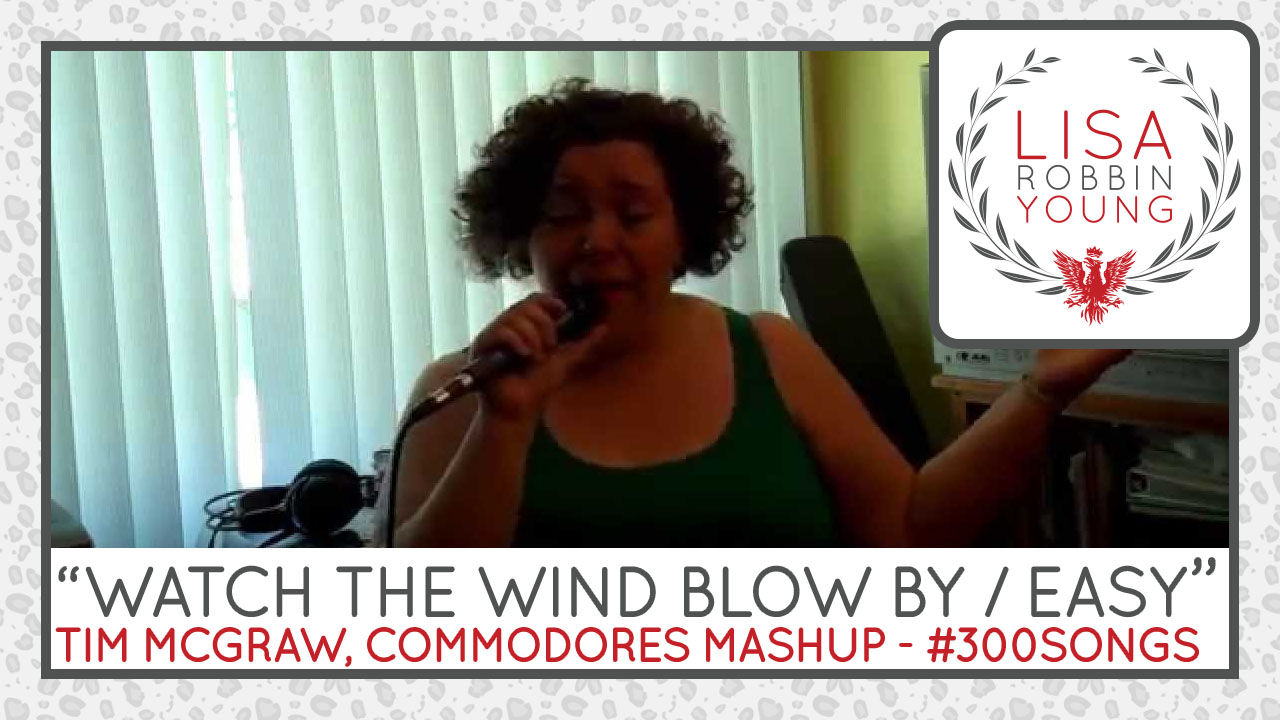
I may be ill this week, but I'm not skipping my weekly video. It's time again for another musical medley mashup!
This time, it's the most well known Sunday song of all time (that classic Commodores hit, "Easy") with a little country thrown in for good measure (that Tim McGraw hit "Watch The Wind Blow By").
Lionel wrote his song as a breakup tune, while the other is just a feel good, kick back love song. Put the two together, and it's a fun little anthem about freedom and doing what you love on your own timetable. Enjoy!

Four ounces.
It's approximately what the iPhone 5 (and a variety of other every day items) weighs.
And since the start of the year, that's my net weight loss for all of 2014.
Four ounces.
For the past two years, I've logged my daily weight (well, as often as possible), high or low, I've watched my body fluctuate around the same 10 pounds. And I'm still 90 pounds away from what most reasonable people would consider a healthy weight for my age and body type.
To an outsider, four ounces is laughable. It's barely a tick on the scale, and yet it's one worth celebrating.
Why?
Because I'm past the half-way point of the year, and I'm still trending downward.
See, I started the year above my normal weight - by about 3.5 pounds. That means, not only have I lost that extra baggage from the holidays (and my birthday party!), it means I've actually made progress toward my ultimate goal.
Plus, in June, I started a 3-day fast, which gave shaved another 4+ pounds off the scale. But I didn't fast for weight reasons (more on that in another post), so when the fast ended, I wasn't surprised to see some of that weight return.
But not those four ounces!
I'm no small woman. I know that. I also know that there are lots of moving parts to my own weight loss journey. Food sensitivities, emotional eating, and other stuff I'm just now discovering. Like my Cinderella complex. For as independent as I am, I keep hoping my Fairy Godmother will come with her magic wand and miraculously flush that 90 pounds off my body, give me a gorgeous dress and send me off to The Ball in my fancy glass slippers.
My coach called me on it this week. When I told her about my resistance to following through on my weight loss goals, she pointed out how good I am at getting things done - when it's a priority for me.
Zorch. She got me. It's fun to talk about what I've done well. It's sexy to talk about plans and goals.
I've worked over the last six months to see that four ounces - but not consistently. I'd put my head down for a while - anywhere from 5-21 days, and then I'd shrink back. I gave my power over to other people and put myself in a position where I didn't have healthy options available to me.
One of the practices I've instituted this year is re-commitment. It's easy to get on board with something, but when you hit The Dip, it's also easy to fall off that bandwagon, and never return. Re-commitment is permission to pick yourself up, dust yourself off, and start over again with what you've said matters.
When the scale starts climbing, or the exercise gets monotonous, it's easy to give up, grab a jar of Nutella, and forget about what really matters.
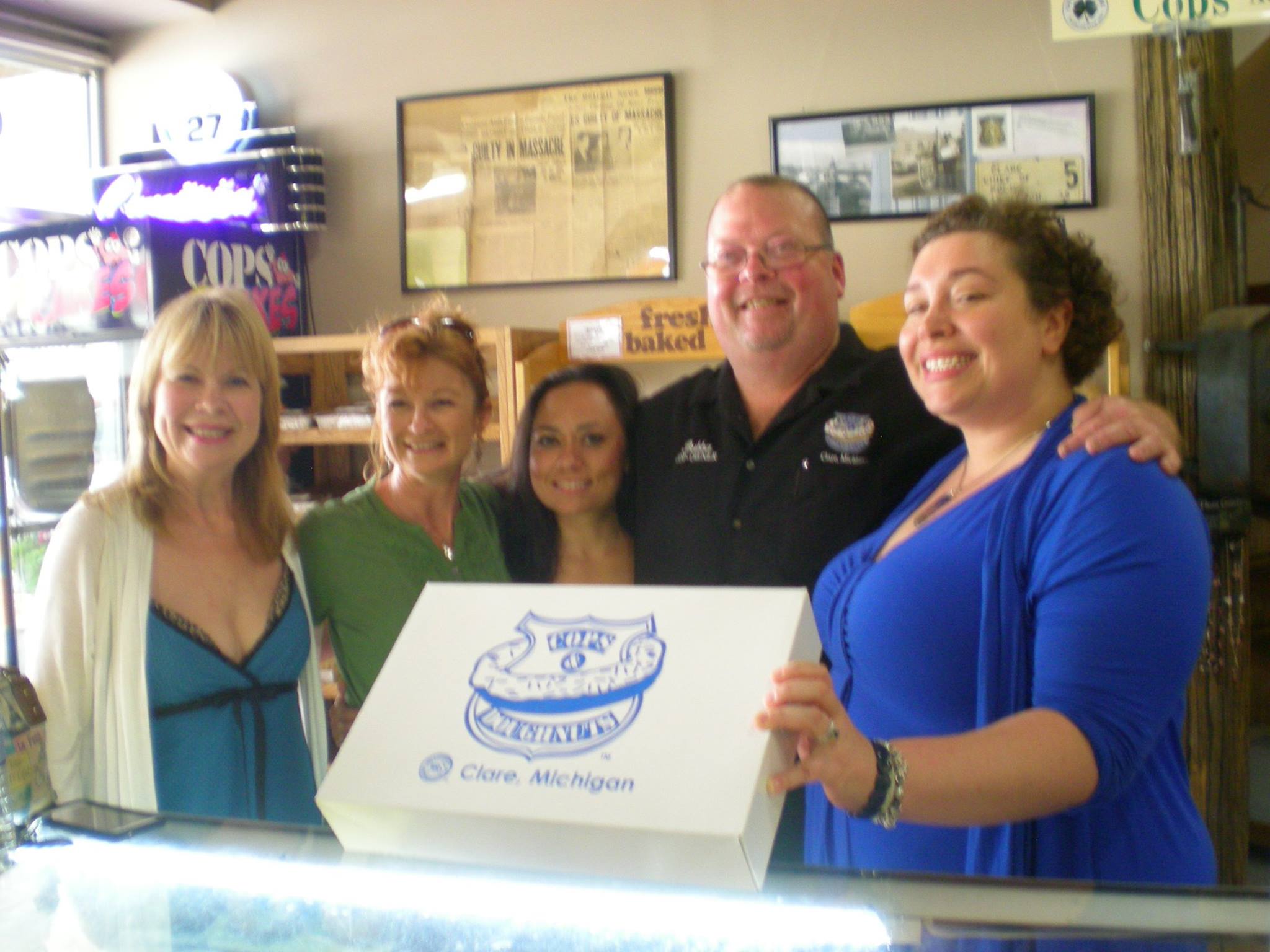
When your friends invite you to go fun places - like Cops & Doughnuts in Clare - it's easy to get lost in a sea of sugary goodness and succumb to the temptation of tasty treats. It's easy to give up on your long term goal for some short term socialization and delicious debauchery.
And in some ways, I did. In others, I didn't. At the end of the trip (which was fabulous, by the way. Did you see my mugshot on Facebook?), I hadn't gained a pound.
Of course, I hadn't lost any, either. But my wins included:

One week later, and I can proudly proclaim I'm down almost 2 pounds from the trip - and then there's those glorious four ounces.
Re-commitment takes guts. It takes courage to say "Hey, I fell down, and I'm not gonna stay down." It takes balls to say "I made a disempowering choice (or series of choices), but I'm going to get back on track."
It takes cojones to say "Yep, I've dropped the ball regularly on this in the past, but now, I'm re-committing, doing some things differently, and we'll see how this time goes."
And it takes supreme levels of courage to do that in the face of well-intentioned friends and even haters, who've seen you fall and don't expect you to ever get back up.
When you do get back up (because you're awesome like that), you celebrate that win. Dance! Sing! Shout! Tell your friends! Paint a mural! Blog about it! Take pictures!
Even if it's "only" four ounces.
Don't focus on the thirty-eight steps you still have to go to see the finish line. Just focus on the step right in front of you. Take THAT step and see what shows up. Then take the next step, and see what shows up.
Rinse and repeat until you see the finish line.
You've got this. I believe in you.
See you there!
"Let me be a lesson to you of what NOT to do."
When you're a celebrity on par with Jonah Hill, that's probably not the ideal phrase to be uttering to your fans. In this case, though, Jonah's sincere apology on The Tonight Show with Jimmy Fallon after being caught on camera making a grossly inappropriate comment has done a lot to mend fences.
[I'll also go on the record as being ignorant, because I didn't realize the comment he made was now considered "a homophobic slur". I grew up hearing that phrase from men and women alike in my neighborhood. Not that it was a pleasant thing to hear, I was just a little surprised that it was a nuanced term.]
From the paparazzi video, it's hard to know exactly what was said, but Jonah indicated he and his family were being verbally attacked on a personal level by the photographer and "was genuinely hurt by this... and in response wanted to hurt him back".
To borrow a line from The Dixie Chicks: "There's your trouble!"
(more…)(Author's note: this post originally appeared in 2011 on one of my old blogs. I've freshened it up a bit for you today.)
One of the things that really annoys me are those folks that say they want change, but don't take action when answers are provided.
It dawned on me why they don't budge.
Picture a huge file room in your brain. There's a file clerk in there, taking in "evidence" for the various files in the "cabinets."
The file clerk never takes a break. He's contstantly filing away bits of information in the various files.
Let's say, in one cabinet, you have two files, one marked "I can't sing", the other marked "I'm a good singer."
Then let's say you're invited to sing in a local Karaoke contest.
Quickly, you run to the file clerk and say "pull out the files to help me decide what to do!"
The file clerk, never missing a beat, pulls out two files. One is significantly larger than the other. The one that says "I can't sing" weighs 100 pounds, while the other has only a few slips of paper inside.
(more…)
Happy Mother's Day! Today, I'mma be chillaxin' with my fam, opening gifts and posting the pics on facebook.
This coming weekend, I'll be doing my first live "solo" performance in about 10 years. I've been in a lot of shows since I got married and had another kid, but I wasn't really the "star" of any of those shows. This weekend, that changes.
On Saturday May 17, I'll be hosting the first in a series of livestream concerts with my band "The Damn Whippersnappers" (get tickets here). They are so named because they're all about half my age, and I could almost be their mom. But don't be fooled, these guys are phenomenal talents. The video below is only after about 15 minutes of rehearsing "I Cain't Say No" from The Rodgers & Hammerstein cowboy classic, "Oklahoma!". You'll notice that Des, our piano player, isn't even using music.
This was our first rehearsal. These guys are THAT good - and we didn't even have our drummer, Joe, with us! This song - and others like it - are just the tip of the iceberg.
While I'm thrilled to be singing some of my favorite tunes - in my own style - I'm more excited that this show isn't just about great music. It's about inspiring people to own their dreams. In addition to the fantastic music, I'll be sharing some personal stories that I've never shared publicly before about my journey to own my dreams and be myself without apologies.
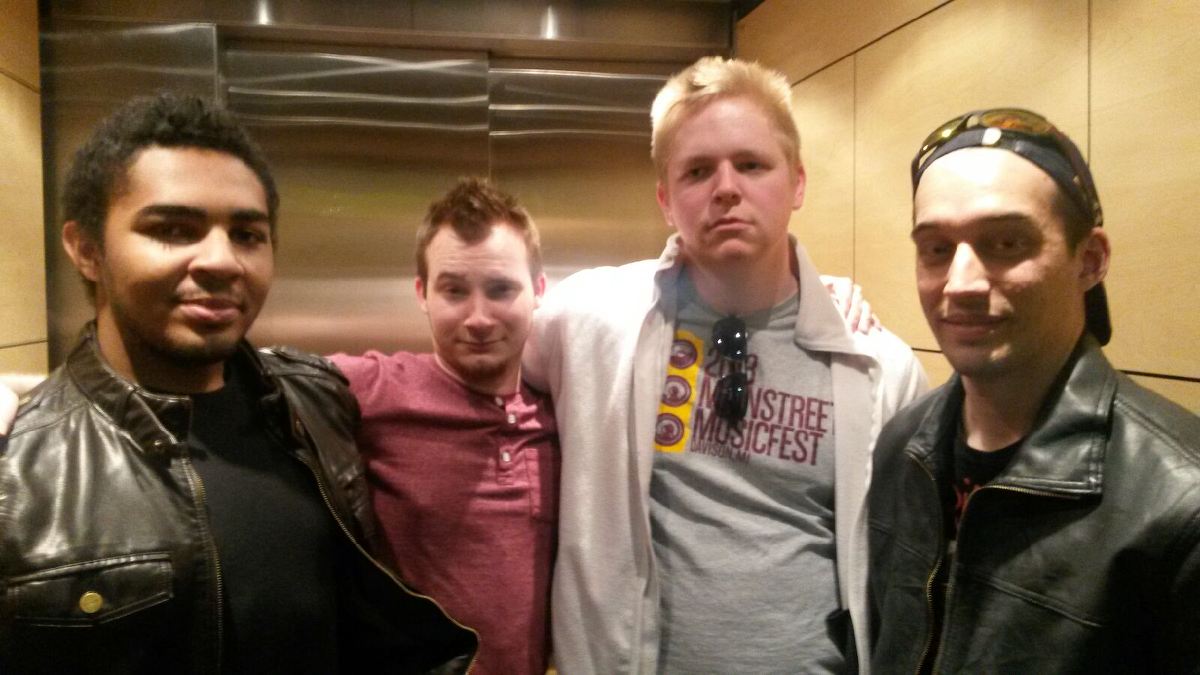 The Damn Whippersnappers left to right: Des, Kris, Joe, Owen.
The Damn Whippersnappers are incredibly talented and dish it out as well as they take it. We have a blast playing together, and they're going to knock your socks off when you hear them play in a performance setting. Heck, they blow me away in rehearsal!
The Damn Whippersnappers have never played to a national (or global) audience before. They all have musical aspirations, and this project is an important opportunity for them to bring their very best to the world. I'm humbled, honored, and amazed at the musical gifts they bring to each rehearsal.
More than that, though, I'm impressed by their level of commitment and professionalism - that's only rivaled by their ability to have fun. We've had some fun outtakes where music just spontaneously shows up - like our "Jazzthoven" moment, or the rehearsal where Michael Jackson's "Thriller" made an impromptu appearance. They are SO much fun to work with, and the best gift I can give them is a huge audience.
A huge audience would be awesome for me, too! This show is truly a dream come true for me. I've always wanted to play tunes I love - and a couple of original tunes I wrote - with a band of my own. To have an audience that hears these songs, these stories, and leaves the show inspired, changed, and better off because of it.
My biggest dream is to help you live yours.
If you're worried about the time, grab a VIP seat and you'll get recorded highlights from the show, so you'll have the best bits to enjoy for years to come. We're hoping to do more shows this summer, and ultimately record the best songs for posterity. In less than a week, it'll be all over, you'll miss out on a huge dose of inspiration and you'll probably kick yourself for years to come.
Save yourself the bruises and get your ticket to the show. And if you're local, we've got house seats, too... but not for long!
He was laying in that hospital bed for several days. Stubborn, cantankerous.
He'd had difficulty breathing when they admitted him, but this eighty year-old man was a fighter, and while he hadn't been eating well for the past few weeks, his strength was contagious. His children, gathered in the room, listened to him tell off the nurses, the doctors, and just about everyone that entered the room.
He talked about how he wasn't done living yet. He just bought a new house. He just celebrated his 80th birthday. He had a grandson he wanted to watch grow up. He was a vigorous "old dude" that didn't give up easily.
His vitals looked good, and no one knew what was causing the trouble. All signs pointed to stress, maybe from making that move, or not getting enough rest.
After a couple of days in the hospital, test results came back.
"You've got a tumor the size of a baseball on your lung. It's causing pressure on your stomach when you eat too much, which, is presumably why you're not eating." the doctor said.
"Cancer?" said the old man. "Well, I guess that's it."
 (more…)
2
It started innocently, as revolutions often do.
I've been working (and re-working) my branding and messaging for the past year, and nothing really seemed to hit the mark. I dove into course after course that offered bits and pieces of what I was hoping would help me craft a clearer direction for me as both an artist and entrepreneur. As usual, some were better than others. While class is still in session in at least one of those programs, I want to update you on a major ah-ha I got from Revolution U579, the brainchild of author and all-round good guy, Jonathan Fields.
It probably sounds better when the Beatles sing it. Jonathan's premise is that instead of creating a business, we can create a commercial revolution that sets us apart in our industry as well as in the minds of our biggest fans. We stand for something bigger than just the "stuff" we sell.
That sounds like a pretty sexy idea to me.
RevU takes you through a series of exercises and prompts to ultimately identify the core idea of your revolution. Jonathan asks what you're moving away from and what will supplant the old dictatorial regime. For me, it boiled down to one simple idea:
As kids, our hearts are full of whimsical fantasies and never-ending stories about our biggest dreams. Firemen, princesses580, becoming a rock star. We keep on dreaming until, one day, something happens, or someone else enters our lives and slowly, those dreams get squashed, squelched, or otherwise relegated to some dusty corner in the attic of our minds581... often to never be revisited again.
 582That's when death begins. It's slow, plodding, and sad. Most of the time, we don't even realize it's happening to us. Someone tells us we're too loud, or too enthusiastic, or a bit obnoxious about our dream, so we turn the volume down. Little by little, (more…)
[Note: I originally wrote this post a few years ago, for my Business Action Hero website. I've refreshed it here because it's still relevant - maybe now more than ever.]
"If you are deliberately trying to create a future that feels safe, you will willfully ignore the future that is likely.”
- Seth Godin

It hit me between the eyes. This painful, jarring sensation at far too early on a Sunday morning - on a holiday weekend no less. This strange need for safety that we all seem to crave - even go out of our way to re-inforce.
Even if the result is less comfortable than pursuing change.
We don't want to rock the boat and get people mad at us. So we stay in the comfort zone. Maybe we push a little here and there, but we're not really making true progress on our own path.
It's here where we have to choose:
Because safety is the ultimate risk. Hoping and praying that nothing will change. Images of ostriches with their heads in the sand come to mind. They can't see that tornado bearing down on them, but golly, they sure feel safe!
[tweet "When it comes to owning your dreams, safety is the ultimate risk."]
Back in 2010, I had the honor of interviewing best-selling author Jonathan Fields about the upside of being an entrepreneur. During that interview, he said something that has stayed with me:
"There is no sideways in life. It's an illusion. There's only up and down. Usually this is the most horrifying scenario of all."
- Jonathan Fields
At first, I didn't want to believe it, but my own experience has validated that there's no standing still. You're either moving forward (as you define it) or you're getting left behind. When I interviewed him again for his second book, "Uncertainty", he offered up this gem:
"If you want to do great things in the world, you have to go to a place where you don't know how it's going to end."
- Jonathan Fields
(You can listen to that interview here.)
Since then, he's launched the Good Life Project and Revolution U, all the while, going where he'd never gone before. It's been fascinating and fun to watch. Clearly, this is a guy that continues to choose "adventure" over "safety".
Safety is your nemesis.
I don't mean you should recklessly throw caution to the wind. We need to be smart about the risks we're taking. Safety and security is one thing most of us crave - it's the foundation of Maslow's Hierarchy of Needs. Without it, we don't feel like we can move forward.
But once we "have" it, we're less likely to move forward because of it. Safety means we don't have to push, strive, or work as hard because, well, we're safe, and nothing's going to happen to us in our safe space, right?
That's a wicked catch-22.
Safety works hard to keep you stuck - just as hard as you work to plow forward in your adventure.
"What if they don't like it?"
"What if they think I'm crazy?"
"What if it flops?"
"What will _____ say?"
"That's too hard/easy/fast/slow/tedious/tiresome/boring/good for me."
"I'd love to but I don't have enough ______ (or I am not ____ enough)."
We judge ourselves so harshly that we don't give ourselves a fighting chance. Let's change that!
Remember: perfection is an illusion. You're already as perfect as you're gonna get. You're human. To expect perfection 100% of the time will only cause more judgement (pain, resentment, frustration). Stuff happens that we call "failure". Big deal. Take a moment to celebrate the wins, stop staring at the door that closed, and look for your next steps.
The nature of a nemesis is that it has an equivalent level of power and sway. Think of The Joker and Batman, Prof. Moriarty and Sherlock Holmes. A nemesis is not easily defeated, but can be thwarted and often contained. It is when you underestimate your nemesis that it takes a foothold, and often wins a battle or two.
Simple, but not easy.
It can be a real challenge to find even a little piece of quiet during the day. But quiet stillness is a daily must-have if you want to stay sane and allow for the blessings that come from intuitive/divine guidance.
This week's Convo features Joanna Weston, a certified Martha Beck trained life coach. We talk about finding stillness, what coaching is (and what it isn't), as well as how she's helping her clients create space for the sacred.
Visit Joanna and learn more about her "Creating Space For The Sacred" program.
The Convo returns! This week's video is a segment from Module One of my Spotlight Sessions program. The program launched today, and it felt like this segment was important to share with you.
Where are you at in your 5 Key Areas? What could you be doing differently?
For some of us, there comes a time in life when it feels like everyone has given up on you.
You might even feel like giving up on yourself.
Don't.
As I write this, I've just returned from spending the day in the hospital with my oldest son. Suffice it to say he's on the brink of giving up on himself. He waffles, as I suspect many teenagers do, between thinking he's the greatest thing since sliced bread and seriously wondering why anyone "wastes" their time with him.
If you've followed me for any length of time, you know the trials (more…)
by Dave Ursillo
[Editor's note: This is Day 21 of the Be Your Own Guru series - and this week we're getting into a lot more "how to". This is Dave's second appearance in the series, and this 20-something whippersnapper's got moxie. Take a cue from Dave today and let your mind flow and find more courage and confidence as you write.]
If you want to become your own guru -- a centered source for self-growth, burgeoning awareness and spiritual expansion -- you must write.
 Now, I should say that I don't throw around must's and should's very often. And in this case the 'must' is only as true as your intrigue by the concept itself: that writing, beyond all other mediums and forms of human communication, is an extraordinary albeit complex means of not just sharing ideas and telling stories, but becoming deeply attuned to one's own truth, beliefs, ideals and aspirations.
I have come to believe that writing is the most divine of art forms. First, writing is a means of understanding: by putting pen to paper, you engage is a reflective (if not confrontational) process of facing your own truth. That means that, in writing, you are bound to encounter every fear and insecurity that plagues your subconscious; every shred of hope and aspiration that makes your heart beat; every touch of pain that has ever scraped your skin and each taste of love that has ever graced your lips.
As you dig, you will learn. And the old, outdated, naive (more…)
[Editor's note: This is day 20 of the Be Your Own Guru series. Teresa is a friend as well as a colleague. She's most effective at providing experiential examples around abundance and feelings of scarcity. I practically begged her to do a video so that you could get a very visual, experiential take on why doing/making"more" isn't always the answer to your "not enough" problem.]
Video Highlights (more…)
[Editor's note: This is Day 16 of the Be Your Own Guru series. This is Melanie's first adventure as a guest contributor to ANY blog, and I'm humbles to share her voice today. Melanie brings the perspective of an artist and an intuitive to this conversation. She reminds us that we all have our own guru inside ourselves - and it's time to let it shine.]
Guru: the act of being a pure, spiritually aligned wise one.

Are you your own guru, or is someone else? Do you feel that this thing they are is separate and nothing to do with your own existence? Are they teachers and gurus who convince you they’ve got it down and are perfect super uber spiritual beings? (& Perhaps you're not?)
Well perhaps they have it down.
BUT
Everyone is unique.
Everyone is diverse.
Everyone has a different life...
Culture...
Take on things...
Approach...
Awareness...
Gifts.
If we are all unique, so are (more…)
[Editor's note: Today is day 13 in the Be Your Own Guru series. I met Tiffany as a contestant on Prosperity's Kitchen. Her mission spoke to me, as I hope it will you. Her commitment to helping young girls take ownership of their dreams is something we can all learn from as we strive to reconnect to our true voice and trust ourselves again.]
Think about a time in your life, around age five or so. Remember how you knew you could do anything you wanted? How you knew you could change the world?
You got excited, you were present, and you didn’t give a crap what anybody else thought.
 But most of us lose it, to some extent, along the way. We let other people dictate what we’ll do with our lives. The kids that grow up and go on to rock the world are the ones that still have that passion as they grow older. They never lost sight of their awesome - or they reclaimed it in adulthood.
How do we reclaim our awesomeness? If we’ve lost it, do we even have time to get it back?
Follow these steps to be present again in your life, and embrace your awesome.
1. Allow yourself to feel pain. You’ve got to make that emotional connection, or it’s just not going to stick. Take some time for yourself one afternoon. Go someplace you really enjoy being and where you can concentrate, and bring a pen and paper with you. Start listing all the things you
wanted to do and be when you were little. List all the dreams you had. Big and small, crazy and doable. You’ll start to notice something: you’re getting a little not-so-fun gut feeling, you’re realizing the pure joy you had when you had those dreams. Determine that from this point forward, you will dream and you will help support others in their dreams. This is your little mourning period.
2. Dream those dreams and be a believer. My daughter and I believe in fairies. Sure, we’ve never actually seen them, but do you know how absolutely exciting things are when you believe in the possibility of them? Life is no longer seen through practical black and white glasses. There’s color and beauty and huge dreams and possibilities. Whatever it takes, dream. Write it down each day. Make a vision board. Keep those dreams alive and start looking at the world from that vantage point.
3. Help someone else dream. This might be your spouse, child, friend, neighbor. It doesn’t matter. When you help someone else dream, you get caught up in those happy feelings. It’s no longer about you, but how you can help that person realize their dream. When you’re in this spot, you start dreaming again yourself.
Technology, books, mentors are very useful, but to get started with anything in your life, you first need to check-in with yourself. You’ll see the untapped potential there.
I’d love to know: what were your childhood dreams? What are your big dreams now? Let me know in the comments below!
_________________________________________________________________________
 Tiffany Manley helps girls realize that they can find all they need to sparkle and shine within themselves. She uses education appreciation, career exploration, & confidence construction to help girls realize they can dream gargantuan dreams - and that they can achieve them. Her website is a collection of resources for boosting self-confidence in young women (and their moms!), homeschooling, and more. You can also connect with Tiffany on twitter.
[Note: This is Day 7 of the Be Your Own Guru blog series. When you've been strapped to baggage for years, sometimes it feels like you'll never shake it Today's post gives you a context and hopefully some inspiration to begin shaking your own baggage.]
I've never been the tiniest supermodel on the runway. I don't think I'm ugly (I've done a lot of work on my self-esteem over the years), and still I recognize that my weight has never been where it's "supposed" to be. As a young child, I was the tallest kid in class. When the boys started passing me, I quickly became the "biggest" kid in other ways. As I got older, I tried lots of things to lose the excess baggage, but it was just exactly that.
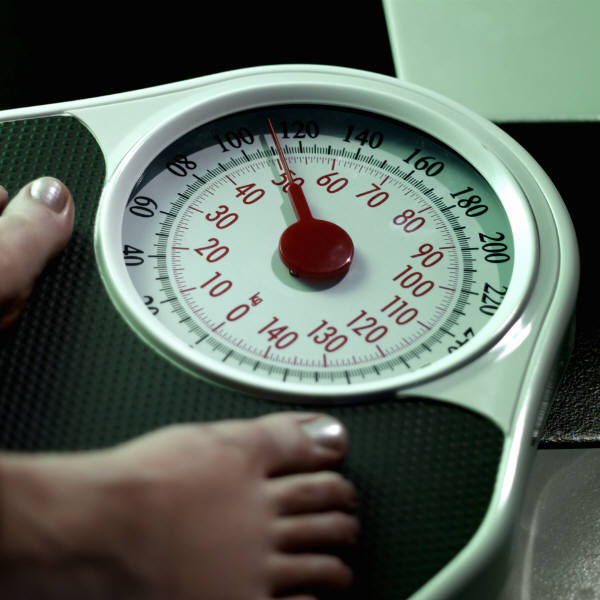 I'm what you might call an "emotional eater" - though I couldn't find a strict definition among the various eating disorder websites that matched how I deal with food. Essentially, when I'm stressed I eat... and eat... and eat. The same for when I'm sad, or even really happy. Instead of people, my emotional extremes have always been met with food of one kind or another. (more…)
[Editor's Note: This is Day Five in the Be Your Own Guru series. Katrina lives in Hadley, MA - just far enough from Boston to not be in Lockdown, but close enough to recognize the danger at her door. She submitted this post before the tragic happenings of the past few days, and it's a fitting reminder that sometimes, the best way to make forward progress is to go backwards.]
We spend so much time in our lives looking forward, moving forward, and dealing with things in front of us. It’s almost as if our bodies are trapped in tunnels - constantly moving forward, unable to shift direction. We forget to check the periphery of our space or of our lives. We lack time for exploration.
Literally, and especially figuratively. All of this "forward motion" leaves us without awareness of so many parts of our lives - both in movement and beyond. We stop rotating our spine to see the world around us. We forget to look up. Our breath gets stuck in our sternum, our oxygen levels decline, and our necks tilt forward. Even our spines compress, as a gradual shrinking forces our bodies into the tunnel of forward movement. (more…)
By Amy Wright
[Editor's Note: This is day four of the Be Your Own Guru series. Amy's got a keen eye when it comes to leveraging your time. She pulls no punches today when she shows you just what you're missing out on by trying to do everything yourself.]
Maybe you’re lying to yourself, following conventional wisdom that says you’re “saving money” or “paying your dues” while you do everything in your business yourself.
It’s all crap.
 Let’s pretend that you’re a life coach of some sort (feel free to insert your profession here). You make roughly $100 hourly while you’re coaching. Let’s also pretend that, like most business owners, you have insane amounts of email, billing, scheduling, phone calls, social media and marketing that you do every week. Let’s say that those administrative tasks take you about 15 hours each week, and that’s only because that’s all the time you have to commit to it.
Now let’s say (more…)
by Stu
[Editor's Note: This is Day Three of the Be Your Own Guru blog series. Stu gives us a clear understanding of What a guru really is - and where to find yours today.]
I never thought much about "Gurus" until I was in school. I had a teacher that would tell us entertaining stories about her retired teacher. They would always end with, what I found to be, the strangest comment: "I'm on a never-ending search to find my new Guru." I would think, Hmmm... being in a school, you would be surrounded by gurus, right?"
I was right... but I found that out later, at the bottom of a rabbit hole.
 Anyone on a path to wisdom, to finding the secrets of life, has come across the notion of a Guru. We inevitably hear about this Guru, that Guru, or even "my" Guru. It conjures up images of a half-in-this-world-half-not levitating apparition. But who is your Guru? ... and what exactly IS a guru?
It's insane to ask that question!
A Guru is someone who has the answers to your questions, possesses a wisdom of unfathomable proportion, one with knowledge not of this earth. Sounds fantastic! But...
Can there possibly be one person with all and total knowledge? Can one person know the right and perfect path for every other person? No matter your belief system, possessing all knowledge = not being human... or being nailed to a cross. So what do they have... these "Gurus"? (more…)