A client came to our session recently, looking a little defeated.
She said she was feeling guilty — guilty for not doing enough in her business since our last session.
She said, “It feels like I’ve just been playing catch-up.”
Then she rattled off what the past few months had looked like:
She got married.
Found out she was pregnant.
Lost the baby.
Started adjusting her mental health meds.
Took on a part-time job to pay down wedding debt.
And that was on top of all the usual “life stuff” we all manage — family, house, errands, obligations.
Still, she said, “My brain keeps telling me that if I just put more time into my business, everything else will get better.”
Then she started listing all the things her brain claimed would “be fixed” if she could just hustle harder.
That’s when I had to stop her.
“Your brain is lying to you,” I said.

There’s a subtle but powerful difference between feeling like you’re behind and actually being behind.
In her case, it wasn’t perception — it was reality.
She’d experienced a cascade of major life changes that completely derailed her rhythm.
No amount of mindset work can erase that truth, and pretending otherwise only adds pressure to an already overloaded system.
So first, we named it.
“You really are playing catch-up,” I told her.
“Your business has taken a backseat to some major life events, and that’s not failure — that’s doing what you can as you are able.”
When we try to bulldoze through those moments, we ignore the natural capacity shifts that life demands. You can’t hold the same pace when your body, mind, and emotions are in flux.
You’re not broken; you’re recalibrating.
That reframe alone softened her whole body. She exhaled — like she finally had permission to stop fighting reality.
Then we tackled the next lie:
The one that says if you just put in more time, everything will get better.
This is the lie our culture rewards — the “just work harder” myth.
It’s baked into entrepreneurship and productivity culture.
But here’s the truth: You don’t know that more effort will fix anything.
You can’t be sure that spending another five, ten, or fifteen hours a week on your business will repair what feels off in your life. That’s an assumption your brain is presenting as fact because it’s trying to regain a sense of control.
Brains love control. They crave certainty. So much so, that they'll go about making up stories that feel like facts. There's research on something called Intolerance of Uncertainty that indicates our brains will go out of the way to avoid any form of uncertainty. Some groups of people have higher IU than others.
So, when uncertainty (chaos) increases, people with higher IU are more likely to experience emotional distress, engage in worry, and seek mental “structures” to reduce ambiguity.
Essentially, your brain tries to make order out of chaos when there may not be any order to find!
One study found that greater perceived control over stressors on a given day predicted higher odds of resolving those stressors later. That suggests that your brain’s craving for control isn’t just psychological fluff - it connects to how effectively you navigate challenges.
So when your life feels chaotic (especially if you have high IU), your mind may start constructing tidy equations:
“If I just do X, Y will improve.”
“If I work harder, I’ll feel better.”
“If I push now, I’ll finally catch up.”
Except… those equations aren't always accurate and rarely hold up in real life.
Instead of arguing with her brain, I invited her to run an experiment.
I said, “Let’s test your brain’s hypothesis.”
Here’s how we designed it:
The goal wasn’t to do more.
The goal was to gather evidence — to prove or disprove her brain’s theory.
That experiment gave her something she hadn’t had in weeks: agency.
Instead of spinning in guilt and overwhelm, she had a structure for clarity. A real, effective structure that wasn't based on some illusion in her mind.
She could now see herself as a scientist studying her own capacity, not a failure scrambling to “catch up.”
Once she stopped trying to fix everything through effort, we turned to the practical side.
She’d taken that part-time job to help pay down debt from the wedding. It made sense — but it also ate into her time and energy.
So we reframed that too.
I invited her to do that math and know when her extra income would pay off the debt completely.
We called it her Freedom Date.
From that moment on, every dollar she earned wasn’t just money.
It was pay toward freedom.
That one change transformed how she viewed her part-time work.
It wasn’t a punishment for falling behind; it was a strategic bridge to the next chapter of her life and work.
If you’re a business owner — especially one juggling multiple roles, responsibilities, and emotional realities — you’ve probably heard your brain whisper the same lies:
“You should be further along.”
“If you just worked harder, you’d feel better.”
“Other people are doing more.”And you’ve probably believed them, at least a little.
But your brain isn’t always a reliable narrator.
It’s wired for efficiency, not accuracy.
When life feels overwhelming, your mind will default to the simplest-seeming solution: do more.
Yet sustainable growth doesn’t come from doing more; it comes from designing your business around your actual capacity, not your idealized one.
It comes from testing what’s true, not assuming it.
That’s what capacity-aligned business design is really about: creating evidence-based clarity around what works for you, in this season of life, with the energy and resources you actually have.
If your brain has been telling you that “more” is the answer, try this instead:
Run your own experiment.
You might discover that less effort leads to more stability, that structure brings freedom, and that your business doesn’t grow when you push harder — it grows when you design for your truth.
Because sometimes the most productive thing you can do is stop believing everything your brain tells you.
Doors to my latest workshop will open soon. Conditions For Success: The 7 Domains That Shape Sustainable Growth is free for all Rising Tide members. Not a member? That's also free (for now). Get signed up and be the first to learn more!
I was sitting at my desk, doing my "usual" routine - the seemingly endless loop of "productive" things like email, writing, researching.
Yet, I couldn't shake this restless thought, pounding in my head:
“Is THIS what it's all come to in 50 years on planet earth?”
This year has been a wild ride, to say the least. Choosing to leave Indiana. Packing everything that would fit in a 5x7 storage pod (and selling or donating everything else) to come about 2,000 miles to the other side of the continent. Navigating my husband's health: 4 heart procedures, a neck injury, a diagnosis of and surgery for thyroid cancer, all in less than 6 months' time.
Oh... and I was supposed to be running my business, too?
Something had to change. I felt like I was living under a rock and I was pretty sure everyone was slowly losing interest in anything I had done or would be doing in the future.
Momentum matters. It's what keeps the "marketing machine" moving along. When you lose momentum, or can't capitalize on it when you've got it, things stall, slow down, and you basically have to start all over again.
Or at least it sure feels that way.

Sure, there's that old saw about how people learn by watching you. So there's some truth to the idea that visibility and influence are connected, but visibility for visibility's sake keeps leaders performing for appearances - draining energy, and losing trust in themselves and their teams.
When people believe visibility is leadership, you see things like:
With the rise of influencer culture, this is an easy trap to fall into.
I've been doing deeper work on what I call your Conditions For Success. It's a topic I've touched on in planning workshops over the years. When you know the conditions that set you up for success, it gives you more power to create or establish those conditions for yourself in an intentional way.
Your Conditions for Success aren’t just about energy, tools, or mindset—they include the world you choose to live and work in. Sometimes, the smartest move isn’t more effort, it’s moving toward contexts that naturally amplify your zone of genius or your ability to find success for yourself or your work.
And while I understand that not everyone has the ability to just up and leave where they are for more favorable conditions, the awareness that a better environment may exist is still important.
But in all my time researching and teaching, I missed something critical: identity alignment—how your internal sense of self matches how you act in work, relationships, and decisions (or doesn't). I'm fixing that now, by looking at why people who don't experience success may actually be grappling with Identity issues that we'd never considered before. Call it my own bias, or ignorance, this new research has helped me see just how important our sense of identity is in our sense of accomplishment and feelings of success.
I've known plenty of folks, and heard a number of stories about people who have wealth, power, prestige - all the outward trappings of success - yet they still feel miserable and unsuccessful. It seems obvious now that these folks were some how out of alignment, but I didn't get that it might be an identity issue. Checking all the boxes of "visible" success doesn't always equate to feeling successful or having an experience of success. I never realized that folks who weren't seeing that visible level of success may also be having a similar struggle.
If you're a leader who's stuck on "performance at all costs" you're running up against energetic, ethical, relational, and operational tensions that are likely to break you. You probably feel like you've got to be "on" all the time - or the house of cards will crumble. The research confirms what we already know: high stakes + high pressure + long hours leads to emotional exhaustion, reduced cognitive clarity, and eventually, burnout.
Let me be clear: wearing masks to get through a tough spot in your life or work can be useful. It's not always safe for you to be yourself, out loud an on purpose - especially if you're in an marginalized identity group.
Putting on a happy face when you are going through it can keep your clients or team members from unnecessary worry. But when your internal sense of self is misaligned with your external actions (especially if it's a chronic, continuous state of affairs), it can lead to:
When you can show up and get to be your full self (warts, sparkles, and all, as I like to say), you’re more likely to experience:
There's a TON of research to support this. Research also shows that being able to be your authentic self helps you lead your team members more effectively. But if you focus too much on short-term gains, and less on the long-term well-being of everyone (you, the team, the company), trust erodes and burnout sets in.
I get it. In our current political climate, there are a lot of short-term, immediate fires that need putting out. It's really hard to think about the long-term effects of anything when federal agents descend on your neighborhood and/or start rounding up folks who look like you.
The key is to strike the balance between your immediate need and the long-term vision you have in mind.
It's easy to forget. I sure did.
I was SO focused on getting moved, getting settled, making sure that my partner was healthy, that I had all I could do to see clients, never mind the other demands of my business! I managed to compete season 8 of Creative Freedom and have been faithful in filming for the reality show I'm working on, but there hasn't been much more than that going on for a while because of, well... (gestures wildly through the air) all this "life" that's been happening!
By tuning into identity alignment, you take a first step toward:
When you're out of alignment, trust drops. One look at the political landscape today and you see what I mean.
In a spring 2025 survey by the Partnership for Public Service, only one-third of Americans (33%) said they trust the federal government. Nearly half (47%) said they do not trust it. Further, two-thirds of Americans (67%) believed the federal government was corrupt, and 61% saw it as wasteful. A May 2024 Pew Research Center poll showed similarly low figures, with only 22% of adults trusting the government to do what is right most of the time. An August 2025 U.S. News & World Report survey found that 85% of Americans believe politicians and community leaders care more about their own power than the public's interest.
An article out of Cambridge revealed that When leaders don’t align what they say (visible leadership) and what they do, perceived authenticity and trust drop. This one from ScienceDirect says that your team (your audience) can smell the hypocrisy a mile away. You're not fooling anyone when you're being performative - at least, not for long.
I'd go a step further to say it's not just with your audience, but also with yourself. This sense of self-betrayal leads you to stop believing yourself, second-guessing yourself, and eventually, just giving up on yourself... and your dreams.
Ouch.
When I'm working with clients, we use a 4-step process:
Inside Conditions for Success, the Core Domain is the one that deals with your sense of purpose and identity. These are the things we have the most control over. Notice I didn't say TOTAL control over. We can decide how we want to show up in the world and who we want to be. We can seek to align our identity and purpose in the world in ways that others have little to no direct control over. But we are interacting in the world, and we have commitments, obligations, and identities that are not always going to be aligned with what predominant culture is asking of us. It's then that we have to make choices about where we will or won't compromise.
Those compromises are what set us up to potentially be out of alignment. Again, that's not to say all compromises are bad or wrong - very often they are survival skills. But it's unsustainable to LIVE that way for very long.
If the decision leads to confusion, skepticism, or dissonance in your relationships or team, it might not be truly aligned - or you may have been wearing a mask for so long that people around you don't know how to deal with this "new you". Here are some questions you can use to prime the pump:
“Does this choice come from my core values, or is it a reaction to others’ expectations?"
If you feel a sense of resistance, that’s probably a signal that something is off.
“Would I stand by this choice if someone asked me why I made it?”
If you find yourself holding back explanation or feeling defensive, that’s a red flag.
“Did I consider diverse perspectives, especially dissenting ones, before deciding?”
If you ignored feedback or dismissed counterarguments lightly, the choice may not be fully authentic.
"Am I aware of my motives, strengths, and limitations in this decision?”
If your decision feels reactive, emotionally heavy, or clouded by fear rather than clarity, that’s a sign to pause.
“Will this decision stand when pressures increase?”
If the decision only “works” now but collapses under stress, it may be more performative than authentic.
“Does this choice build or erode trust in me (internally or among others)?”
Because authentic leaders act in line with who they are, their followers tend to see that consistency, which builds trust (source).
When you're looking more closely at your identity, try these:
Journal Freely: Let thoughts and feelings flow without judgment.
You'll start to reveal patterns in your energy, decisions, and relationships. Over time, it can show where alignment is strong—and where external pressures may be pulling you off-center.
The goal is to keep moving closer to your truth. As I said before, total control - perfection is impossible unless you live in a vacuum. But striving for alignment helps you feel more successful in the moment. As I've said many times before, success is a destination and you're already there!
Conditions For Success is a topic I've touched on in planning workshops over the years. It was inspired by a quote attributed to the Irish poet of the Victorian age, Oscar Wilde:
"Success is a science; if you have the conditions, you get the result."
When I saw it, I felt this desire to prove or disprove the notion.
I mean, really? Can it be THAT easy?
In nature, we can see that some seeds bloom and grow while others - from the same plant - won't. We easily say "well, the conditions weren't right for the seed to grow."
Can this also apply to humans?
Apparently, yes... with an asterisk.
For years, I've led planning workshops and retreats where I've asked clients to consider their conditions for success in a generic way. Maybe they do their best work when they've had a cup of coffee first thing in the morning, or if they get to bed by 9pm and get eight hours of sleep. The focus was on things that were obvious and apparent - things they could control.
The logic being that when you know the conditions that set you up for success, it gives you more power to create or establish those conditions for yourself in an intentional way.
Some clients were able to take this rather generic assessment and run with it, while others still met challenges that made it difficult, if not impossible for them to create conditions that allowed them to thrive.
That's when I started thinking there might be something deeper at play. In our imperfect world, there are downright hostile conditions that make it impossible for almost anyone to thrive. And yet, there are a handful of people who can manage even despite those conditions.
There's a lot of "Darwinian, survival-of-the-fittest-type stuff" that's been baked into our world. Our culture, our communities. It's why we see the deep need for accessibility legislation and other resources to help people that are NOT optimized to function under those conditions to at least get by (or subsist, as is the case in many places where unaffordable housing is the rule, not the exception).
As I became more aware of these systemic issues, I recognized that there are some conditions we can control or influence, and others that we can't - at least, not at the individual level.
Turns out, your Conditions for Success aren’t just about energy, tools, or mindset—they include the world you choose to live and work in. Sometimes, the smartest move isn’t more effort, it’s moving toward contexts that naturally amplify your zone of genius or your ability to find success for yourself or your work.
In my exploration and research, I've identified 7 domains of influence that range from the highly personal (that we can control) to the more global (where we have minimal individual influence).
This helped me see where things were falling short with my clients' Conditions for Success. When you're in a Macro domain where the deck's stacked against you, it's a much harder slog. You can do everything "right" in your Core and Personal Domains, and still struggle more than someone who is operating in a Macro Domain that offers them more favorable conditions.
That's not to say that those personal things don't matter in those cases. In fact, they are even more important! While I'll stop short of saying you can create your own parallel society, I will say that the more aligned you can be with your personal Conditions For Success, the less friction there is for you to deal with. If you don't have to fight your Core or Personal Domains, that's less friction in your day-to-day. If there's less friction, that energy's freed up so that you can use your spoons to deal with the bigger, systemic conditions that are out of alignment.
Will it solve every problem? No. But the goal is minimal friction, not a problem-free existence. I'm not sure anyone can promise that!
Consider where you might be out of alignment. What's one small step you can take this week, today, right now even, to improve your Conditions for Success?
Reinvention isn’t just inevitable—it’s essential. If you’re a creative entrepreneur, you know the drill: what once felt like a perfect fit can suddenly feel like “itchy pants.” (Been there, done that, got the rash.)
In the final episode of Creative Freedom Season 8, I’m sharing 9 clear signs you’ve outgrown your brand—and how to embrace the next phase of your journey, even if it feels scary as hell.
If any of the topics hit home, you’re not alone. I’m right there with you—navigating my own messy, magical reinvention. You’ll hear more about that, too!
Download Season 8 Episode 10 | iTunes | Spotify
In this episode, we are talking about:
Rising Tide community members can login and access your free downloads here.
Not a member yet? It's free! When you register for the Rising Tide, you also get email updates, the FREE learning library, and access to episode transcripts, worksheets, and more!
Special thanks to our Patrons for your continued support.
Theme music: “Big Time” by Ikoliks, licensed from Artlist.io
In a world full of noise, your story is what sets you apart. As a solopreneur, you don’t need a massive marketing budget—you need a brand story that’s real, relatable, and rooted in your unique journey.
In this episode of Creative Freedom, we’ll explore why stories are the heartbeat of your brand, how your personal journey forms the foundation, and why shared values create deeper connections with your audience.
We also include a guide of 16 different stories you can start telling today to build that all-powerful “Know, Like and Trust factor” with your audience.
Your brand story is actually MULTIPLE stories. When you weave them together, you create a narrative that captivates, connects, and inspires action.
Ready to make your mark? Tune in to Season 8, Episode 9 of the Creative Freedom Show and discover how to craft a brand story that’s as unforgettable as you are.
Download Season 8 Episode 9 | iTunes | Spotify
In this episode, we are talking about:
Rising Tide community members can login and access your free downloads here.
Not a member yet? It's free! When you register for the Rising Tide, you also get email updates, the FREE learning library, and access to episode transcripts, worksheets, and more!
Special thanks to our Patrons for your continued support.
Theme music: “Big Time” by Ikoliks, Artlist.io
Ever roll your eyes at the phrase “personal branding”?
You’re not alone. For multi-passionate creatives like us, it can feel like trying to fit a rainbow into a single crayon box. But here’s the thing: your unique blend of passions is exactly what sets you apart.
Here’s the thing: your personal brand isn’t about creating a flawless facade. It’s about embracing who you are—warts, sparkles, and all—and sharing that with the world in a way that resonates with your Raving Fans.
Brands that last aren’t the slickest or the loudest—they’re the ones that keep showing up, being recognizably themselves. That’s how you build trust, loyalty, and a community of Raving Fans.
Check out the full episode and grab your free branding guide in our Rising Tide community.
You know you want to!
Download Season 8 Episode 8 | iTunes | Spotify
In this episode, we are talking about:
Rising Tide community members can login and access your free downloads here.
Not a member yet? It's free! When you register for the Rising Tide, you also get email updates, the FREE learning library, and access to episode transcripts, worksheets, and more!
Special thanks to our Patrons for your continued support.
Theme music: “Big Time” by Ikoliks, Artlist.io
In a world that often demands we “pick one thing,” multi-passionate entrepreneurs and Fusion creatives can feel out of place. But what if your diverse interests are your greatest asset?
In this episode, I’m sharing how to embrace your multi-passionate nature and turn your many talents into a thriving business - plus, the inspiring story of someone who built her empire by refusing to be put in a box.
Together, we’ll explore practical strategies for integrating your passions, balancing priorities, and weaving your unique story into your brand. If you’ve ever felt “too much” for the business world, this episode is your permission slip to shine.
Download Season 8 Episode 7 | iTunes | Spotify
In this episode, we are talking about:
Rising Tide community members can login and access your free downloads here.
Not a member yet? It's free! When you register for the Rising Tide, you also get email updates, the FREE learning library, and access to episode transcripts, worksheets, and more!
Special thanks to our Patrons for your continued support.
Theme music: “Big Time” by Ikoliks, Artlist.io
The music business has changed a lot in the last few years. Music technology has opened up so many opportunities for independent artists, introducing a whole new breed of overnight success stories who've had a video go viral... and then suddenly, they're the next big thing.
But for every one of these "overnight" sensations, there are hundreds of thousands of musicians trying to build a following online (or offline) - to become a professional musician that makes a steady living from performing this music that they love.
There's a lot of competition out there because the technology has lowered the barriers to entry, opened up the playing field, and just about anybody with an internet connection and a halfway decent audio recorder can get seen and heard, which is both bad and good.
Bree Noble, the founder of the Female Entrepreneur Musician Podcast and Profitable Musician, talks about her entire career - from the early stages of being in corporate to moving into becoming a musician full time… and the “profit path” that she developed to help you do the same.
Download Season 8 Episode 6 | iTunes | Spotify
In this episode, we are talking about:
Rising Tide community members can login and access your free downloads here.
Not a member yet? It's free! When you register for the Rising Tide, you also get email updates, the FREE learning library, and access to episode transcripts, worksheets, and more!
Special thanks to our Patrons for your continued support.
Theme music: “Big Time” by Ikoliks, Artlist.io
In this noisy and competitive business world, it's easy to get caught up in comparing ourselves to others and trying to fit into the mold of what others think we should be - or even what WE think we “should” be. But that's a recipe for frustration and mediocrity. (Cue the sad trombone)
Instead, we want to use our quirks - our STRENGTHS - to our advantage. They are really your secret weapon or your special sauce in both life and work! So today, we’re going to unpack exactly HOW to put them to work for you. How can you better leverage your strengths to grow your business? That’s what we’re here to discover.
Download Season 8 Episode 5 | iTunes | Spotify
In this episode, we are talking about:
Rising Tide community members can login and access your free downloads here.
Not a member yet? It's free! When you register for the Rising Tide, you also get email updates, the FREE learning library, and access to episode transcripts, worksheets, and more!
Special thanks to our Patrons for your continued support.
Theme music: “Big Time” by Ikoliks, Artlist.io
In a world filled with noise and competition, standing out can be a challenge, and it’s particularly daunting if you’re a multi-passionate entrepreneur or Fusion creative. You’re so good at so many things that defining a clear niche or brand identity can be hard.
But what may look like a challenge is exactly what you need in order to captivate the attention of your Raving Fans. In this episode, I'm sharing three secrets that you can start implementing TODAY to break out of the sea of sameness, along with the story of someone who defied expectations, became a force for good in the world, and is a celebrity in their niche.
Together, we’ll discover the keys to standing out in a noisy market and unlocking more freedom and ease in your business.
Download Season 8 Episode 4 | iTunes | Spotify
In this episode, we are talking about:
Rising Tide community members can login and access your free downloads here.
Not a member yet? It's free! When you register for the Rising Tide, you also get email updates, the FREE learning library, and access to episode transcripts, worksheets, and more!
Special thanks to our Patrons for your continued support.
Theme music: “Big Time” by Ikoliks, Artlist.io
In Heart-Centered Business: Healing from toxic business culture so your small business can thrive, Sufi spiritual business teacher Mark Silver, M.Div. speaks to those who hate the toxic way business has developed, and want an approach to business that is as nourishing as it is powerful.
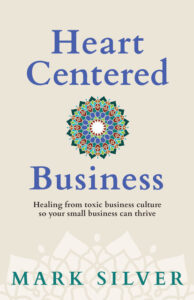
The effects of global business have brought devastation and injustice that no one wants. Instead, we yearn for beauty and real vibrancy in the world around us, and healthy heart-centered business must be part of the healing.
This book is a guide to doing business, your business, in a truly spirit-centered way. We need to, and can, realize the truth that, as Mark says, every act of business can be an act of love.
Rising Tide community members can login and access your free downloads here.
Not a member yet? It's free! When you register for the Rising Tide, you also get email updates, the FREE learning library, and access to episode transcripts, worksheets, and more!
Special thanks to our Patrons for your continued support.
Theme music: “Big Time” by Ikoliks, Artlist.io
Let's talk about something we all know deep down: there's no one-size-fits-all approach to success in business. It's all about finding YOUR way and embracing your unique creative spirit (within legal boundaries, of course!). But hey, let's be real; carving out your own path can be a bit challenging, especially if you're a Fusion creative like me. No matter where you fall on the creative spectrum, if you're feeling a little lost on your journey to success, I've got you covered!
In this episode, I'm sharing five exercises that will bring clarity to your life and business. Trust me; they're game-changers! Tune in now to discover your path to success and get ready to unleash your creative freedom!
In this episode, we are talking about:
Rising Tide community members can login and access your free downloads here.
Not a member yet? It's free! When you register for the Rising Tide, you also get email updates, the FREE learning library, and access to episode transcripts, worksheets, and more!
Special thanks to our Patrons for your continued support.
Theme music: “Big Time” by Ikoliks, Artlist.io
This is the LAST episode of season 6! I am ready to CELEBRATE with this week's episode where we dig into the questions I recommend asking yourself before you decide you are ready for coaching.
I have been a business coach for - coming up on - 20 years now. I helped thousands of people find their right way to making a profitable, sustainable business. In that time, I’ve learned the difference between coaching, consulting, and mentoring. I can be any or all of those things, depending on what my client needs.
I’ve also found that folks don’t always know what they need. They’ve hit a wall, they’re feeling stuck, and they’ve heard that somebody hired a so-called "business coach" and that seemed to help them. So, that’s what they look for.
Not so fast! Coaching - for Instagram or anywhere else - is not a magic pill that cures all ills. In fact, many of my clients will recount the times they’ve sat with me and cried or told me to eff-the-eff-off because they didn’t like the hard truth they were facing in the moment. Truths that they ultimately HAD to face if they wanted to move forward.
You’ve got to be ready for coaching. If you’re still standing around wanting someone to tell you what to do or be your boss, then that’s not what coaches do. In order to know whether or not a business coach is your right next step, these four things must be true:
Think about these four things. Listen to the episode. And then, reach out and let me know if you think a business coach is the right next step for your business.
Inside this episode, we're talking about:
Rising Tide community members can login and access your free downloads here.
Not a member yet? It's free! When you register for the Rising Tide, you also get email updates, the FREE learning library, and access to episode transcripts, worksheets, and more!
Special thanks to our Patrons for your continued support.
Theme music: “Welcome to the Show” by Kevin MacLeod, incompetech.com. Music licensed under creativecommons.org/licenses/by/3.0/
Our money stories shape our choices, which shape our money stories.
While it’s easy to look outside yourself at what other people are doing and make judgements about “good” or “bad”, “right” or “wrong”. I want to invite you to hold a mirror up and see if your own money choices or stories might be harboring a few blocks of your own. Because YOU are the only person you can do anything about them anyway.
Today, I’m sharing the biggest money blocks for each creative type. Because, while we’re all unique, we do carry a few patterns in our types that can put up BIG roadblocks to our business growth and success. While each type may have symptoms that look the same (feeling stuck, hitting a plateau), the thoughts that are at the root of these issues are often different, depending on your type.
If you haven’t already taken our free quiz to discover your creative type, you’ll want to do that in order to know your type. Head on over to LisaRobbinYoung.com/quiz to get your results.
There’s no opt-in required to get your results but if you DO opt in, you get a guide that unpacks all the different creative types so that you can learn about more than just your own creative type.
After you get your result, or before, tune in below to learn how to adjust your money choices.
Inside this episode, we're talking about:
Rising Tide community members can login and access your free downloads here.
Not a member yet? It's free! When you register for the Rising Tide, you also get email updates, the FREE learning library, and access to episode transcripts, worksheets, and more!
Special thanks to our Patrons for your continued support.
Theme music: “Welcome to the Show” by Kevin MacLeod, incompetech.com. Music licensed under creativecommons.org/licenses/by/3.0/
There comes a time - or maybe even multiple times - in your business when you’re done with the income you’re currently making and it’s time for more. Most of the time, you don’t want to be DOING more to get there. That’s when you need to strategically consider how to increase your profits - your profitability, the money that stays inside the business - to achieve the freedom goals that you have.
That profitability begets sustainability. Because that means you can pay yourself more. You can pay your team more and still have money in the business for growth.
There are lots of potential ways to do that, but today I’m focusing on the 3 things that most directly impact your profitability and help you experience true creative freedom.
Inside this episode, we're talking about:
Rising Tide community members can login and access your free downloads here.
Not a member yet? It's free! When you register for the Rising Tide, you also get email updates, the FREE learning library, and access to episode transcripts, worksheets, and more!
Special thanks to our Patrons for your continued support.
Theme music: “Welcome to the Show” by Kevin MacLeod, incompetech.com. Music licensed under creativecommons.org/licenses/by/3.0/
In 2007, Consumer Reports did a taste test with McDonald’s coffee and Starbucks. The Consumer Reports Coffee Taste Test showed that McDonald’s plain black coffee edged out Starbucks and other fast food chains and had the best tasting black coffee of them all.
Then in 2009, a more informal Starbuck’s taste test was held to look at some of the flavored coffees. This was a bit less scientific, but still a blind taste test. The result? McDonald’s wins again!
But here’s the point I thought was interesting: everyone still preferred the Starbucks environment, even though the McDonald’s coffee is better.
McDonald’s charges less for their comparably - and purportedly better - flavored coffees than the Seattle coffee giant, but people happily pay more because of the experience of shopping at Starbucks. This is a great illustration of how pricing is subjective and based, at least in part, on the story you’re trying to tell.
There are also a lot of “feels” that come up around pricing. Today, I want to tackle one of the most common concerns I hear from entrepreneurs with an existing book of business: How do I raise my rates so that I don’t lose my current clients or come off looking like I’m only in it for the money?
Listen in below!
Inside this episode, we're talking about:
Rising Tide community members can login and access your free downloads here.
Not a member yet? It's free! When you register for the Rising Tide, you also get email updates, the FREE learning library, and access to episode transcripts, worksheets, and more!
Special thanks to our Patrons for your continued support.
Theme music: “Welcome to the Show” by Kevin MacLeod, incompetech.com. Music licensed under creativecommons.org/licenses/by/3.0/
I have an Incubator client right now that’s working on building their business, and they don’t have a large audience. Between fits of frustration around wanting to go faster and inspired ideas that need execution, we’ve been having conversations around who they serve and how to talk to them to stimulate sales without coming off as sleazy. As nice as it would be to just jump from a great business idea to loads of sales, it just very rarely works that way.
Could she walk up to every person she meets, introduce herself and offer her services? Sure. But she’d likely end up with more folks running screaming for the hills than she would new customers.
There’s probably nothing people hate more than to be sold to. And maybe you’re even thinking to yourself:
"I don’t want to be that slick, sleazy salesperson and have to push, push, push all the time just to keep my nose above water."
What can you do? Listen in below to find out!
Inside this episode, we're talking about:
Rising Tide community members can login and access your free downloads here.
Not a member yet? It's free! When you register for the Rising Tide, you also get email updates, the FREE learning library, and access to episode transcripts, worksheets, and more!
Special thanks to our Patrons for your continued support.
Theme music: “Welcome to the Show” by Kevin MacLeod, incompetech.com. Music licensed under creativecommons.org/licenses/by/3.0/
In our last episode we talked about how to find folks and I intimated a little bit about the need to talk TO them, not AT them. But we didn’t get into specifics of how to do that - what to say, etc.
I don’t want to leave you hanging. So, that’s what this episode is all about. This episode will be useful regardless of how well connected you are with this audience. Whether you’re just getting started with them or you’ve got clients, or the start of an audience but not many Raving Fans, I’m going to save you the two by four to the head.
Because it’s not enough to know who they are, you’ve also got to reach and connect with - engage with - them. Listen to the show below to become "coffee worthy".
Inside this episode, we're talking about:
Rising Tide community members can login and access your free downloads here.
Not a member yet? It's free! When you register for the Rising Tide, you also get email updates, the FREE learning library, and access to episode transcripts, worksheets, and more!
Special thanks to our Patrons for your continued support.
Theme music: “Welcome to the Show” by Kevin MacLeod, incompetech.com. Music licensed under creativecommons.org/licenses/by/3.0/
A moment of truth telling: Finding your audience is actually more about them finding you. Being a lighthouse, in many respects, for your right people who need a safe harbor from the storms of their world.
What kind of a light are you shining out there? Where does that light come from?
There was a time in the big bad world of business, where you could pretty much sell anything and people would buy it. You didn’t need to persuade people about the benefits of choosing you because you were the only game in town. They either bought what you were selling or they went without. Period.
But buyers are smarter, do more research, and have a LOT more options at their fingertips. It takes more than just “buy my stuff, it’s great” to encourage a buyer to say yes.
But even in a world where a whole lot of people MIGHT say yes to your offer, you need to practice a little discernment.
Today, I want you to understand the principles behind finding your target audience - how to determine if you’re talking to the right people in the first place, and if not, what may need to shift so that you can actually FIND these folks.
Inside this episode, we're talking about:
Rising Tide community members can login and access your free downloads here.
Not a member yet? It's free! When you register for the Rising Tide, you also get email updates, the FREE learning library, and access to episode transcripts, worksheets, and more!
Special thanks to our Patrons for your continued support.
Theme music: “Welcome to the Show” by Kevin MacLeod, incompetech.com. Music licensed under creativecommons.org/licenses/by/3.0/
Pivot! It was one of the biggest buzzwords of 2020, thanks to the pandemic that shall not be named putting a monkey wrench into EVERYONE’S plans!
Not to brag, but I’ve been pivoting since before it was cool. I’ve probably done the pivot 5 or 10 times in my nearly 30 years online. I mean, nothing lasts forever and the only constant is change, right?
Last episode I talked about how Taylor Swift pivoted to a new music genre...and she’s not the only one. Fine artist Henri Matisse and lots of companies have started down one path, decided it’s not working for them (or has stopped working for them), and turned to something new.
So yes, pivots are a thing, and they absolutely CAN be done successfully, but how do you know if it is, in fact, time to pivot? Listen in to find out today.
Inside this episode, we're talking about:
Rising Tide community members can login and access your free downloads here.
Not a member yet? It's free! When you register for the Rising Tide, you also get email updates, the FREE learning library, and access to episode transcripts, worksheets, and more!
Special thanks to our Patrons for your continued support.
Theme music: “Welcome to the Show” by Kevin MacLeod, incompetech.com. Music licensed under creativecommons.org/licenses/by/3.0/