She was sprawled out on the sidewalk, screaming bloody murder. The bike - a garage sale special (meaning there was no padding on the all-metal seat) - was still somehow attached to her.
She and I lived close to each other, and were about the same age, but I had no real interest in bikes when I was six. I wanted her to play dolls with me, but no. She was a tomboy through and through. And she really wanted to learn how to ride a bike.
Her parents bought her this scrap metal bike with what little money they had, took it home, cleaned it up with a bit of red spray paint, and after letting it dry, gave it to her.
She wasted no time. She hopped on (no training wheels), and took off down the neighborhood. I lived at the end of the street, so most of the kids used our house as the turnaround. I waited for her there.
She was no stranger to bikes. Most of the neighborhood kids had them and let her ride when parents weren't looking. Some with training wheels, some without. When this little girl climbed on her very own bike, she was a natural.
Until...
Still straddling the metal heap of a bicycle, but flat on her back, the girl was screaming bloody murder. Apparently, she hit a sidewalk bump where the concrete was broken up and the metal seat jammed her... in the... well, you know.
She lost control, the bike fell over, and she was sort of tangled up in it.
So much screaming. So much crying. I kept looking for blood, but didn't see any. Maybe she broke her leg or something. I thought for sure her folks were going to end up taking her to the hospital. Even her brother - who normally ignored his baby sister - set out to figure out if she was okay... or at least get the kid to stop crying and screaming.
Once they calmed her down, they realized that beyond the need for a padded seat, the only thing that was really bruised was her pride. So her father, in all his infinite wisdom, encouraged her to "stop crying like a baby and get back on the damn bike."
The little girl obediently climbed back on - after setting the bike back up and giving it a firm kick to show it who was boss. This time, instead of riding up and down the street, she practiced in my gravel driveway. She practiced turning, braking, and navigating the bike on "a bumpy road" as she called it. She even managed to teach herself to ride "standing up" so that the seat didn't get the best of her again.
She fell a few more times (gravel wipeouts - OUCH!), but under the watchful eye of her parents, she managed to get back up without shedding a single tear.
By dinnertime, she was racing one of the neighbor kids, giggling and playing as if she was a cycling pro.
Eat your heart out, Lance Armstrong!
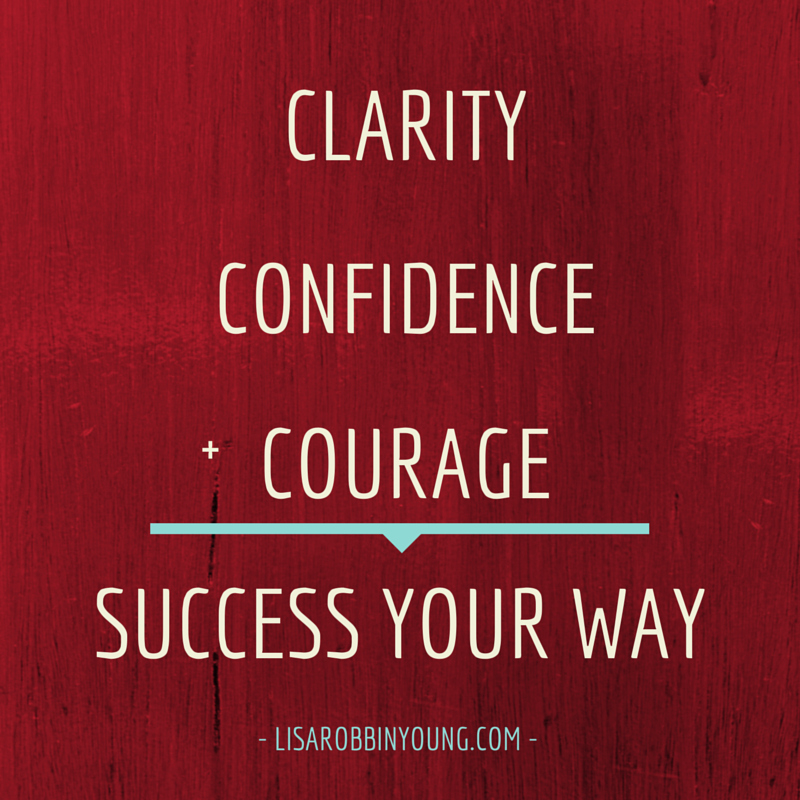
A colleague of mine once shared a similar equation with me. She was using it to talk about the power of irresistible presence, and how, when these three elements are combined, you are more able to show up in a magnetic and authentic way.
The more I looked at her equation, the more truth I saw.
Success in anything can ONLY come when we have these three elements in proper measure. Without all three, you'll fall short in some way. Don't believe me? Let's look and see:
One of the most important things I've ever done for myself was develop The PEACE System. It helps me have crystal clarity on my priorities for any given day. Coupled with my Dreamblazing program, I've created my perfect solution to knowing exactly what matters most in any given moment. I have total CLARITY on what to do, and why.
After she fell, that little girl had clarity that her bike had a few issues, and that she needed more practice riding with it before she took it out onto the broken sidewalks of our ghetto neighborhood.
But clarity alone only helps you see the bicycle. It doesn't give you insight into how to actually ride it. Clarity says "I need to learn how to ride the bike." Confidence says "This is how one rides a bike."
Big difference.
You know what that means right? No? Here's the Urban Dictionary definition. CONFIDENCE comes from this space of knowing. When you've got clarity, you can make some decisions about what to do, and what not to do. You can even help other people make decisions based on what you know. As a coach, I am lucky enough to work with clients that need to make changes in their lives and business, but if all I did was spout off my knowledge, or tell them what to do, I'd be nothing more than a "sexual intellectual" that no one wants to work with. What's more, if I left my clients in that space, they'd never make any forward progress.
Confidence is the by-product of practice. Practice can only happen in a safe space. Like learning to ride a bike, there's always a fear of falling down, but training wheels and a steady hand on the back of the seat can make all the difference between riding down the street and never getting on the bike in the first place.
Confidence is built when the action you take is positively reinforced. When that little girl got back up on the bike, her parents stood by (safe space) and encouraged her progress. When her progress was reinforced, it gave her the confidence to know that she could ride this bike.
That little girl knew she could ride a bike - she'd done it before. She just needed to figure out how to handle the particular quirks of this bike. She quickly realized the seat would be an issue, so she needed to learn how to ride standing up. That would pretty much solve her "cushion" problem.
But knowing is only half the battle (GI Joe!)... or in this case a third of the battle. Because all the clarity & confidence in the world won't help you if you don't have the courage to do something with what you know.
For most people, if you've got courage, you've got confidence. COURAGE is the active piece to the "knowing" of Confidence. But sadly, people act with "courageous stupidity" all the time. You hear stories about someone accidentally setting their house on fire because they tried to kill a spider with a torch. Crazed drivers struck by road rage who speed up as someone tries to pass them - only to find out that person was a cop.
We all have something we're fighting for, something we believe in, something that in our bones we know to be true (that we'll defend to the bitter end). But without clarity (of what an appropriate response would be, for example), our courageous acts come off just plain arrogant or stupid.
This little girl could have thrown the bike to the ground in disgust and refused to ride it. After all, she "knew" she could ride a bike, and this one wasn't behaving properly. But because she also had clarity that this was the only bike her parents could afford, if she really wanted her very own bike to ride, she'd have to act differently.
Clarity says "I need to learn how to ride the bike." Confidence says "This is how one rides a bike." Courage says "This is me, riding this damn bike."
I'm leading a free workshop on Saturday March 14, 2015 to help you have more clarity, confidence, and courage in your life and business. If you're ready to learn how to create your own safe space to develop confidence and courage in your life and work, I hope you'll join me for this special, one-time-0nly workshop. You can learn more and register here. I'll also be sharing more about my Creative Freedom Apprenticeship and telling you how you could earn a scholarship to attend at no cost to you.
Every hero has values to which he clings. Superman had "truth, justice, and the American way" while MacGyver believed his mind was more effective than guns for solving problems. Some values are more honorable than others, but you can't be a hero without values worth dying for.
 Not a concept that's widely embraced in the business world. Not too many corporations that I'm aware of would lay down their lives for the work they do (or the workers that do it). The very nature of a corporation is to generate a profit for shareholders - and sometimes doing what's right may mean NOT generating profit for shareholders.
So is it possible to be heroic in business? Absolutely. Because doing the right thing is always in style, even if the shareholders disagree.
Men and women of action always have a choice. We can choose to value principles over profit, people above things, and not be a martyr in the process. We can do what's right, knowing that the long-term reward is far greater.
And no, I'm not talking about "eternal rewards" or heaven here. I'm talking about the tough decision to close a business segment that's losing money, and shifting those people and resources into areas where better work can be done. I'm talking about the tough decision to NOT fire good people if they can be used elsewhere, even if it means a short term cashflow pinch (not crisis, mind you. That's different.).
I'm talking about having values worth dying for.
When "the world" tells you how things "should" be, even thought your gut tells you otherwise, and your values guide you in a different direction, do you cave? Or do you choose to be the action hero?
Will you take a short term beating for a long term gain?
So many people will do anything to avoid even the slightest amount of pain. Yet, pain is a part of growth. Discomfort & uncertainty abound in entrepreneurial circles. You can't avoid it if you want to grow. And yet, time and again I see people take what appears to be an "easy" way out, only to find themselves stuck in "the fire swamp" because they didn't trust their gut.
Remember, heroes are not above getting bloodied up a bit - so long as the fight is in alignment with their values.
As you examine your own business, think about these questions:
If you can't answer these questions, you've got your work cut out for you. It would be nice if you could stop and get absolute clarity on this before you do anything else. However, I recognize that's not always practical.
Remember, this isn't about issuing a "vision statement" or some other piece of equally benign paper. Show, don't tell. "Be the change you want to see" and all that.
Take a few minutes to share with me (via email or as a comment on this post) any/all of the following:
A. What do YOU value in life and business?
B. What did you learn when you asked others what they think you value?
C. Based on what you know about me, what do you think I value?
I'm sharing my results in a later post. I'm looking forward to seeing what happens!
Anyone can be a hero for a day.
An above-and-beyond gesture. An extra dose of good-will. Being in the right place at the right time.
Anyone can have a day like that, do something awesome, and be a hero for a day or two.
True heroes walk the walk, even when it's difficult. They do the right thing when there's NOT a profit to be made. Sometimes, they do the right thing when the wrong thing appears to be far more profitable in the moment.
They're concerned about eternity, not about right now.
When I say "eternity," I'm not necessarily talking "heaven or hell", religion, or anything of that sort.
I'm talking about being able to wake up each morning, look yourself in the eye, and know that you've made the most of yesterday, with a commitment to doing your darnedest to make today even better.
Action heroes get banged up, scratched and dented, and take a few beatings from time to time. They get a little dirty, bloodied up, and still they rise, because they know it's not about the short-term gain, it's about the end game.
Who's going to be at your funeral? What are they going to say about you? How will you be remembered? Will you be remembered at all?
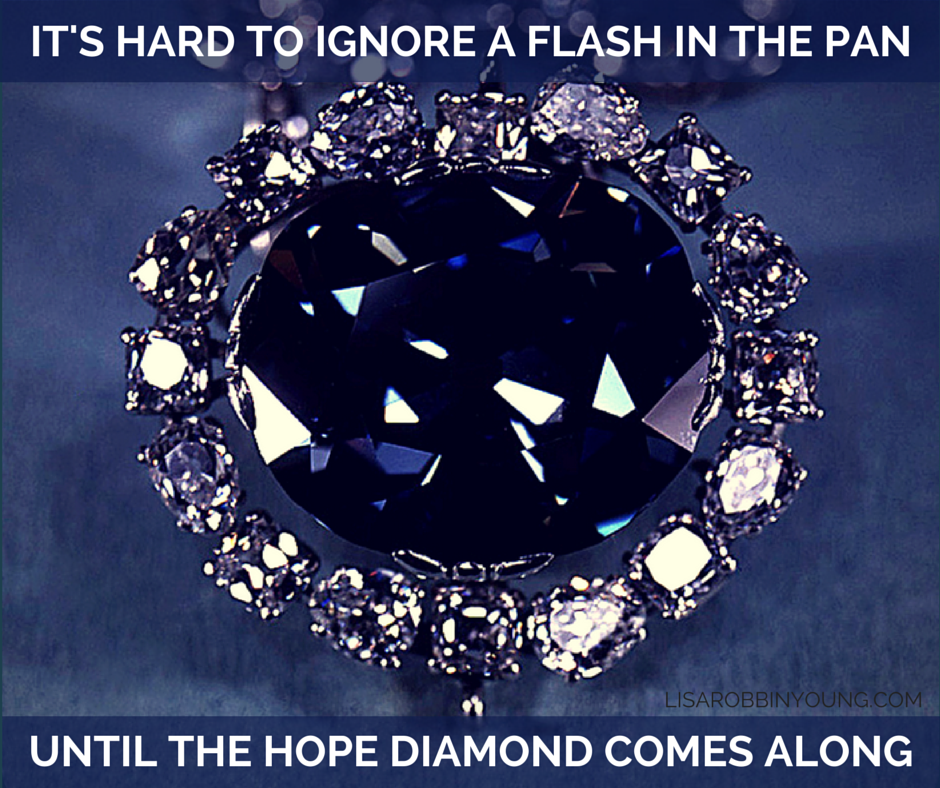
Sarah Robinson once wrote about what I call the "Hero of Now," the hero of right this moment. The flash in the pan that looks good on paper, seems to be on a hot streak, or appears to have some of the success you desire. This "flash in the pan" can be pretty easy on the eyes. In fact, sometimes we get mesmerized and then we're stunned when that flash turns out to be of little substance, or simply doesn't have the long-term value that makes them a true hero.
I've been there at least eleventy-jillion times in my own life and career (give or take a few jillion). You see someone that's doing their thing and it's hard NOT to notice. In fact, our brains are hard-wired to pay attention to something in which we're interested. The Reticular Activating System (RAS) in your brain is what causes you to notice every silver Jeep Liberty on the road after you decide that's the kind of car you want to buy next... or ignore the voice of every other screaming kid at the McDonald's playland except yours.
Here's an excerpt from what Sarah noted:
I thought part of a leader’s job was to search for unnoticed diamonds in the rough and start to polish them. I thought true leaders never, ever forgot that they were once unnoticed and that someone reached out to help them become who they are.
Apparently I was wrong.
When I see “leaders” huddled together in a self-congratulatory group (I’ve even heard of an event where the leaders sit in a roped off area, inaccessible to the “common” attendees), it makes me question any aspiration I might have to someday be among them.
I know not all experts and leaders are like this and that gives me the hope I need to keep going.
Speaking as the kid in high school that was the music geek with TWO 6th hour classes my senior year, I know the uncool factor, and wore it well for a while.
Just like in high school, those would-be heroes are quite often real-life zeros once the playing field is leveled.
I can't tell you how many kids from my past - that thought I was uncool, unworthy, un____, now approach me with some kind of "wow! Look at you!" amazement.
They know I've "arrived" in a way they never did. But I'm still striving, and they're stuck wearing the blue apron at the local big box store.
So too are many of those internet flashes in the pan that were once riding high now facing their own issues: health issues, family troubles, bankruptcies, divorces, lawsuits, and other not so pretty consequences of doing their thing for momentary success, instead of building for the long term.
People talk. Your audience sees you even if they don't always say so. Today's hero, if they continue to demonstrate heroic qualities, will continue to be a hero decades from now. If today's hero runs off at the mouth and ignores the music geeks too often, they end up fat, balding, and with no prospects...
Not that I speak from experience or anything (hee hee).
Think about music: Billy Joel is a legend. Starland Vocal Band? Not so much. Their one hit, "Afternoon Delight," was the biggest-selling single of 1976. They even won a Grammy, but by 1981, they had called it quits.
Do you want to be a one-hit wonder or a lifetime achievement award winner? Both of them may win a Grammy, but who will be remembered for their enduring contribution?
It's hard to ignore a flash in the pan... until the Hope Diamond comes along. (Tweet This)
When you look at your business, your life, are you building something that lasts? Are you a true hero to the folks you serve, the colleagues that seek you out? Are you "The Hope Diamond" of your industry, or just another flash in the pan?
Sometimes it's hard to know for sure. We've all watched someone skyrocket to the top of their industry, stay there for a few years, and then get "shot down" by some kind of incident, controversy, or some other bad PR issue.
They stand the test of time - despite their shortcomings. True business heroes are around for decades or centuries, not months or years. True business heroes continue to learn and grow, develop their network, and rarely rest on their laurels.
True heroes adapt, are agile, and realize that getting beat up is part of standing up for what's right. Just because a company is making billions today doesn't mean it has the wherewithal to be in a future edition of "Built to Last". There are plenty of companies (and people) that started with a future just as bright as Facebook, and ended up extinct.
What makes a true hero? Who are your heroes in life and business? Is there a secret ingredient? I'm guessing you have some thoughts about it. Share them in the comments, and let's start a conversation!
[AUTHOR'S NOTE: This article originally appeared one of my old blogs in March, 2011. I revised it for re-publication here, since I felt it deserved a little resurrection.]
"That's impossible!"
I can't count the number of times I've heard that phrase in my life. It's usually preceded by "You can't do that!", or followed by "Why don't you try something else?"
Meh.
I sometimes think that when God gave me the choice to be born, I told him to give me the absolute hardest path to success - just so I could prove to people it could be done.
Then again, I also used to dream of being a mermaid.
I have, however, always been a bit of an overachiever. I'm the kind of person that says "Oh yeah? WATCH me!" when someone says "you can't..." I've taken trips, been in programs, raised kids, and generally lived my life unconventionally.
It's only been recently that I've learned the art of quitting. I was always the person that flatly refused to give up. I worked a job where my paycheck bounced - twice -before I took the hint that I should probably move on. I've gotten better at seeing the signals that tell me it's time to move on. On the whole, though, I'm still a tenacious, relentless being. I don't quit just because something's hard.
In my years of experience, I've managed to see my way through a lot of "really hard" stuff. I experienced the joy of living on welfare, abuse, racism, and more - all before I graduated high school (with honors, thank you very much). I grew up in Flint, Michigan, the most dangerous city in America, for heaven's sake! I think that automatically earns me some kind of combat medal.
I left school and forged my own path. Then I got pregnant and did the single mom thing for a while. My 20's had their share of... well, me being in my 20's!
Then, I got married to a man who's had to deal with his own emotional baggage. I mothered my eldest through a lot of troubled times. My youngest was involved in his babysitter's conviction for child sexual misconduct. I built a company, closed it, and laid off my one employee. And that's just the last 10 years of my life!
Saying all this isn't about shock value. It's not even about bragging. Yeah, I've been through some tough stuff, but so have many other people I know and love.
This is really about staying power. Grit. Stick-to-it-iveness, and being willing to gut it out when things get really really HARD.
Because "impossible" isn't the same as "really hard."
Impossible, as originally defined, means "not able to occur, exist, or be done." If it's impossible, it's simply not possible.
But Napoleon Hill said "Anything the mind of man can conceive and believe, it can be achieved."
Now, good old Mr. Hill didn't say it would be easy. He just said it can be done. It's possible.
It's possible to fly, to plumb the depths of the sea, use touch fasteners to "tie" shoes, and chat with friends in other countries in real time. If you wanted to do any of those things 200 years ago, it would have seemed impossible. But the truth is, it would have been really REALLY hard... especially if you tried to do it all by yourself.
 But someone eventually developed materials that made submarines and airplanes possible, "moving pictures" a reality, and velcro a staple in my kid's shoe closet. All the raw materials existed 200 years ago, but they hadn't been put together yet. It took a series of chemists starting in the late 1700's and early 1800's to figure out the polymers that would eventually give us Velcro in the 1950's.
It takes a village, yo.
When I was 21, and pregnant (more…)
A couple of weeks ago we started the studio/office rearrange when the new lighting came. I still haven't been able to fit everything in, but this new video gives you an idea of where we're heading.

It's also the start of a new format for the weekly songs. I wanted to do something that was a little more inspirational AND educational, so that they didn't just come across as a bunch of cover tunes for no apparent reason. When I started the 300 songs project, it was about getting practice and learning how to operate the equipment in the studio. Over time, however, I've been blessed to have built a cozy following of people who actually enjoy watching the videos, not just listening to the rehearsal concepts.
We've even done a couple of virtual concerts featuring some of those tunes. During those shows, I always try to tie the songs back to an important moment in my journey or a "teachable moment" of some sort, because I believe that music can be educational as well as inspirational (remind me to tell you how the music of Billy Joel helped me win the city quiz bowl tournament in high school).
To that end, I'm launching this new format featuring the song "Hide" made popular by Joy Williams. Whenever I feel "not enough" in any respect, this song kicks my butt and reminds me I'm awesome. I hope it does the same for you. If nothing else, you'll get to see a rare moment of me wearing makeup!
You don't have to hide!
It's time for you to shine and show the world how awesome YOU really are. (Click to tweet)
Subscribe to Lisa’s YouTube Channel | More from the 300 Songs Project | Front Row Sessions Replays
I don't know a single entrepreneur that didn't start their business with some type of do-it-yourself (DIY) approach. Most of us begin with more time than money, and it makes sense to capitalize on that resource. In fact, I tell would-be clients all the time that the less money you have, the more you need to rely on "other resources" - friends, colleagues, connections, skill-sets, and other means of getting the job done without cash. In the direct sales world, I see a LOT of new consultants relying on family and friends to keep their business afloat (if that's your problem, you can fix it with a little Direct Sales 101).
For other entrepreneurs we often get a little too good at doing everything ourselves, and that creates a problem.
 That's the point where income and time are roughly equivalent. It's not generally a lingering point, because responsibilities typically rise in correlation to our income. I'm not sure I agree with Upamanyu Chatterjee when he said, "the more money you have, the more hassles," but you get the idea. When things are roughly equivalent, we have to get ruthlessly honest about where we're investing (or spending) our time and money. Eventually, though, things ease up and we once again have either more time or more money.
Once we have more money than time, it makes sense to start liberating our time with some of our money. Yet, in the last couple of years, I've noticed that people are killing themselves (some quite literally) trying to do too much. I've mentioned Jon Morrow's story before, but his is not an uncommon tale. When the financial meltdown started rippling through my client's lives, I saw many folks tightening belts and even going dark to "ride out" the economic storm. Yet, history tells us that the companies that fare best are the ones that keep showing up and keep sharing their message even during hard times.
So how can you tell if DIY is still the way to go? There are several questions that bear exploring:
You've probably heard the old saw "everyone's a genius in a bull market" - right? Essentially, anyone with a website could slap up a paypal link and sell their stuff like hotcakes during the earliest days of this century. There were info product "gurus" hawking their schlock for $997 - and it was a pdf copy of a 3rd generation photocopy of a 75 page "report" that was poorly edited, and an MP3 of said guru reading the PDF aloud (I'm not joking). There might have been a few gems in there, but you had to dig through so much crap that it almost wasn't worth your time. The prevailing logic at the time was that if one gem could turn your business around, then who cares if it looks like crap? That was the advent of the "fail fast and fail often/good is good enough" mentality that swept the internet.
The problem was that it wasn't even good, let alone good enough. Stuff like that doesn't pass muster anymore. The bar continues to rise. Videos I filmed three years ago don't measure up to the new HD footage I can shoot with my webcam (my WEBCAM, people!). If there's more sizzle than steak, word gets out, and people stop buying. So if you've got inferior offers, it's no wonder your business is killing you. Maybe you need to invest in a team that will turn your offer into something people actually want to buy - or invest in a few beta testers to get feedback before you launch. Either get help or get out of the offering.
I truly believe you can make a living doing what you love (and in many cases a VERY GOOD living). If a grown-ass man can make money on youtube unboxing and talking about Transformers or doing video game walk-throughs, then I have no doubt in my mind there's an audience for whatever you love doing. But you can't offer crap or people won't keep showing up.
When responsibilities rise to meet income, many entrepreneurs forget about profit until the end of the year. They see profit as an event (income minus expenses, right? WRONG.) They just keep watching the dollar bills roll in... until they stop rolling in. Then they look at their business, start cutting costs, and scrambling to "stay afloat" - when they're already sunk.
You need a profit plan, and you need to follow that plan during the feast and the inevitable famine. Business, like so many things, is cyclical. If you're overspending when money is abundant, you'll be in the hole faster than Alice and the White Rabbit once the money dries up.
Look at more than just your income and outgo. Consider your long-term growth plans. No business can continue to grow indefinitely. Tastes change, markets change, and entrepreneurs have to be willing to pivot, shift, and serve their markets in meaningful ways. A profitable business today may not be profitable in future years (Blockbuster Video, anyone?), and a smart business owner keeps pace with the changes. If that takes up too much of your time, then a coach, an accountant, or another financial professional can help you keep your finger on the pulse of your business.
This is where it all comes down. You can work like a dog and have a profitable business, but have no life to speak of. Likewise, if you're constantly "re-investing" into the company, then you're not creating something sustainable. You're blue-balling your business (yes, I said it) - stringing it along and keeping it from really performing.
I had a client that owned a screen-printing company. The company was recognized for doing great work and the employees liked working there. My client was an investor, he didn't work in the business. His good friend was the owner, and wasn't particularly responsible with the income. So my client had stepped in as an "investor" to make sure payroll would be met on a consistent basis. Year after year my client plowed money into the company to keep it afloat, but when we looked at the books, the company wasn't sustaining itself. It wasn't profitable, but he didn't mind plowing the money into the company because it kept his friends in jobs. I told him he was blue-balling the company and that they needed to sit down and get real about their revenue plan. I told him he needed to have this conversation with his friend sooner, rather than later, because the company wasn't really a business!
He told me he didn't have time to have that conversation because he was busy with his own job (where all the "investment " money was coming from). Plus, he didn't want to "get into it" with his buddy. So the company hobbled along for a few more years before his buddy finally bailed on the business. Now, he's got a solid business manager in there running things. Hopefully, he'll be able to turn the ship around and create a profitable, sustainable business.
You can pump all your time or all your money back into your venture, but that doesn't mean you have a business. It's certainly not sustainable. If you can't walk away from your business to practice some self-care, or take some time to "just be" then something's amiss.
If your business can't run for a time without you, then you're the problem, not the solution. (Tweet this)
Hire someone to look at the numbers and give you some ruthless honesty. Give yourself permission to get support in creating or delivering your offering. Maybe you're lousy at writing sales copy - get a copywriter. Maybe your training style doesn't resonate with your team, hire a pro. Don't force yourself to be everything to your company, or your company can't survive without you. The day you get sick (or worse) is the day the company goes under. That's not a profitable sustainable business. That's just crazypants.
How have you set yourself up for success? What are you doing to ensure that you're not the bottleneck in your business? Share what's working for you in the comments below so we can all learn from one another.
At this point in the new year, more than 25% of Americans have already given up on our New Year's resolutions -that is, if we even made them in the first place. By the end of the month, that number climbs to nearly 35% of Americans (more resolution-related stats here).
Some folks (and businesses) are just getting started. I'm still seeing people offering courses on setting up your budget and/or income plan for 2015... that don't start until February!
I hate to break it to you, but you can't get a "jump start" on 2015 if the year is already rolling along!
One of the common problems I see for entrepreneurs stems from income or revenue planning. In fact, if your business is new (less than 5 years old, or making a market transition in the past 2 years), it's not always easy to predict where the money's going to come from in your business.
For many entrepreneurs, the first couple of years feel like throwing spaghetti on the wall to see what will stick. You make offers, do some research, hone your product or service, make more offers, and see who bites. You keep what sells, and table the rest. Sometimes you resurrect that stuff, and sometimes it's gone forever. In my own business, I've had a resurgence of interest in products that I wasn't actively promoting. I had essentially tabled these offerings, so I didn't include them in my revenue planning for this year.
Big mistake. If you've got an offering available, it should always be included in your revenue plan - even if you don't sell many of them during the year.
That got me to thinking about other mistakes I've seen when it comes to planning out your income, so I figured I'd conjure a post to help save you from making the same mistakes in your business.
Your budget and your income plan are not the same thing. Because a lot of creative types feel hemmed in by the word "budget" it's become common for coaches and trainers to use a different word (abundance plan, income plan, spending plan, etc.). A budget tells you how you project you'll spend/invest the money you earn. The income plan tells you how you project you'll earn the money in the first place.
I remember one of my early years in business, I created a budget with roughly $50,000 in line item expenses. I had no income plan. Sure enough, about two months into the year, I was pulling my hair out because the income wasn't keeping up with the expenses. I had no idea HOW I was going to earn the money, I had just put down the income of my dreams with no real plan of attack on how to make that income happen. In short order, I quickly reduced my "budget" to align with the realities of the income of my business.
Budgets are often wishful thinking. Income planning is where the rubber meets the road. If you can't figure out how to earn the income, you shouldn't be creating a budget to spend money you don't have.
A direct sales client of mine was struggling to get ahead of the curve in her business. She had come to me with an income plan that included very tight margins and little "wiggle room" in case something happened.
Of course, something happened, and her husband was unable to work for an extended period of time. She was panicking about how to make ends meet. After she took a breath, we looked at where she could leverage her existing offers, find better clients and increase her average ticket sale. Then, I illustrated the need to plan for more than just "the minimums" because there's always something for which you can't possibly plan.
Rates go up and "life happens" - yet time and again I see entrepreneurs build a budget and project income based on that budget, without any realistic expectations around the "what if" scenarios of business. What if your current supplier dries up? What if your web host goes out of business or raises their rates in order to stay in business? Most companies give you a 30-day lead time on rate increases, which means you could get hit at the worst possible time of the year if you're not prepared.
 One of my previous clients relied heavily each year on the income from one particular offering. Last year, they found themselves scrambling for most of the year to make up for the lost income when they had fewer enrollments than they budgeted for. It wasn't really "lost" income, though, because they never had it to lose! They had put too much reliance on a single source of income. It came back to bite them when they didn't have a plan in place to generate more income with some of their other offerings.
If this is your first year in business, then it makes sense to focus on one thing, get really good at it, and sell the heck out of it. But once you've been working with clients, listening to customers (you are listening to them, right?), and doing your research, you'll see other offers that you can provide to some if not all of your market. Facebook started as a connecting point for college grads (of particular schools), and only after they got good at that did they expand. Now, they've got Instagram, partnered with Google for advertising, and have their fingers in a bunch of pies. That doesn't mean you have to offer auto parts and jewelry (like Murrays Discount Auto Stores used to). If you're seeing an opening to serve your clients (and you are looking, right?), then it's more than likely you'll have more than one source of income over the years.
What if what you're doing today becomes illegal tomorrow? How can you shift and remain profitable?
This year's VAT regulations for international buyers created a firestorm of resistance, but it still went through. And international vendors of digital goods have to deal with the fallout - at a price. If all your eggs are in one basket and that basket is locked down, you're not in business anymore. On the other hand, if you've got more than one source of income, you'll stand a better chance of weathering the storm (I'm moving my "digital only" products to a platform that handles the VAT for me so I don't have to deal with it).
 Technically, this could be construed as a budget item, but the reality is that I see a lot of entrepreneurs planning to make all kinds of money, without any kind of support behind it - whether that's a coach, learning a new skill set, or some other type of professional development. Your budget needs to include these items and so does your income plan. As you scale, costs change. You may hire a VA to handle things that you used to do yourself. If you're planning on earning more than six figured, you can pretty much guarantee that you'll need some kind of support. Your income plan needs to cover the costs of that support. Don't assume that you'll be able to cover it with the growth of the business, because, as I've already said "life happens" and you may find yourself in need before the cash-flow comes in to support it. Which brings me to mistake #5.
 I can't tell you how many entrepreneurs I've talked to that tell me they made "six figures" in the last year - only to find out the company may have taken in six figures, but they didn't pay themselves a salary.
Say what?
That means that not only did YOU not make six figures, but the company probably didn't either! There's a difference between income and profit. And no, your salary is not profit. If you're not paying yourself, then you're lying to yourself about the actual profitability (and viability) of your business.
You can bet that Donald Trump, Warren Buffett, and Oprah don't work for free. They have large businesses and each draw a salary that's part of the company expenses. Profit is money that's not allocated to covering expenses. Most businesses erroneously think profit is what's left over after covering expenses. I'll show you why that's wrong in a minute. Regardless, you need to be sure that your income plan is built to cover a salary and savings for emergencies.
Financial guru Dave Ramsey reminds us that it's not a question of if, but when emergencies will happen. The printer dies, the laptop gets dropped, the external hard drive crashes... and those are just the minor emergencies. If your income plan (and yes, budget) doesn't include a line-item for savings, you'll find yourself scrambling. What if your tax bill's higher than you budgeted? That's where savings can be a blessing.
Regardless of what you sell - or how much of it gets sold - it's imperative that you have a profit plan. If you sell even 20 cents worth of products or services this year, you need a plan in place to ensure that your company derives a profit.
Okay, twenty cents might be a little ridiculous, but maybe not.
Mike Michalowicz, author of "Profit First" says that profit needs to be a habit - not an event - in your business. Instead of making profit an afterthought (profit = income - expenses, like most businesses expect), Mike says pay your business first and set aside a portion of your income so that you always have profit in the business. I recently led a webcast to explain the Profit First approach and help you get a handle on making sure your business is always profitable.
Whether or not you come to the webinar, it's important to see profit with fresh eyes. You don't have to build your business on the "leftovers" - which, if you're anything like most entrepreneurs I know, there aren't many leftovers to begin with. Instead, you can make an intentional step toward building a solid profit plan - and income plan (and budget) - that's built realistically around what you need to accomplish in the next 12 months (and beyond).
I'd love to hear what mistakes you've made in your budgeting/income planning process. What did you learn and how did you recover? Let's learn from one another in the comments!
It's not an easy song for a woman to sing. It wasn't written for a woman to sing. Until we started the studio rearrange, I wasn't sure I'd ever attempt to sing "Piano Man" - since my low range isn't very strong, and I couldn't boost the signal enough for it to be understandable.
But it's certainly a song I enjoy - and one that became the signature piece for the sixth Gershwin Prize winner, Billy Joel.
The Gershwin Prize is the equivalent of a lifetime achievement award from the Library of Congress - as it "celebrates the work of an artist whose career reflects lifetime achievement in promoting song as a vehicle of musical expression and cultural understanding."
As I watched Kevin Spacey and crew honor Joel with their tribute cover of his song, it dawned on me that the world doesn't need another Billy Joel. The world needs YOU - and you can sing Billy's song, but like Kevin and the gang, you've got to sing it your way. And some people won't like it, or even understand it (Leann Rimes? What?), but you've got to do it your way for your audience to embrace you.
The other thing that caught my attention is that the best way to pay homage to your heroes is to do things your way. No one on that stage tried to sing it like Billy. Even Billy did his own thing in the moment ("It's a pretty good crowd here in Washington.") - and Kevin Spacey learned how to play harmonica just for the event - even if hitting the high notes wasn't as easy as he'd liked. He, and all the others, did it their way.
The world needs YOU to shine bright and sing your song - YOUR way. (tweet this)
Subscribe to Lisa’s YouTube Channel | More from the 300 Songs Project | Front Row Sessions Replays
As I hear clients, colleagues, and friends sharing their goals for 2015, there's a chorus being repeated over and over:
"This year is the year I FINALLY break __ figures!"
 I've heard it so many times that it makes me dizzy and sad to think about the number of folks who continue to miss the mark on this particular goal each year. When I ask why they haven't hit their goal yet, I hear lots of "reasons" - but ultimately, those reasons all mask the truth of why they really haven't hit their big income goal - whatever it is.
First a warning: "Big income goal" is relative. Like dream shame, the fact that you have a goal means it's big. For you, it might be 10 figures, or 6, or 5, or being able to finally quit the day job. The number doesn't matter. The principles are the same regardless of the number of zeroes at the end of the figure.
Why is it that most entrepreneurs that dream of making "mucho dinero" don't hit their big income goal? Here are a few reasons I've encountered (both on my own journey, as well as with my clients): (more…)
Tomorrow, I turn 40 (Bradley Cooper and I are the exact same age, thankyouverymuch!). This clip was taken from November's show, where I realized it was over 20 years ago that I wrote this song. As Billy Joel gets the Gershwin Prize for his song, "Piano Man", this week, I wondered what it is that makes some songs so timeless. And I wondered if I'd ever have a song that had that kind of effect. Then, I realized that I'd already written a song that I still sing even 2 decades later. It might not be a Billy Joel-caliber tune, but it's mine, and I love telling the story behind it.
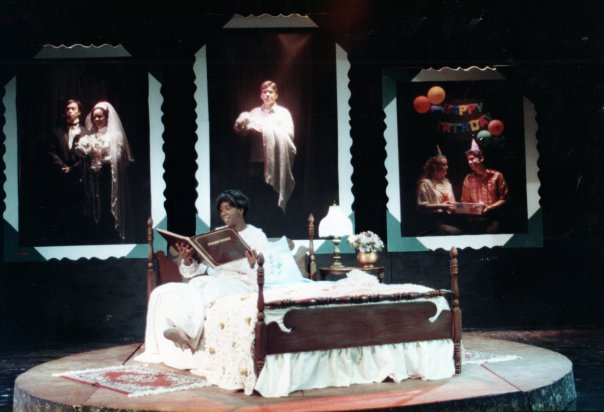
My drama teacher, Mr. Jennings, gave me an opportunity to write and record this song for a play he was doing by the same name. He was known for being quite creative with the productions he mounted. He wasn't afraid to set Shakespeare in the 1950's, and was known for his color-blind casting policy, which sometimes got him into trouble. At the opening of this show, he wanted to have tableaus that looked like scrapbook photos that would come to life. It was a great opportunity to do something I loved in a meaningful way - completely outside the curriculum of the classroom.
Mr. Jennings was one of the first people to give me a platform for my music. He was willing to take a chance. The world needs people like that. The world needs people willing to share an unknown voice or an idea with a larger audience. I'm grateful he was one of those people for me. As I look back nearly 20 years, it's a thank you that's been a long-time coming.
Subscribe to Lisa’s YouTube Channel | More from the 300 Songs Project | Front Row Sessions Replays
 This week I successfully completed all my planning for January! Woo hoo! I know many entrepreneurs who are still shuffling papers and won't solidify their plans until sometime in the middle of the month - after they've given up on more than half their New Year's resolutions. I've been that person, and over the last couple of years, I've finally managed to hammer out a process for planning that works for me.
That's part of the struggle if you're a creative entrepreneur. There's no one plan that seems to cover everything. If you're a personality-based business owner, it's even harder. You've got to include your personal plans with your business plans, because they tend to overlap. Short of my own Dreamblazing program, I've yet to see a planning system that does that well, if at all.
Yes, finding a groove and getting the planning process down is a hurdle, but once you've got that process down, there are still a few mistakes I consistently see entrepreneurs make when planning their new year. I've even done them myself! Here are five of the big ones:
In my Dreamblazing program, I talk about "pumpkin" goals and "radish" goals. Pumpkins take all year to mature, while radishes only take 20-40 day. Having all your harvest come in at the end of the year makes it difficult to manage - and you can starve the rest of the year. Radish-sized goals give you some bite-sized results that you can manage throughout the year. Those radish goals can be milestones toward your bigger pumpkin goals, too.
Just be sure you don't have (more…)
It's one of my all-time favorite Christmas tunes. Maybe it's because my middle name has "Mary" in it - or maybe it's because I've always wondered what it would be like to try to parent Jesus. What kind of special issues would Mary have to deal with? Could she possibly have any clue how the legend of her child would change the face of the world? I hope you and yours have had a blessed holiday season. I'll be doing a bunch of studio moving over the next week, and then it's MY BIRTHDAY, so there may or may not be any new videos next week... it all depends on whether or not we get the studio set up complete.
Fingers crossed!
But after the studio
Subscribe to Lisa’s YouTube Channel | More from the 300 Songs Project | Front Row Sessions Replays
"Brave" was the theme for 2012 and in 2013, I chose to "Inspire".
This year was about "Divine Alignment" - and there was a lot of re-alignment happening.
Every year for half a decade now, I've intentionally chosen a "theme" and a "theme song" to set the tone for my year - both personally and professionally. As a personality-based brand, it's important to choose something that reflects both pieces of the puzzle. So much of what I do overlaps, connects, and is even interwoven throughout my life and work. It makes sense, then, to craft something that has meaning in both arenas.
Here's a summary look at my 5 Key Areas for 2014:

For me, faith is where my core beliefs and values intersect. The values in focus this year were freedom, space, contribution, creation, and joy. That meant doing more of what I love and reaching more of my right people. Trips to Atlanta, Minnesota, New York, Vegas, and Arizona had me re-connecting with bunches of people that mean the world to me - and connecting with a few new friends as well. Talk about JOY! And I've got a car again, so there's some more space and freedom opening up for me. I did a LOT of connecting this year, including more work with Des (and the incomparable Damn Whippersnappers) - and TWO online shows.
I was also pleased to be able to work with my friend and coach Teresa Romain in her year-long program. The folks in that group are always so inspiring, and I'm lucky to now count many of them as friends. My Faith cup runneth over this year, to be sure.
"It's my life. It's now or never. I ain't gonna live forever." - It's My Life

My oldest not only managed to turn 18 this year, but fell in love and moved out. As a mom, there's still a bunch of emotional baggage I carry about that, but as a coach, I recognize that I can't live his life for him, and he's a much happier, better adjusted, more responsible guy now. So in that respect, Mom's happy. He's actually working to get his GED so that he'll graduate ahead of the other kids in his class. Go figure! After years of struggle, it's so nice to see him happy, healthy-ish, and living a life he's proud of.
The rest of the family is drawing closer. Hubby and I are staring down the barrel of our 10th anniversary this year, and we've managed to carve out a bit more time for one another. Our current pastime is "Netflix at Night" - where we carve out an hour or two to cuddle on the couch and watch a series from beginning to end. This year we checked off "Burn Notice" and we're swapping through "Psych", "Criminal Minds", and "Royal Pains" as we speak. We're both a little bummed that "Psych" is kaput. That's some funny stuff for any child of the 80's.
As I say in my book, "sometimes friends are as family". My extended family this year includes two amazing groups of women: my mastermind, and a spiritual group that evolved from Amy Oscar's Soul Caller retreat last year. They've always been an encouraging, uplifting, and often enlightening bunch of ladies. My Mastermind had their first get-away weekend, a book-signing event in Traverse City for Jill, and a jaunt around the lake in Ortonville on Pam's family boat. Our retreat group had a reunion gathering this year that was simply amazing.
It's always a blessing to watch these ladies soar to new heights, and I expect that 2015 will be even bigger for them.

I'm making slow, yet steady progress on the 100 pound weight loss goal I set for myself at the beginning of the year. I'm about 75% dairy-free now and closer to 95% gluten-free. The challenge comes when I am not home, and don't have a back-up plan - like when I'm mid-flight and ravenous, or when someone brings brownies home the night before grocery day when the cupboard is getting bare. It's forced me to be more proactive about my meals, which is rarely a bad thing. I'm at my lowest weight all year as I roll into the holidays (pray for me).
I've still got a few pounds to go before I hit 20 for the year, and I'm being compassionate with myself. I'm not giving myself carte blanche, though. I'm still doing what I can to be mindful. See all those cookies? The Aunts in my family have an annual tradition: Cookie Day. We made 11 different varieties of cookies. I had a few, but I shipped most of them to my son or my sister in California. Hee hee.
On the mental/emotional side of the Fitness coin, I did a lot of self-education this year. Aside from the work I did with Teresa, I jumped into several online courses, books, and training programs. I also got designated as a Certified Profit First Professional Business Coach (ooh! Fancy!). After being one of the editors for Mike Michalowicz's book by the same name, I recognized that implementing the Profit First approach meant that my business would be guaranteed a profit at the end of the year (it worked!). I was also able to work with a few clients in this approach, one of whom went from losing $10-12,000 each month to turning a $2-5,000 profit during our time together. Sha-zam! If you're interested in getting your own profit analysis, let me know. It's the first time in my life where I've said "I LOVE RUNNING THE NUMBERS!"

As I mentioned, my business turned a profit this year. Not only that, but I took quarterly profit sharing distributions - a first for my business. In the past, I didn't really feel my profitability - it was more on paper than anything else. This year, it felt empowering to cut myself a profit check at the end of each quarter. I'm really looking forward to next week's check - which should be the biggest of the year.
The shift was almost entirely due to the Profit First approach. It meant scaling back on a few things I didn't want to admit were not serving me. It forced me to be ruthlessly honest with myself about what was working in my business, and what wasn't. Gone were the "big" clients were playing "Moneyball" with my Great Work. I hired a kick-ass VA, updated the website, and got clear on my target market (not necessarily in that order).
I created content - lots of it. There are nearly 100 tunes in the 300 Songs project - many with videos now. My YouTube channel had over 50,000 new views this year, and now sports almost 250 subscribers, which is on pace with my goal for the year. Woo hoo! I also launched my new Dreamblazing program - a strategic planning system for personality-based business owners to meld their personal and professional goals.
"Tomorrow's getting harder make no mistake. Luck ain't even lucky. Got to make your own breaks." - It's My Life
I spoke at a National Conference in Arizona (and had a ball!), taught a workshop in Minnesota, and got to perform in a variety of ways - including work for one of Detroit's biggest rap superstars (no, I did not rap, btw).
But the coolest thing that happened was seeing The Secret Watch hit multiple Amazon best-seller lists in the UK and here in the states. An experiment as part of my annual give-back campaign, it was a thrill to see my name "in lights" next to Tony Robbins and other business luminaries. What was even cooler was seeing all the 5-star reviews. Heartwarming at this time of year.

I got me a car, yo! I traveled a bit during the first half of the year, but I was still relying on others to get around. By the end of the year, I got my own set of wheels, and I am mobile, baby! When I made the commitment to pay cash for my ride, and NOT have a car payment, I thought it would only take a few months. It took YEARS, but here we are, and it was SO worth the wait.
On Father's Day, me and the fam took a trip to Cleveland so I could audition for The Voice. I learned a LOT about myself on that trip. I was in the audition room with a backup singer who was taking a break from a tour with a big name artist. He forgot his words and tripped over his introduction. I nailed my audition. Neither one of us got a call back, which just goes to show you that it's not about talent as much as it is about casting. So much for "blind" auditions.
"I ain't gonna be just a face in the crowd. You're gonna hear my voice when I shout it out loud." - It's My Life
Since this was a value in focus this year, there was a lot of getting myself aligned around the sense of freedom. I did a LOT more of what I enjoy, met some pretty amazing people, and had one of the best years of my life. And I turn 40 in a few days, so that's saying something!
I've put in a lot of effort over the last few years, tried on a lot of hats, and sorted through a lot of stuff that didn't end up working for me.
The time for all that is over. I've finally merged my love of music and performing with my love of business strategy in a way that works for me. It's taken years of doubt, trial, tears, and effort. This is the year of The Singing Business Coach, yo! Watch me work! 🙂
Creating your own niche isn't easy. There are definitely easier roads. I could just perform, or I could just coach, but neither would be fulfilling. It's like asking me to choose if I'm white or black: I'm bi-racial. I'm both. Deal with it.
So I've got to focus in, and stick to it, no matter what. I'm going in, guns blazing, determined to see what can happen for me in 2015.
Bon Jovi may have released it in 2000, but the lyrics really connected with me this year. I was especially struck by the Frank Sinatra reference: "Like Frankie said, 'I did it my way'." The idea of doing things my way has always come with a lot of baggage, and I'm ready for that to be different now.
I've had to "force" a lot of things to happen over the years. And doing things "my way" often meant doing things the hard way. Pushing to meet a goal or a deadline. Putting my financial or personal health at risk in order to achieve something.
Blech.
Now I understand DUMB goals, and how my way doesn't have to be "push, push, PUSH" all the time. I lived it this year. I like it. And I'm ready for more.
"This is for the ones who stood their ground... who never backed down." - It's My Life
December is always a whirlwind for me. Holiday shows, the annual Give-back campaign, and my oldest son's birthday. This year, he turned 18! Now that my eldest is officially an adult, we can focus on "the other" holidays this month: Christmas and New Year's Eve!
This is one of my favorite Christmas songs. I was lucky enough to be able to share it at a Christmas sing-along for a local church last week. I've got a couple more songs from that event I'll be sharing this week, but the jingle bell hat was super timely for the Sunday before Christmas. Just a few days left, and we're STILL shopping.
Do you have the holidays handled yet? What are YOU hoping to get for Christmas this year?
Subscribe to Lisa’s YouTube Channel | More from the 300 Songs Project | Front Row Sessions Replays
I think it was Jesus that said a prophet has no honor in his own home town, with his own family, or even in his own house.
It's one of the big reasons I first built my business online - away from the prying eyes and judgmental insinuations of my own family and friends.
Don't get me wrong, on the whole I've managed to remove myself from the toxic relationships of my younger days, but there are still a few lingering reminders that only serve to affirm the wisdom of Jesus.
I've been a musician and performing artist for decades. I'm glad to be able to offer my services for a lot of different kinds of events. A family member once asked me to perform for a public event she was facilitating. She needed a strong singer to lead the music for the event. Naturally, I accepted. She's family, and it was for a worthy cause.
And of course, I didn't ask to be compensated, because it was a charity event, I had close ties to the organization, and I wanted the opportunity to perform, share my gifts, and serve on a larger scale.
That was all well and good until I realized I had "served" my way out of my own value.
 The day of the event arrived, and as I was rehearsing with the other musicians, she came over and paid the pianist an undisclosed sum for his services. I didn't even get a thank-you card.
It was then that the words of Jesus rang in my head. More and more, I'm hearing stories from clients about doing "spec" work, or free work just for the exposure, only to discover there really isn't a real exposure opportunity. Or they're taking crappy-paying work because, hey, at least it pays something.
I'm here to tell you that you're crippling your business - and possibly your health and well-being. If you're saying yes to anything that comes along, you're not giving yourself room to do the work you really enjoy. Then, when the "good stuff" comes up, you're already booked! Let my example be your shortcut to sanity and more profitability. Here are three ways you can get more of the right people to value your work.
On one level, I was livid that my family member didn't see the value of the work I contributed to the event. I had to learn dozens of songs, rehearse them, and then perform them without errors - just like the other musicians. I also emceed the event, introduced the music, and was the "personality" for the event. Those are also elements of a performance that must be practiced. For as easy as it looks, I don't just show up and "wing it" for an audience. Even my improvisational work at murder mystery dinners comes from years of practice.
She didn't see enough value in my work to even give me any token of appreciation.
That's partly her fault, and partly mine. Had I done my job in the first place, and educated her about the value of my work, chances are good she would have at least given me a thank-you card or some small sign of appreciation.
If you leave it to chance, and just trust that people will recognize the value of who you are and what you do, you'll often be disappointed. It's one reason why I've heard so many people say "the marketing is more important than the mastery." That's not true, of course, because you don't want to be marketing crap, but at the same time, if you're not marketing at all, you're leaving money on the table and missing out on opportunities that could otherwise be coming your way.
And by "marketing" I mean educating your market about the value of who you are and what you do. Until they understand why you are good at your craft, until they understand why your prices are what they are, it's easy for them to price-shop - or worse, ask you to work for free.
I talk with a lot of entrepreneurs who understand the value of their offering - the work they do, the product or service the provide - but they don't value themselves enough to be paid. Hollywood writer Harlan Ellison and creative firm owner Mike Monteiro both speak out about the importance of not taking YOURSELF for granted in the business of doing business (warning: both videos have adult language). Plumbers and doctors can assert a value in the market for their services because of the results they provide. "I'll fix your pipes, and it'll cost you X." There's a clear outcome. But when we start looking at what we think are more nebulous or intangible "results" we discount the value that we bring to the table.
In truth, YOU are the reason that the offer has value in the first place. I say it a LOT - as a personality-based business, you are the most important product that your company has to offer. When I work with direct sellers, it's important they grasp this concept. They are one in perhaps a million other people selling the exact same product for the exact same price out of the exact same catalog. What makes their business the one to choose? People choose to work with a particular direct seller because of who they are, not what they offer.
If you don't value the contribution that you make, why should anyone else?
My grandfather was a carpenter. He once charged a guy $50 to hang a picture in his office. He walked in, tapped on the wall, then drove a nail with two deft strokes. He hung the frame and handed the guy the bill. Outraged, the guy wanted to know why he charged $50 to drive a nail. My grandfather took back the invoice, scribbled something on it and returned it to him. It now read:
Driving one nail: $10
Knowing where to drive that nail: $40
Total due: $50
I make singing look easy because of the thousands of hours in my life I've already spent learning music, performing, and honing my craft. I've got hundreds of youtube videos of me speaking or performing in some way. That's all "free" work I've been doing for years. Lots of practice!
Where have you invested in your life in ways that improve your craft? Value that investment. (Tweet this)
Sometimes, you can educate people until you (and they) are blue in the face, but if you're singing show tunes in a honky tonk, you're going to get booed off the stage no matter how good you are.
When you're first starting out in business, it's a seductive trap to take whatever business comes along - anyone who can fog up a mirror or anyone who pays, regardless of whether or not they're a good fit for you. Ultimately, it means you don't have a business, but rather that you're a whore willing to dish it out to anyone willing to pay you. Sorry to be so blunt, but it's true. Although, my friend and colleague, Sydney Barrows, would probably argue with me. She's the former madam that ran Cache' - a high-end "escort service" back in the 80's. She had a very clear idea of her target audience, and didn't waver. If a client was a jerk, they were fired. Her clients were A-list-ers and her "girls" were expected to provide a quality experience - with a price tag to match.
If it works for the escort business, it most certainly can work for you.
You're wasting your time if you're trying to justify your existence to everyone - friends and family included. I had to back away from people who didn't get me, people who didn't understand what I was all about. I had to find "my people". I've been in various mastermind-type groups over the years, and a year and a half ago I came to roost with a group of local women - all authors - who are some of my strongest supporters and encouragers. They understand me. They help me get some clarity. They even hold me accountable when I ask. I've got other supporters, too. People who see the real me (and love me anyway), like my coaches and colleagues (like Sydney). You'll notice I didn't include my spouse. I love my hubby, and I learned many moons ago that he doesn't get what I do. He's starting to understand a little, but we've been married for almost 10 years now. I had to stop holding my breath, and only share with him the stuff that he understands. The rest, I save for "my peeps."
Whether you're a direct seller, a shop clerk, or a performing artist, you've got to know who you're here to serve. Again, it makes no sense to sing show tunes in a honky tonk - even if they had an opening and it's great exposure. Sometimes you get lucky and the audience knows clearly what it wants - like a local barbecue joint that only plays blues music. Blues and barbecue go together easily. But most of the time, it's up to you to hone in on who you're here to serve.
As a business coach, I focus on growing businesses - specifically those where the business owner is the face of the company. That means I work with a lot of direct sellers, solo-preneurs, authors, speakers, and performing artists. It's a wide variety of people, yet they all share the commonality of being the face of their business. Why? Because I am a personality-based business owner. I am "the singing business coach" - a musician and performing artist who helps other people like me grow a profitable, sustainable business. I understand the particular issues these folks have in balancing personal and professional commitments. We don't have traditional "work hours" because our face is always "on". There are unique concerns that these businesses face that major corporations don't. I understand that intimately because it's the life I've lived for decades now.
That is my professional audience. What's yours? Who do you most resonate with? Who are the people you get the best results with or most enjoy working with? What do they have in common? Those are the threads that help you define your professional audience. Once you've defined it, speak directly to them. Stop trying to win everyone else over. A lot of people won't get you. That's okay. Focus on serving the ones who do.
Once you value the role you play in the work you do, and can educate your right people about that value, it's easier to command the prices (and respect) that you deserve.
How have you experienced this feeling of not being valued for the work you do? How did you handle it? Please share your comments below!
Judy Garland is one of my all-time faves. I don't sing a lot of her music, but two songs I love are The Man That Got Away and this song - both songs debuted by Judy in one of her films. This song is from" Meet Me in St. Louis" and has had a few lyric changes since the original was written by Hugh Martin and Ralph Blane. Regardless, it's a timeless holiday song, and all you could ask for any year - to have a Merry Christmas.
Subscribe to Lisa’s YouTube Channel | More from the 300 Songs Project | Front Row Sessions Replays
I'm not one for social commentary or deep philosophical discussions, so consider this the "light version" of any meaningful conversation about the nexus of technology and society. This isn't a commentary about technology, though. It's more about what's unwittingly happened to people as we've become more "connected" to the world.
The Industrial Age gave us cookie-cutter, assembly line techniques for being efficient and crafting a uniformly effective offering.
That's awesome in a survival-based world, where cranking out quality stuff in quantity is important.
But that's not the world we live in anymore. On the whole, we are wealthier and healthier than we've ever been as human beings. Yes. there are exceptions to the rule, but most of those folks aren't reading this anyway, so it doesn't apply to them.
This applies to you. You, the person that's been cramming yourself into the same cookie-cutter mold for decades (or railing against it), because that's all there was.
I've been pretty lucky to "grow up" in the digital age. I'm technically not a Millenial, but I'm on the cusp. I built one of the first e-commerce websites back when animated gifts were all the rage (the first time), and video wasn't even a glimmer in the Internet's eye.
In that time, there've been lots of "game changers" - which is almost silly to say. The advent of the Internet is like watching an infant grow into a toddler and then a teen - everything is new, thus everything is a "game changer". But the one commonality I've witnessed over the last 20 years is the growing ease with which people can access, use, and contribute to this technology - and how this new-found ease impacts their work.
10 years ago, the idea of watching your favorite TV show or a feature-length film on your stylish CaseFace phone was insane. Now, mobile and "third screen" viewing has eclipsed television, and will likely continue to do for the foreseeable future. The ability to take your media with you has relegated newsprint to the birdcage, and magazines I loved reading as a kid have gotten thinner and more ad-laden.
Less content, more commercials. A sure-fire end to most anything.
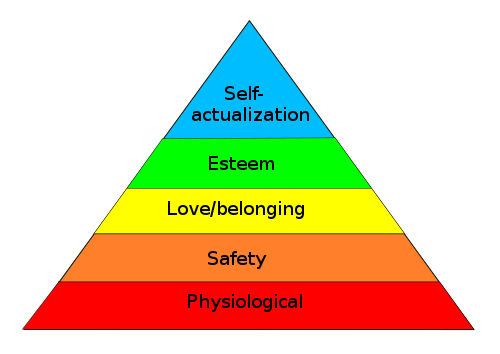
One look at Maslow's Hierarchy of Needs will show you that we've done a great job (on the whole) of getting those basic needs met. As I said before, we're wealthier and healthier than we've ever been in human history.
Here's another great example from Chip Conley, which condenses the pyramid into three layers (particularly the "employee" pyramid, which he's condensed to "money", "recognition", and "meaning").
Maslow's theory is that we work our way up the pyramid, once we've assured ourselves that our more basic needs are met. Once we've handled the basics like, food, shelter, clothing, saftey, and a paycheck, we can concern ourselves with "higher" issues like love, a sense of belonging, or recognition. Ultimately, once those things are handled, we can search for "self-actualization" or the meaning of life, if you will.
Here's the problem in a nutshell. We've been pushed up the pyramid, whether we like it or not. Computers have "connected" us, and made things incredibly easy, yet so many of us weren't ready for the shift.
Now, building a career can happen remotely. For my last job, I applied, interviewed, and was hired digitally. I worked from my Michigan home, and the company was thousands of miles away on the west coast. All my contact and interaction was digital: email, skype, webcam. No handshakes, no eye contact, just pixels.
Love and belonging (at least on some level) are just a facebook post away. When I'm feeling blue, I can post a simple "Hugs please" on Facebook, and my friends come out of the woodwork to encourage me. I never got that kind of instant gratification & encouragement before the Internet! So work, networking, and even relationships have gotten more efficient, thanks to technology.
We've got all this time on our hands, and yet we're stuck.
We're stuck because, now that the basics and middle-ground issues are being "handled," we have to look to ourselves and find meaning - something that takes time and can't be short-cut.
"Why am I here? What makes me valuable if a computer can do my old job in half the time? What real value do I bring to the world?"
We didn't have time to deal with these questions before. We had work to do, dammit, and that had to come first, so we could eat - so we could SURVIVE! But now, with all this time on our hands, we're having to face these questions - and some of us have a boatload of anxiety, depression, fear, or ambivalence toward it.
To make matters worse, we've been taught that thinking of ourselves is selfish and inconsiderate, and we are, therefore "BAD" for behaving that way.
No wonder our culture sometimes feels like it's on a downward spiral.
The truth is, you've been doing it since you were born. You "took" your first breath, and it's been downhill ever since. In reality, you can't NOT put yourself first. It's just that our culture has made it out to be some sort of a crime because there are those among us who would take it to the far extreme. Putting yourself ahead of everyone else - at all costs - is a kind of selfishness that often comes from a place of fear.
Self-care is not selfish - including in your work. (tweet this)
More and more employees are jumping ship to work for themselves. I'm meeting more entrepreneurs who left corporate America after only a few years of being disillusioned about their prospects with their employers. I'm also meeting entrepreneurs that are carving out a name for themselves by defining success on their own terms. They're creating businesses and offers that take into account how they like to work, who they like to work with, and what they want their life to be like so that they can experience success now - not in 35 years. They see that there's no pot at the end of the rainbow, that "someday" doesn't come with a big red ribbon, and they're deciding what they really want and going for it now.
To "older folks" entrenched in the ancient ways of the Industrial Age, it feels a bit like treason. It's definitely shaking up their snowglobes - the idea that they can give themselves permission to walk away from something they don't love and do something that brings them joy - and get paid to do it -still strikes fear into many of my older family members. They grew up in Depression-era America, where you got one job and stuck with it until you were old enough to retire, take the watch and the pension, and then go have a REAL life - if you lived that long. I know many employees of the assembly line factories who literally gave their lives to their work, dropping dead within a few days of retirement.
I've said before that now is the best time for you to create a business (and a life) that works for you. Of course, that means getting clear on who you really are and what's really important to you. It means doing the work at the top of the pyramid, and finding the meaning that matters...
... to YOU.
For some folks, this might seem foreign, or scary, but there are countless people in the world doing it. In fact, I'm launching a new series next year that spotlights these folks (more on that in a later post). They are becoming the norm. Gone are the days of three television networks and multi-national conglomerates that corner the market. Now is the time of what I call the "experience economy" - and creating a life for yourself that matters. It's reaching smaller, tighter markets and making a big impact. It's happening now.
On Monday, I'll be leading a free teleclass called "Success Your Way: How to have a profitable, sustainable business that works for you in 2015... and beyond." If you're at all interested in riding this wave of business with meaning, I invite you to join me. You'll learn more about this crazy "pyramid scheme" called business, as well as how to figure out which stage of growth your business is in and how to shape it to this new experience economy... which might sound more technical than it really is.
In short, we'll talk about how YOU can create a business that works for you, based on how you define success. And if you're not sure how to define success, we'll talk about that, too.
How are you dealing with the way technology has pushed you up the pyramid? What has been a blessing (or a curse) for you because of it? Share your comments below.
This weekend, I was invited to do a short set for a local non-profit holiday party. So Des and I dusted off the road gear and delighted the ladies with a few Christmas favorites. Here's one I've not shared previously: Irving Berlin's 1940's classic "White Christmas."
It's fitting, since last week I did "Rudolph" and those two songs are the biggest selling Christmas songs of all time (White Christmas is #1).
It's still green here in Michigan, albeit cold - hanging in the mid
Wherever you are in the world, I hope your December is full of warmth and good cheer.
Subscribe to Lisa’s YouTube Channel | More from the 300 Songs Project | Front Row Sessions Replays
It never ceases to pique my curiosity. Like the Bat-signal, or a police chase, when searchlights pop up in the sky, my brain tries triangulating the light sources to see if I can figure out what's happening. I start to wonder...
"What's so exciting?"
"Should I know what that's about?"
"Where exactly are those lights anyway?"
"I wonder if I can figure out where they are."
Am I the only one who thinks like this?
They light up the sky and command attention. The searchlight atop the Luxor hotel in Vegas is actually twice as bright as an equal area of the sun. That's powerfully bright, and it draws your eye if you're anywhere near it. Searchlights are a common scene at Hollywood movie premieres and other gala events. Why? Because people want you to look and see what's happening.
Wouldn't it make sense then, that searchlights can also be a beacon in your heart?
I've maintained for years that you already know your very next step. It's not about knowing. It's about giving yourself (more…)
This week, I'm pleased to welcome my pal, Jen Harris, back into the studio. We've performed this song a couple of times, and I wanted to get Jen back here to share it with you. Such a fun rendition of a classic 40's song.
Actually, the story behind this song is some kind of wonderful. Department store giant, Montgomery Ward, commissions a children's story book as a work for hire. Rudolph is born. Then, the author's brother-in-law decides to write a song about the character. It was more than 20 years later that Rudolph became the animated television classic we all know and love. The song became the first #1 hit of the
It just goes to show you that even when you think you're done with a project, it can take on a life all its own.
Subscribe to Lisa’s YouTube Channel | More from the 300 Songs Project | Front Row Sessions Replays