(NOTE: I'm just about finished with the Creative Freedom entrepreneur type quiz. If you're not already on my mailing list, subscribe [in that handy box above] and be the first to get access!)
This summer, I've been channeling my inner crafty woman. I'm a pretty good singer and speaker, but I never really thought of myself as creative - as in making things - until I married a guy who decorates our Christmas tree with origami cranes.
I fiddled around with drawing as a kid - but my cousin was a much better artist. In fact, I could pretty much guarantee that someone I knew was better at any crafty thing than I was.
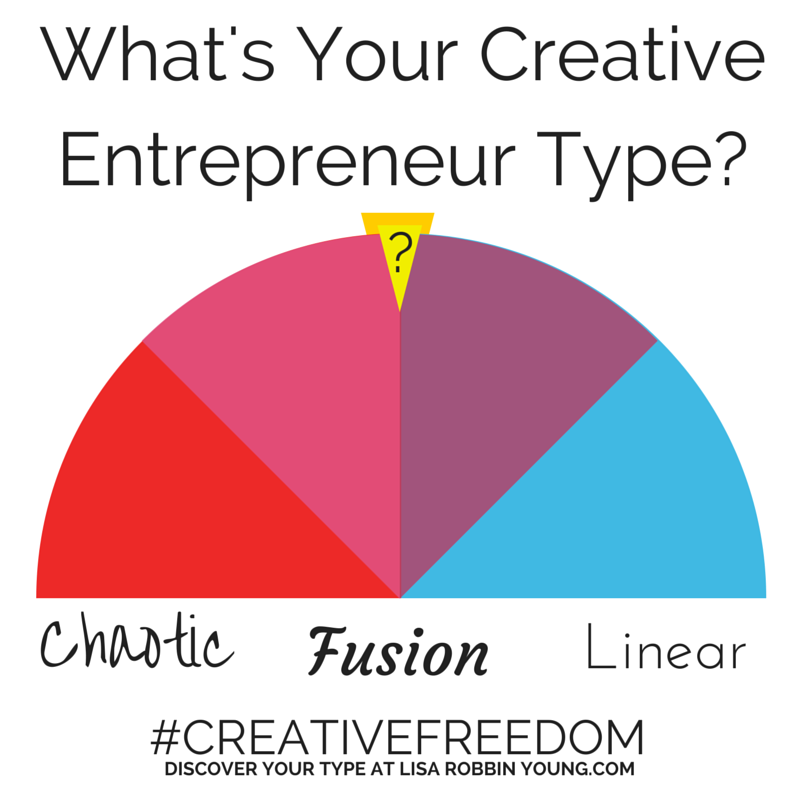
Turns out, that's part of my Creative Freedom type. I'm a Fusion, which means that I can always find someone more creative, more strategic, and more "better" than me if I look hard enough - but that's because my life is filled with a mix of awesome Chaotic and Linear Creatives, who will always be further along on the spectrum than I am. Fusions, on the other hand, sit right in the middle of the spectrum, which means we can do lots of things other people can't. It's why our analytical friends call us "the creative one" and our creative friends call us "the smart one."
This is just part of what I've been exploring in preparation for the launch of my new book "Creative Freedom." Once I learned I was a Fusion type, it gave me permission to embrace ALL the ways I'm crafty and creative. Finally, a place where I don't have to choose, I can just enjoy being me!
And I made an origami daffodil to prove it! It's my first attempt, and I used a plain sheet of paper instead of origami paper, so it's a little wonky, and I'm proud of it!
There's another reason I'm sharing this daffodil with you, and it has to do with a story that goes back about 20 years. You may have heard of it. It's called "The Daffodil Principle" by the late Jaroldeen Edwards.
But before I get there, let me tell you why I'm sharing this story.
I got an email from a reader who has been struggling with building her Noble Empire because of some stuff she's been dealing with in life: health, money, family... you know.. life stuff. She's a little frustrated and overwhelmed about wanting to be further along on her dream, but also stuck in the reality of where she's at.
Which brings me to the Daffodil story.
Jaroldeen's story is actually about a real garden in Running Springs, CA, designed and planted by Gene Bauer - a lifetime effort spanning more than 50 years. Every fall, at her vacation cabin, Gene would plan and plant each bulb by hand. When she started, she didn't even know which end was up.
Can you relate?
As creative entrepreneurs, sometimes we don't know what direction we're going - let alone if it's the right one or not. But Gene's an example of just showing up, year in and year out, and letting the creation unfold into a life's work. Most people don't know Gene was actually a teacher, and planting daffodils was just an interest, that became a hobby, that became a passion.
This week's video tells the rest of the story - the part that happened after Jaroldeen wrote her story - and I think it's probably even more powerful than the original, because of how the Bauers had to overcome adversity when fires besieged the property. Oh, and if you watch really closely, you'll get a quick glimpse of New Kids on The Block and a young Marky Mark Wahlberg before he got all grown up.
The more I researched the story, the more fascinated I became. That's part of why I learned to make an origami daffodil - since they're out of season right now (you can also make a stem if you'd like). Gene and Dale even compiled a history of the Running Springs property to give people some background on how the 5 acre plot of land came to be in their hands, and ultimately covered with so many varieties of daffodils.
THAT, to me, is what it means to build a Noble Empire.
What small step are you making? Share your thoughts and ideas in the comments and be part of the Rising Tide. Have a question you'd like to see featured? Hit me up! I love requests!
We've all had those moments where we've gone a little overboard and shared too much information - with a friend, colleague, or perhaps even a client. My cheeks still burn from the embarrassment I felt the day I "earned" the "overshare badge" on the old Foursquare. I was just so enthusiastic about the platform, that I checked in to everyplace I went that day.
Whoops!
It happens. sometimes innocently enough we let things slip that are better left unsaid. But sometimes we involve others in drama, or share sensitive information that just isn't meant for public consumption. If you're a chronic over-sharer, it could even be jeopardizing your business.
This week's episode of Creative Freedom (with a little help from Joan Jett) provides some clarity on how you can minimize oversharing and focus your marketing message for maximum success on any online platform.
1. Remember that oversharing is relative. If you're typically a very private person, anything you share has the potential to be T.M.I, whereas someone who sees life as an open book has latitude to share more fully.
2. Know your audience. Your online community has an expectation of what you are like. Whether you like it or not, you are constantly crafting an image (and training others how to treat you) by what you accept from them and what they come to expect from you. Consistency is one of the most important tools you can use to establish your brand.
3. Check your settings. Every online platform has some type of privacy settings. Know them and use them to your advantage. But remember that anyone can copy and paste your content (or take a screenshot) and email it all over the internet in a matter of seconds. If you don't want the world to know, keep it to yourself.
Bonus tip: Know your platforms. Each platform wants different types of content. Some people hate food in their Instagram feed, but have an entire board dedicated to food on Pinterest. Where you choose to show up in the online world makes a big difference in how you (and your business) are being perceived.
Have you been accused of oversharing? Have you seen a really bad case of oversharing in another business? How did you handle it? Share your thoughts in the comments and be part of our Rising Tide Community.
In my house, there's a never-ending battle that's almost as epic as the fight for the remote control.
The thermostat.
My husband likes it hot. He closes the vent in our room and bundles under at least two blankets even during Summer!
My son likes it cold. If it's warmer than 65, he'll turn the thermostat down to 50 because he thinks that'll make it colder faster.
Me? I like it in "the dead zone" - a comfortable 70-72 degrees. Not too hot, not too cold.
Needless to say, we've had a few arguments about this. In fact, hubby and I are finally switching sides of the bed this week because he's been sleeping closer to the vent (which is why he keeps closing it).
But...even more datstardly than our family fight for the house thermostat is the epic battle that's been going on between my ears for years with my metaphorical "success thermostat".
You may have heard it called an upper limit problem - that's a term Gay Hendricks used in his book "The Big Leap." Like a thermostat, our brains have a "success set-point" that keeps us comfortable. When we get too far below that set-point, we get uncomfortable, and start working to turn up the heat on our success. But I had a cap on what I believed I deserved. My "success ceiling" was a set-point that actually kept me earning poverty-level wages. No joke!
It was as if every time my money situation started improving, or things started going very well for me, invariably something would happen and things would start to fall apart. My success set-point kept trying to cool things off just as I was heating up!
In her book "Overcoming Underearning" Barbara Stanny says that "money is a metaphor" and that "under-earning is a symptom" - specifically a symptom of a lack of self-worth or self-love. It manifests differently for each person, but ultimately, it centers on a success ceiling/upper limit problem around what you think you deserve.
This week's episode of Creative Freedom revels how to know if you're a chronic under-earner, how I discovered my under-earning success ceiling, and how I've worked to eliminate my upper limit problem in my own life. Oh, and you'll hear bits of my U2/Journey mashup from the 300 songs project.
One look at the Symptoms of Underearning from Underearners Anonymous and you'll have a better idea of whether or not your current financial state is because of a conscious choice to live on less, a short-term slump, or a chronic condition that's due to something deeper.
1. See the truth and OWN it. Just like a real thermostat setting, we have to make adjustments if we want to see things change. For most of us, we can't just "flip a switch" and solve the problem. Further, the "temperature" of our situation will most likely change gradually. You can't go from 32 degrees to 70 degrees in a matter of seconds - it takes time to turn up the heat! Decide on your new direction. What's going to change for you? Then commit to it, and be willing to make small (even microscopic) changes as you move toward your new set-point. The smaller the better actually. It might feel more tedious and time consuming, but micro-commitments are more likely to stick and lead to lasting change because they don't activate the fear centers in your brain. It's the fear center that triggers the thermostat to go back to what's "comfortable" - clearly a relative term when it comes to success.
2. Be wary of people who aren't used to your new settings. They will be uncomfortable (so will you). I have a colleague that says "new level, new devil". Remember what I've taught you before - you train people how to treat you based on what you've come to accept from tehm and what they've come to expect from you. Changing your success thermostat means you're changing the expectations. Some people won't like that - get used to it. It happens. The key is to recognize when people are trying to change your settings and stay the course even if things start to get a little (okay, a LOT) uncomfortable.
3. Believe you are worth it and stay vigilant! This is where all the micro commitments make a difference. Trying to re-program your brain to overcome years of unconscious programming ain't easy. When you've believed for decades that you're not capable of achieving a certain level of success, your brain may have difficulty accepting new ideas that seem to fly in the face of that old understanding. You need to keep looking for evidence for the file clerk in your head that says you are capable. Celebrate your wins even if they seem "small" or "insignificant" - the file clerk doesn't judge.
Eventually, the new set-point will feel comfortable. It takes time and patience, but it's totally doable.
Under-earning is one of the most prevalent problems of the creative community. From working for "exposure" to donating our time and offerings to way too many worthy causes, creative entrepreneurs need to reclaim their money making power! If you've overcome an upper-limit problem, we'd love to hear about it! Share your stories in the comments and be part of the Rising Tide community!
At the beginning of every year, I sit down with my Dreamblazing program and set my goals - then I review them each quarter.
But they also say that "life happens every 6 months" - and here we are at the middle of the year. It's a great time to make sure you're still on track, and if you aren't here's a reader's digest version of my planning process - including a sneak peek into how Dreamblazing makes it easy.
To help you lay the foundation, I've also included the worksheets from the first day of the Dreamblazing program so that YOU can take stock and do a little review of your own - and set the stage for your future success. Oh, and Hall & Oates help me out with a special "guest spot" - sing along if you know the words!
Whether you use my Dreamblazing process you some other method of planning, make the commitment to complete the entire process - especially if it feels uncomfortable. I see a lot of entrepreneurs (creatives in particular) that start planning, and when things get tough or they feel stuck, they quit. It's fine to take a break and come back to it later, just make sure you actually do come back to it later. Dreamblazing is elxible enough to complete in a single
It's hard to know where you're going if you don't know where you are. It's hard to know your trajectory, if you don't know where you've been. A lot can happen in a year. I lost count of all the awesome surprises that happened to me each year, so I started keeping track, and using the "Evaluate and Celebrate" section of Dreamblazing to remind me of just how awesome my life and work can be. That's particularly helpful when I'm in the middle of a funk, or things aren't going as well as I want them to in the moment.
Evaluation also allows me to see where I missed the mark and need to tighten my focus - or re-calibrate if a goal is no longer applicable.
In my book, The Secret Watch, I lay out the 5 Key Areas (Faith, Family, Fitness, Fortune, and Freedom) - but the way you define them is entirely up to you - which, again, gives you the flexibility you need to develop D.U.M.B. goals. Hone in on what will give you the most cause for celebration at the end of the next 12 months in each of these areas, then you can begin to set milestones along the way to help you know if you're on track to hit them.
If you're following the Dreamblazing program, you'll pick 6 goals to drive for the year, but you've also got to prioritize them. It's better to do that NOW before there's a conflict, because "life happens when you're busy making other plans" as John Lennon famously said. If you don't prioritize your goals, then when an opportunity arises that pits one goal against another, you'll be forced to choose. In the heat of the moment, sometimes we choose what's urgent, rather than what's really important. Prioritizing your goals gives you a filter to run all your decisions through.
And if you change your priorities later, that's fine too.
It takes a little time to develop a solid strategic plan, but it's worth the effort. Whether you use a tool like Dreamblazing or develop your own method of annual planning, it's important to make the plan. Eisenhower once said that "plans are useless", but "planning is everything" - and I think he's right. While many of my plans go awry not long after making them, the fact that I took the time to actually sit down, clear my head, and focus on what really matters to me keeps me moving in the right direction. It also keeps me agile so that when life throws me a curve ball (and it happens more times than I'd care to count), I'm able to respond thoughfully, instead of react in a knee-jerk way.
Plans may go awry, but planning keeps your head in the game when life throws you a curve. (Tweet this)

First an exciting announcement: A few weeks ago, I happily celebrated 500,000 views on my YouTube channel. THIS week, I'm celebrating 300 subscribers (click here to subscribe instantly)!
Confetti! Fireworks! Hooray! Huzzah!
This has been a goal of mine for several years, and I'm beyond thrilled that it's finally happened. It was a lot more challenging than I expected, and I've learned a lot along the way. As my channel grows I've developed a love and strong respect for the YouTube community. If you're on YouTube, please say hi and spread the love. Your awesomeness makes this show possible.
THANK YOU.
I was on a coaching call with a client this week and we spent a good amount of time talking about how hard it can be to shine brightly when everyone around you is complaining about your light.
"You're too bright."
"Can you turn it down a little?"
"You're always so enthusiastic about [topic]. I'm tired of it."
While occasional constructive criticism is important (when you work with me, I'm not afraid to give it to you straight), it's also important to remember that you've got Divinely-given gifts that are uniquely yours to bring into the world.
Shout it out! Tell everyone about your brand. Heck, have your brand name printed out onto face masks, hoodies, pens or mugs if necessary. Don’t hide them away; be proud of who you are and what you have achieved.
Often times, we're put down, or we feel guilty about being so awesome. And even if you're shy and reserved, it can be tough to deal with the criticism and "baggage" others want to foist on you when you're sharing your gift with the world. It often results in being overgenerous as a means to counter the criticism, to be liked, or to "apologize" for your existence.
Been there, done that.
You don't need to apologize for being awesome. We all shine in our own way, and yes, some of us are called to shine "brighter" or to a "bigger" audience (remember: size is relative. If it's your dream, it's big. Period.). That doesn't make us any more (or less) needed in the world.
Sometimes we're put in a position where we shine brighter than the folks around us because they need to get used to having more light in their lives. This isn't a statement of arrogance. Most of the awesomely talented people I know didn't ask to be awesome. They just are. But the amount of guilt they feel and crap they take for being so shiny is overwhelming. I'm reminded of the crawdads in a bucket that keep pulling each other back down so that no one escapes.
You don't have to make your light any less bright. That's what sunglasses and window shades are for. People can choose to be around you and they can choose to leave. This is a lesson I'm learning myself. For YEARS I have felt the need to dim my own light because the people around me couldn't deal with how shiny I am. I never asked to shine. I was born with these gifts, and while I've honed them over the years, it was never in an attempt to be better than anyone other than myself.
It's not your job to diminish your light. Your job is to shine your light into the world. (Click to tweet this)
There are plenty of people in the world who are afraid of the light. Heck, even Plato wrote about it in his Allegory of the Cave. But here's the thing:
Just because other people are afraid of the light, or judge the light, or shun the light, doesn't mean that you need to take it personally.
When I walk into my bedroom and flip on the light, sometimes my husband grumps about it. My light bulb doesn't get all defensive and start apologizing for being bright. That's what light bulbs do, for pity's sake! And while I might apologize for causing my husband pain, I rarely apologize for turning on the light because I needed the light to see. Don't apologize for your needs. Apologizing for your needs equates to saying "I'm not worthy of having my needs met. I'm sorry for my existence."
Word choices can be tricky, eh? But I've said this many times in the past: you train people how to treat you based on what you've come to accept from them and what they've come to expect from you. If you're constantly apologizing for your existence, then, Houston, YOU have a problem.
Katy Perry sang an inspiring song that confirms that the only way to shine is to ignite yourself:
"You just gotta ignite the light and let it shine
Just own the night like the 4th of July"
I think it's safe to say that if you don't ignite yourself - and let yourself shine - it's improbable that anyone else will do it for you.
On the surface, Independence Day is about celebrating my country's establishment as a sovereign nation. It's become the high holy day of picnics, beach fun, and fireworks.
But at the core, it's a symbol to embrace what matters most to you, hold it out for the world to see, and stand your ground. Do you think the British were particularly pleased? Hardly. They fought us for several years before and after we claimed our independence.
You'll probably face a few battles of your own (both internal and external ones). That's to be expected. As several great minds (including William Lamb and Stan Lee) once said, "with great power comes great responsibility." Being awesome ain't always easy, but you've got it in you to handle it!
Need a little extra incentive?
Our Independence Week edition of Creative Freedom brings us a special "guest appearance" - this time by Katy Perry. It's a friendly reminder to own your awesomeness.
What are you awesome at? Go on! Toot your own horn (I dare you)! How have you been holding back your awesomeness? Do you know someone else that's letting their light shine "brighter than the moon"? Share your stories, thoughts, and ideas in the comments.
If you or someone you know could use this information, please share us with them and be part of our Rising Tide! Every share helps. THANK YOU!
OH, BTW... Des is coming back from California this week, so look for new videos in the 300 songs project soon! YAY!
BEFORE WE BEGIN: I just want to let you know that my new web-based reality mini-series "30 Days To $5k" is now in full swing. Episode 1 aired Friday to an audience that praised the originality and risk-taking edge of the show. If you haven't yet seen the trailer for Episode 1, you can do that here. If you're already enjoying the show, THANKS FOR WATCHING!
Okay, on with #CreativeFreedom!
Webinars are becoming a popular lead generation tool, but if you're doing them wrong, you're actually doing more harm than good to your business... especially in the era of video - where people aren't held hostage in a conference room.
If you're brand new to hosting webinars or any kind of virtual events, I encourage you to experiment and get your feet wet - you'll never know how well it works for your business if you don't try. That said, there are three very SIMPLE things everyone can do - whether you're brand new or a seasoned pro - to make your webinars infinitely more valuable to your viewer and more effective and profitable for you.
I did some informal surveying of a few online groups I'm in - groups that regularly frequent (and sometimes pay for) webinars. Regardless of the group, there were three major complaints that rose to the top of every conversation:
1. Not starting on time. People show up ready to learn, and you're dragging your feet, dinking around with the technology, and generally wasting the time of your guests.
2. Spending the first 20-30 minutes talking about yourself. No kidding. I was on a 90 minute webinar where the host talked incessantly about herself for the first 25 minutes. I learned a lot about where she's lived, what she's done, and why she wanted to teach this content, but I learned nothing about the topic I was there for... which I can't even recall now because I left the webinar around the 30 minute mark.
3. Not delivering the content promised. While the majority of respondents recognized that a "pitch" was coming at the end of the webinar (and even expected or looked forward to it), they were also disappointed at how little useful content was shared relative to the length of the webinar. Sometimes, the promised content wasn't even delivered, but instead, an upsell was offered to give them access to that information in a different program. That left webinar attendees feeling robbed, and rightfully so. Even paid webinars had a similar result, though to a lesser degree.
This week's episode of Creative Freedom (with a special appearance by Toby Keith) turns these tell-tale signs of a crappy webinar on their head and reveals three super-easy tips, as well as a bonus tip for helping you get more out of webinars, virtual events, and any other presentation you're about to do.
The minute you implement these tips, you'll see improvements in your presentations (online or off). And they're easy, so there's no real excuse to NOT do them if you're a professional. You'll also notice that none of these tips require any special equipment, no special knowledge, and no special investments. I'm not talking about making your webinars "prettier" here. I'm all for getting started right where you're at with what you have, and "failing: your way through things. However, these are easy steps to improve your talks right off the bat.
Remember, your audience is making an investment of their time in you. That's hours of their life they'll never get back! Are you investing equally in them?
Invest in your audience as much as they invest in you. (Tweet this)
What have been your horror stories? What's really kept you engaged on a webinar? Share your comments below and be part of the Rising Tide. If you know someone that could use this info, please share it with them. You never know how your act of kindness could change their life or business for the better.
Shazam! My audition in Detroit for The Voice went better than I expected, although I did not get called back. It's always fun for me to go to "The D" and this time was no exception. I learned some powerful business lessons during my long wait in the audition line (post coming soon), plus I met a childhood friend of Anita Baker who designs Mustangs at Ford! We had a fun time connecting and learning about each other. Hooray for new friends!
Speaking of, this week's video is actually a request from my facebook page. Jessica-Lynn Sage asked about hiring help in your business. Her big concern was in being able to trust someone else to handle the work and "let go" of doing it yourself.
The timing couldn't have been more perfect, since I've been working on my photo shoot for the new album (and website). This week's episode of Creative Freedom gives you the low down on how I sourced and "hired" the team for this shoot.
But there's something else I didn't include in the video that's also important...
In my research, I've been exploring the three different types of creative entrepreneurs (a quiz is coming soon!), and each one has their own sets of challenges. Chaotic Creatives look for people they trust with their vision and the direction they're trying to go as creative individuals. Linear Creatives are more concerned with getting results NOW - and getting the "right people on the bus" as Jim Collins would say. I'm a Fusion Creative, so I tend to walk the line between the two. Results are important to me, but I also don't want people to deviate too far from my vision, so I'm willing to forego some short-term results for a better overall project at completion. Understanding your Creative Entrepreneur type will help you know what to look for in hiring your support staff, as well as your temporary team members, like my photographer and stylist for this shoot.
Like the contract riders rock stars have for "green skittles," Chaotic Creatives want to adhere to the vision above all else - no exceptions or deviations. It's that kind of exacting, demanding nature that makes Steve Jobs both a brilliant mind and a jerk.
Because my vision included some specific shots I wanted, and a certain look and feel, I put together a pinterest board of ideas and inspiration. I put the call out on Facebook for a photographer (Thanks Heidi!). I shared that board with everyone, and made sure they were in sync with what I was trying to achieve. I actually had someone that didn't like my idea - so they were off the team. I knew my direction for the project, and didn't want to deviate.
At the same time, I didn't want to wait around for months to make this happen. We had already been negotiating a shooting date for a few weeks, and I know it takes a bit more time after the shoot to get the raw photos processed. So I really wanted to have it all hammered out before school got out on June 9. When my original venue fell through, the photographer suggested an alternate outdoor location. She recommended and secured a stylist, and we finally booked June 8 (we couldn't have cut it much closer, right?).
Linear creatives tend to focus on structures, routines, and processes. Above all else, don't deviate from the system (versus the vision), because the system works. It's the kind of strategic creative thinking that made Edison a genius in the lab, but a social misfit with his own family.
When it rained the day of the shoot, the outdoor venue wasn't viable, so we punted, opting for an indoor location for almost all of the shots (Thanks, Ted!). The indoor venue provided a lot of great images we couldn't have gotten anywhere else, and my willingness to be flexible on the results made it possible to complete the project without dealing with rescheduling.
A true Chaotic Creative wouldn't negotiate on the details like that, while a Linear Creative would be more interested in meeting the deadline more than the creative vision. I fell somewhere in the middle, allowing for and trusting flow, but still making sure I got the key shots I wanted for the project.
For example, there was one shot I was insistent on having, and if we couldn't do it that day, I was willing to do it another time with another photographer if need be. Gratefully, mother nature cooperated in the end. The skies cleared up and I stood out in the middle of traffic while Heidi snapped the shot that will likely be the album cover. I like to think it was my flexibility that gave us the better weather near the end of our shoot.
Whether you're paying for help, or just getting started with asking for help, whether it's a long-term or short-term hire, you need to be able to trust that your team will do what you've asked them to do. The video outlines a few ideas, but did I leave anything out? What else should Jessica-Lynn know about getting help in her business? Leave a comment and be part of the Rising Tide for all the creative entrepreneurs in our community!
In my early days on Facebook, I was quick to follow anyone with a pulse. If they connected with me as a friend, I returned the favor. I watched my list of "friends" skyrocket to well over 1000 people in very short order.
Problem is, while my friend count was increasing, it didn't result in new friendships... just more nameless faces on my feed. I never had that problem on twitter, though. It moved so fast, I didn't WANT to follow a bunch of people that I couldn't keep up with.
The result? In my first full year of twitter activity, I generated an additional $30,000 in revenues that I could directly attribute to my time on twitter. I'd met tons of people, made great connections, and made inroads on my income goals as well.
And my follower count on Twitter was substantially lower than the thousands I had on Facebook.
That was a valuable lesson for me. Twitter was engaging and it helped me connect with real people in real time. I knew I couldn't keep up with thousands of Facebook friends that weren't really having conversations with me. I needed to cull my list of "Friends" down to the people I really connected with.
I was chasing a magic number. I thought that if I had thousands of facebook followers, it would result in thousands of dollars in income. That wasn't true for me. By chasing a number that didn't really matter to the bottom line of my business, I wasn't focused on results, I was focused on "looking good" - on vanity.
I knew I had to cull my list, but I didn't want my friend count to drop significantly in a single day. After all, I was still hooked on the vanity of having thousands of "friends".
But any number you're tracking that doesn't directly tie back to your bottom line results - numbers that just make you look good, or feel good, are vanity metrics.
Sure, vanity metrics can prop you up when you're feeling low, but over time, you start to resent them.
"Hey! I've got 10,000 friends! Why is no one seeing my posts? Why am I not making any money?"
Then you start to blame the platform, instead of addressing how chasing vanity metrics has compounded your problem.
"Stupid Facebook changed their algorithm, and now no one sees my stuff!"
Often, the problem isn't the platform, it's the way you're using it. If you've got 1000 "friends" that you never talk to, that you never interact with, why should Facebook's algorithm make your posts a priority for them?
...Not that I speak from experience or anything...(insert awkward silence and lots of blushing here)
So over time, I started doing something most people might consider unthinkable. Each day, when Facebook sends me the birthday announcements, I go into the profile of the birthday boy (or girl), and if I don't truly have a connection with them, and it's been more than a year since we've "friended" each other, I unfriend them.
"Happy Birthday! I just unfriended you!"
Now, I don't post it on their wall or make a big stink about it. I just deleted 2-3 people every day until I only had people in my friends list that I actually knew, had conversations with, or were people I wanted to spend time getting to know better.
In all the years I've been doing it, no one has ever grumped at me about unfriending them... which proves my point.
If you have no relationship with your connections, they won't miss you when you're gone. (Tweet this)
While looking at a high Klout score can inflate your ego, what really matters (at least for me) is the trend of that number. Is it going up, down, or staying the same? What does the trend mean for your business? If a rising Klout score means you're connecting with more people, and those people are your perfect-fit customers, then great! On the other hand, if it means you've just been more active on social media this month, then perhaps you need to re-think your business strategy.
Or maybe Klout means nothing to you (like it does for my colleague). What matters is that you're keeping track of the numbers that matter to you and your business in a way that works for you.
Here are a few numbers I track on a weekly basis (with the help of my AMAZING VA), to keep me on track in my business. In some cases, the number is important, while in other cases, it's the trend that matters most:
If I had to track all these (and more) myself, my creative brain would have a meltdown. Either that, or I'd spend more time getting lost in the sites as I collect the stats - which is why I have a VA (virtual assistant) handle most of this data collection for me. My financials (sales, income, expenses, etc.) are still handled on my end. Queen Latifah once said to make sure you are always the one who signs the checks, and I think that's sound advice.
The bottom line is that, in business, you need to be concerned with your bottom line. Depending on your Creative Entrepeneur type, it isn't always comfortable to do it. To be clear, making time to look at the metrics and money doesn't mean you're putting money ahead of people, either. As I've mentioned in previous posts, You've got to have profits, or you don't have a business... it's a charity or a hobby! There's nothing wrong with charities or hobbies, but you need to be clear which it is that you are running and behave accordingly.
What numbers have you been tracking that don't tie back to your results? What ways can you stop chasing vanity and start creating connections, engagement, and more meaning in the relationships with clients, subscribers and fans that you already have? Share your comments and become part of our Rising Tide.
Also, we're considering starting a free facebook group to take these concepts even deeper each week. Interested? Let me know! When there's enough interest, we'll make an announcement in my weekly newsletter. Not on the list? Use the handy dandy box at the top of the page and rectify that problem now. 🙂
Whenever I'm working with a new client, invariably we come to the topic of income. How much are you making? How much do you want to make? How much do you want to KEEP? All three questions are important, and are valuable for different reasons. At some point, the topic of "making six figures" comes up (or seven, or more).
This is where it gets fun and tricky. For some creatives, it feels like a dream number. Like it's an unobtainable "nice to have" that would be cool if it were possible. They envision lazy days on an exotic beach somewhere, sipping cool drinks by a warm sea, while people pay top dollar for their creative genius. Their flights of fancy are short-lived however, when they look at their current financial situation. They're just having a hard time believing that kind of lifestyle is possible for them. For others, perhaps, but not them... at least not now.
For some creative entrepreneurs, it's a clear goal. Maybe they've already hit it once or twice (or come very close) and they're ready to make it a regular thing. They're tired of being teased, and are ready to build something solid.
For others, they've already hit six figures, but they're not enjoying the income they're making because they're not as profitable as they thought they'd be (see my definition of profitable for a deeper explanation of how I use the word.). They're tired of trying to manage everything themselves. They know they need support, and they want to efficiently and effectively get the right people on the bus, as Jim Collins would say. They don't have time to play around, even though they have a LOT of fun doing what they love.
For some people making six figures is a necessity. It may sound hard to believe if you've never been in their shoes, but if you're living in a major city, like New York or San Francisco, rent alone can be a hefty five-figure sum for even a teeny-tiny place. If you've got a family, it's even more. While it's true that many people can have a six figure lifestyle without ever making six figures in a single year, it's also judgmental and probably not practical to uproot yourself and live someplace less expensive (particularly if you've got family or a spouse that are tied to your locality). If you've made choices that find you in this situation, no amount of criticism will help you earn the six figures you seek.
Note: you can add as many zeroes to the number as you'd like. The problem is still the same: you've got to have a clear understanding of your expectations. I call this the 6-figure distinction. Until you're clear on what "six figures" means to you - what it looks like, how it feels, how YOU experience it - you'll continue to hit walls in your business growth.
This week's episode of Creative Freedom sheds light on the 6-Figure Distinction, and helps you get clarity for your own life and business.
We didn't have time to really expound upon this in the video. As an entrepreneur who started with nothing, it's important to emphasize that my network of awesome friends and colleagues came because I've been able to be a resource to them. I didn't just make friends so I could use them for my own gains. Which means there's also a limit to how big your effective network can be. You can't help everyone all the time. So at some point, you DO need cash.
Jim Rohn famously said that you're the average of the 5 people you spend the most time with. But the more people in your circle, the more watered down your average is. These are the people talking about you, referring you, connecting you to their people. How do you want to be known? Who do you want to be known as? Your answers will dictate the size of your network. You have to judiciously balance the number of people you're serving in your network with the number of people helping you. If you swing too far out of balance in either direction, resentment ensues. Been there. Done that.
People are a resource, not a tool. Choose wisely. (tweet this)
You can have an incredible life and a business you enjoy without ever making six figures in a single year. You can also make millions and be miserable. I've seen it happen with clients and colleagues. I've lived it myself. Your distinctions and perceptions will ultimately color your experience of your life and Great Work.
What is your vision of a six (or more) figure lifestyle? What goals are you setting for yourself in your Great Work? Share your successes and ideas in the comments and be part of our Rising Tide.
Sometimes it's innocent enough. Someone asks you to do something that's a real problem for them, but only takes you a quick second to handle. Once it's finished, they offer to compensate you in some way - maybe taking you to lunch, or actually offering you cash - but you decline.
I've done it more times than I care to count. Because I've got a pretty diverse background in all kinds of things, people ask me questions all the time. Sometimes it's a quick answer, other times, it requires a minute or two, but it's a whole lot easier for me than it is for them. They've just rented my brain (or my hands) for a project, and when they offered me compensation, I declined.
Whoops.
Whether it's your kids, your clients, your colleagues, or total strangers, you train people in every interaction you have with them. Last week, we talked about being too generous, and the other piece to that puzzle is turning away business/income/money because "it's no big deal" for you.
People come to expect you to be a certain way. My mom expected every McDonald's to have clean restrooms. Why? That's not part of their brand promise. Simply, mom had a lifetime of experience that gave her that expectation. The day she walked into a filthy McDonald's bathroom, she nearly blew her lid. Not because McDonald's ever promised her a clean restroom, but because she came to expect it because of all her past... um... interactions.
My grandfather was a carpenter and once charged a guy $50 to hang a picture frame on the wall. The guy was a bit miffed. "All you did was drive a nail!" When the guy asked him to itemize the bill, it looked like this:
Driving a nail: $5
Knowing where to drive the nail: $45
Total Due: $50
So often we discount the value of our hard-earned knowledge without even realizing it. Sure, it may only take a few minutes to handle that task for someone, but you've invested YEARS of learning how to do it in such a short time. There's value in that.
While my videos are meant to be fun, this is a serious issue for creatives - especially for women. My pal, Jason Stein, is super passionate about this topic and works with women entrepreneurs to help them deal with their money blocks. He's gifted at clearing the clutter and helping you see straight... and he's a bit of a badass, like me. And my friend and former coach, Teresa Romain, also takes a holistic approach to facing money issues. Both are incredibly gifted and compassionate folks that are good at untangling your money stories.
This week's episode of Creative Freedom talks more about this issue, as well as another way that we turn discount our value and turn away money or opportunities. Special thanks to my mastermind pals Pam and Jill for the impromptu jam session in today's episode!
You train people how to treat you based on what they expect & what you accept. (Tweet this.)
Are you expecting money to show up a certain way? Are you "not enoughing" the opportunities and money that you've already got? What other ways might you be "biting" or "hiding"?
Share your thoughts and ideas in the comments and let's be a rising tide for everyone. Remember to share this video with folks you know that could benefit. You'll have my undying gratitude for years to come!
First off: We're only a few weeks into our new web series, and I'm already getting questions and requests for topics to cover. YAY! If you've got a burning question you'd like to see me answer in the Creative Freedom series, let me know! We want to make this program as valuable as possible for you.
Now, on with the show!
It's a valid question. For me, there's a difference between being intentionally generous and being too generous - giving too much and coming across as desperate because of it. I've met plenty of direct sellers and other entrepreneurs who give not because they're being intentionally generous, but because they want potential clients to say "yes" - to validate them, affirm them, or just plain like them.
When you're intentionally generous, there's a solid strategy behind it (like giving 10% of all proceeds to charity, or to increase goodwill with existing customers), or you're feeling led by a divine call to be generous in a given situation. When you give from a place of fear or solely to be liked/affirmed, you're actually NOT being generous. You're being selfish (giving to get). True generosity comes when you're not expecting anything in return. True generosity has limits built in.
Piling on bonuses and giving lots of extra incentives hasn't worked in corporate America - quite the opposite, actually. The more you pile on, the worse the performance. Be intentional with your generosity.
Freebies, opt-in tools, and even your sales offers need to be strategic and focused. They're meant to help you clients get to know you, know what you have to offer, and trust that you are who you say you are (and that you provide the results you promise). Liking you is optional at this point. Remember what Teddy Roosevelt said: "Nobody cares what you know until they know that you care."
Who wants to be seen as the overgenerous desperate doormat? Train people how to treat you. (tweet this)
When it comes down to it, creating offers (and opt-ins) that are in alignment with your market isn't about over-giving. It's about establishing your relevance, building trust and credibility, and making it clear that you're the right person for the job. Likeability comes later. How have you created offers that work? Where did you stumble? What did you learn? Share your comments and insights and be part of our rising tide!
First, I just want to CELEBRATE for a minute...
My YouTube channel is now over HALF A MILLION views! WOO HOO! Thanks for watching, sharing, and commenting on my videos for the past 7 years (SEVEN YEARS!). Can you believe it's been that long? I can't! I've been in the online arena since 1993, but nothing in my online career has given me more joy than hitting this milestone. THANK YOU for making it possible!
My first video went up about 7 years ago, but I didn't really start using YouTube consistently until a few years ago. I've created over 300 videos, but most of them are private (which means, they don't count) because they're part of courses I've taught. Only about half of those videos are available for the public to watch.
I've covered a lot of ground in that time: training for direct sellers and entrepreneurs, personal videos, interviews with thought leaders and of course, music from the 300 songs project. All of it an exploration of stuff I know in the hopes it will help you own your dreams without selling your soul.
In January, I FINALLY got a set of lights for the studio. Before now, I've been relying on room light or the picture window in my office... which makes it hard to film on dark, dreary days (like most of our winter this year!). I've had a few people ask about getting decent lighting for videos, so here's my short (and FUN!) tutorial on a couple of different ways to get your shot lit well enough to get your video done.
Here is a link to the lights I use in my studio. Remember, I didn't have lights until earlier this year. Most of my videos were shot using natural light from a north-facing window (as shown in the video). I often pull the blinds a bit so we don't get too much light. Keep in mind, also, that my Flip HD camera has a self-adjusting feature to compensate for low/bright lighting that's pretty good. Know your camera. Individual results may vary.
It's here! After months of being sick, fighting resistance, and in general just not getting it done, I'm proud to announce my new web series for creative entrepreneurs! It's called "Creative Freedom" and we talk about anything and everything related to building a creative business that lets you have more profit in your pocket and more time to enjoy the money you're making.
One of the business support systems I've come to value above most anything else is my mastermind group. These wonderful people come together to celebrate and support one another in their life and business pursuits. One of the things that
As a recovering overachiever, I've learned a thing or two about spinning plates. In fact, some might call me a pro. I can't count the number of times I've heard someone say:
"Damn, Lisa! How do you manage to get so much done?"
"Lisa, you are EVERYWHERE! How do you do it?"
"You seem like you've got a lot going on, Lisa. How do you manage it all?"
The truth is, my days are fairly light. I may have an appointment or two on a given day, but I spend a lot of time home alone, focused on doing the work. Whether that's practicing piano, scripting or filming a new video, or taking my kids to the doctor, I've created crystal clear priorities that keep me on track.
For all the stuff I am doing, I still say "no" to a lot of things that don't mesh with my priorities.
And yet, I'm not perfect. I still manage to say "yes" to enough activities that can distract me and take me off course from time to time.
What I've learned in my years as an entrepreneur and coach is that it's easy to get distracted from your priorities (REALLY EASY). Add to that the fact that very few people will volunteer to hold you accountable to your priorities, and you've got a recipe for overwhelm.
So how do you mitigate overwhelm and keep your business on track? Here are 5 tips to help you create a focus and stick with it throughout the year.
1. Pre-plan your priorities. In my Dreamblazing program, we set your objectives for the next 12 months, and then we prioritize them. By deciding your priorities in advance, you've got a filter you can pass every opportunity through for the coming months. By pre-planning your priorities in this way, you've got a much better chance at staying on task and not getting sidetracked by pop-up "emergencies" or "special opportunities" that don't support your priorities. For example, one year, my top priority wasn't in my business - it was to build a healthier relationship with my son. When I had the opportunity to speak at an event that conflicted with a commitment I'd made with him, I had to say no to that opportunity. Did I miss out? Not based on my priorities. I held firm to what was most important for me at that time. It would have been easy to re-prioritize in the moment - especially if we'd needed the money. But I'd made a decision months earlier to focus on quality time with my son. That decision made saying "no" easier.
Pre-planning your priorities isn't just an annual thing. I use The PEACE System to clarify my priorities on a daily basis. By making sure my top priorities are on my radar each day, I accomplish more of what matters in less time, because I'm not distracted as often.
2. Guard your self-care time. This has been the most valuable lesson of my business career. When lots of tasks, challenges, and opportunities are coming down the pike at the same time, it's easy to neglect your personal time. Everybody wants a piece of you. Everybody wants to pick your brain, get a little of your time, and it all adds up. Next thing you know, it's been days since you've had a shower, and you can't remember when you had any white space in your day.
Not that I speak from experience, or anything.
When I was working as an Admin in the automotive industry, I routinely managed the calendars of six (yep, SIX) executives. I was their sole support person, which meant juggling the needs and priorities of five high-powered, driven, single-minded guys - and one woman who was probably the most driven of them all. Multitasking was my specialty. But self-care was not. I remember the day I came to work in a pair of hose I'd rinsed out and blow-dried that morning because I'd put in so many hours at work I'd forgotten to do my laundry.
Self care is making sure you've got time to see to your own needs. It isn't always about going to the spa and getting a massage - though that's nice, too. It's about white space in your day. The auto industry was filled with people who'd wolf down lunch in 5 minutes - never leaving their desk because of an all-day conference call. I watched these execs turn their offices into sleeping quarters, changing rooms, and occasionally a bathroom (don't ask).
That's what a lack of self-care looks like. I've spend the last 10 years shifting away from that, creating more "white space" in my life so that when a true emergency crops up (like a phone call from my kid's school, asking me to come get him), it's not a Herculean task to rearrange my day. A quick call or an email and I've got things handled.
3. Right-size your expectations. There's a running joke that if you give a man a piece of paper and a list of things to do, he'll use as little of the paper as possible, whereas a woman will fill up that to-do list, turn the page over, and keep on writing. It's easy to find things to do, things that need our attention, and that's where overwhelm starts the slow creep. I don't care who you are, without a small army, it's virtually impossible to clean an entire house, prepare three meals from scratch for a family of four, do all the dishes, take all the kids to all their appointments, balance the P&L statement, create your blog content, do three interviews, create four web pages, host a webinar, make seven sales calls, get in an hour of exercise, take a nap, and be bright eyed and bushy tailed, showered and shaved for your evening out with friends. And if you have a chronic illness or need to take care of ailing loved ones, you have to expect even less of yourself.
It doesn't make you a bad business person. It means you're human! Something has to give. Maybe you get a support team, call in reinforcements, or just postpone some happenings for another day. As much as you might like to believe it, NO ONE can do it all (so quit trying!).
Right-sizing your expectations means getting more of the right things done. (tweet this)
Coming down off a multi-tasking high in the auto industry, I had to re-assess what I was truly capable of on a given day. I knew I wanted more white space, more peace and ease, but I was also used to getting a lot done in a day. At first, my to-do lists were incredibly long. Then I let the pendulum swing the other way: no more than one appointment per day. Over time, I managed to find a "groove" that works for me: most days are appointment free, with two days a week dedicated to handling scheduled appointments (coaching calls, doctor visits, etc.) This gives me plenty of white space to stay in creative flow, while also giving me plenty of energy to handle the scheduled appointments during one or two days of the week (and lots of energetic "recovery time" thereafter).
4. Get an accountability partner. My pal Winnie has been my stalwart business buddy for over two years now. We connect via skype almost every week, and together we've launched best-selling books, grown new business divisions, re-branded, and so much more. There's no way I could have stayed the course over the past two years without her willingness to show up and hold me accountable for the priorities I've set for myself. We don't nag each other. We know that priorities change, and we go with that flow. But we're also willing to call B.S. on each other when we're dragging our heels on a project to which we've committed.
An accountability partner provides a powerful level of support & encouragement on a frequent basis. Because you're working together, there's an added benefit that you're going to learn from each other. I count Winnie as one of my best friends - not just because she knows where all the bodies are buried! It takes a certain kind of person to be willing to put up with me, call me on my crap, and still be willing to cheer me on and celebrate my successes. And I get the honor of doing the same for her.
5. Make friends with "no". Get used to saying (and hearing) no a lot more often. When you ask for help, sometimes the answer will be no. Keep asking. It's not always because you don't want to say yes. Sometimes you need to say no because it's not in alignment with your priorities. That's wonderful. Oh, and don't take it personally when someone else tells you no.
I remember coming home from a week-long workshop a while ago. Upon my return, one of my clients called to "fire" me. I was SO happy for them that it kind of threw them off guard. They didn't need me anymore, and while I knew it, they couldn't imagine a different path than they one they'd envisioned with me on it. I had even suggested they replace me with an employee at much less cost, but it wasn't happening... until I left for the week.
That time away gave them clarity to see new possibilities and alternatives that would better suit them and their bottom line. When I picked up the phone and heard "we've decided not to renew your contract," all I could say was "HOORAY! THAT'S AWESOME!" It totally threw my client for a loop because it wasn't the answer they were expecting. I reminded my client that my sole purpose was to help them get profitable and find the path that worked for them. They were finally taking my advice which meant a more profitable direction for their company. Keeping me on wouldn't be in alignment with their best interests, nor mine. So, like Nanny McPhee, it was time for me to go.
Bonus tip: Be forgiving with yourself. In all my years of prioritizing and planning, I still get it wrong from time to time. Nobody's perfect. Even the best laid plans change. Pick a course and stick with it to the best of your abilities, but if something happens that requires a redirect (like your kid going to jail), go with it. When I was a financial advisor, we were taught that "life happens every six months." So rather than rail against it, we made a plan for it. I still do. My Dreamblazing program has built-in check-ins every quarter, to ensure that the priorities you've set are still the right ones for you.
Let me hear from ya! What's been keeping you in overwhelm lately? How do you manage to get more of the right things done? Share your comments below and let's be a rising tide for the entire community.
A couple of days ago, I was practicing The PEACE System as I try to each morning, and during my meditation, this song just started pouring out of my head.
A lot of people ask me how I write songs. Sadly, I don't really write them, as much as I transcribe what I hear in my head. They come to me in finished samples- sometimes in fragments, but usually the whole dang song just sort of rolls out in one fell swoop - as if I'm listening to a radio station or something. It's how "Something In My Dreams" and "What Love Can Do" both were born, as well as most of my tunes. The hardest part for me is getting the song down fast enough so I don't lose something precious in the transition from my head to the piano/pen.
Imagine hearing a brand new song for the first time and trying to remember every single part, note, and riff. Even Des has to listen to a song a couple of times before he's got it down... and I'm not that good (yet).
So I sing it over and over and over until I have the melody on lock, and then record the vocal. Then I try to get to a piano and "find" the chords before I've lost them. I can't tell you how many songs I've lost over the years because it didn't get down on paper the way I heard it in my head.
*sigh*
But as these lyrics came out, it was clear it wasn't just a song for me to "not lose" - but rather a message that might help you right now - in lyric form - before the song is complete. Chances are good this one will end up as a last-minute addition to the new album (details soon!).
You can't be fixed because you're not broken. (tweet this)
by Lisa Robbin Young (April 22, 2015)
I can't fix you. Nobody can.
You can be mad at the world, and beat on your chest all that you can.
But I can't fix you in the state that you're in
'Cause you're not broken...
And you never have been.
You're not broken. I just want you to know.
Yeah, the world may try to beat you down,
But still you grow.
If you just keep on fighting, the world can't win.
'Cause you're not broken.
You gotta let that sink in.
There are times when we feel like we're just not enough -
We can't take anymore - that it's just too tough.
And our world's crumblin' down 'round our ears.
Yeah it's rough, but you're here.
And you're breathing.
So I can't fix you.
I just want you to know.
Don't be mad at the world as it beats you down
'Cause that's how you grow.
Yeah, just keep on fighting, and I know you're gonna win.
'Cause you're not broken - and you never have been.
No. You're NOT Broken.
You've gotta let that sink in.
When "Now Discover Your Strengths" came out, let's just say I was a very late adopter. So late, in fact, that I had already bought "Strengths Finder 2.0" first. After taking the test to find my strengths, I was non-plussed. I felt like I already knew what my strengths were, and the book and quiz basically confirmed it.
 For those of you keeping track, my top five strengths are: Strategic, Woo, Communication, Context, and Connectedness - in that order.
Call me slow, but once I knew what I already knew, the book sat on my shelves for years. Since I "already knew everything" it was relegated to the bookshelf that I rarely touch - the one I'm cleaning out now to move into my studio.
When I clear off bookshelves, I always dive back in to some random pages and see if the book still holds any value for me before I let it go. Some books I read once and pass off immediately. Not because they aren't good, but because I really feel like I've gotten everything I could from the book.
Yes, sometimes that means buying another copy of the book when my hard-headedness wears off, but not usually. I have a learning addiction, so I'm constantly absorbing new material, and like any user, once it's all used up, we discard it and move on to the next fix.
For whatever reason, I held onto an entire collection of books by Marcus Buckingham, Tom Rath, and Donald Clifton. I kept telling myself that they'd come in handy for client work, and since I'm taking on fewer one-on-one clients now, it seemed like a good idea to go back through them and see what good they'd do me.
So as I flipped back through the book, I read the descriptions of each of my strengths. I found myself nodding. Then, I found myself writing them all down - and highlighting! I haven't highlighted a book since college!
Clearly something was happening in my brain. It was almost unconscious... like my hands were operating independent of me. By the time it was done, I'd re-worded the five lengthy paragraphs to look something like this:
What makes me so awesome? It’s a unique combination of clear, meaningful strategy and communication with a positive impact.
Clear, Meaningful Strategy: Strategy is a distinct way of thinking, a special perspective that allows me to see patterns others don’t. It's a big reason I was appointed to a government-sponsored think tank as a teenager. It’s an advantage that helps me find potential obstacles before you hit a road block, a dead-end path, or the land of confusion. Clarity is king with me. I also believe we are on this rock for a purpose. Yes, we make our own decisions and we are accountable for those choices and actions, and still we have a greater gift to share with the world. Whatever your connection of choice (Spirit, God, six degrees of separation, etc.), we are all connected to each other in some small way. This perspective helps me understand how today’s strategies impact tomorrow’s results.
Communication With A Positive Impact: Words are my palette. I've won multiple awards for my writing, music and performances. I have a deep need to bring ideas, stories and events to life, energize them, and make them exciting and vivid. I use examples that make it easier for you to relate, understand, and apply to your specific situation. People like to listen to me because I’m a knowledgeable, passionate communicator and I inspire them to take action in meaningful ways. I also believe that words are meaningless unless they mean something to you. So I want to learn who you are, what makes you tick, where you’ve been and where you want to go. Your back story helps us understand how to plan for the future. You'll make better, more confident decisions when you understand your back story. This keeps you from making the same mistakes or re-inventing the wheel on your path to success.
If you've read the book, you'll recognize some of the language, but it's decidedly my own spin on what Clifton, Rath, and Buckingham have described as my top 5 strengths. I've already added it to my about page, and will soon have micro versions on my social media profiles and new one-sheet as well.
1. Buy the book and take the test. Make sure you get a copy of the book that has an unused access code for the test. Once you've taken the test, make note of your top 5 strengths.
2. Copy down all 5 strengths descriptions. The paragraphs are way too long for a bio. You'll be editing mercilessly in the next step. For now, just copy it all down.
3. Edit mercilessly. Change all the "you" statements to "I" statements, and re-write the paragraphs into something very client focused. I was able to eventually take the Strategy and Connectedness paragraphs and blend them into one. For me, I wanted to show people that Strategy is worthless without a bigger picture meaning.You can see that I used the phrase "I also believe..." as a transition from one thought (strategic) to the next (connectedness). You want to streamline all this information into something digestible for an average reader. You're not necessarily trying to condense each strength into one or two paragraphs like I did, though. It could be 5 smaller pargraphs if your strengths don't seem to logically go together like mine did. In any case, do what works for you, since this is your bio, and you want to be proud to share it with people.
4. Sprinkle in your credentials. The idea is to give a nod to your accomplishments, but stay focused on how they help your clients. You'll want to find no more than 1 or two things that illustrate each of your strengths. Here I've mentioned my appointment to a think tank as a teenager to illustrate and affirm my strategic abilities. I've also mentioned that I'm an award-winning writer, musician, and performer - which hopefully serves to both inspire my audience and encourage them to experience the different ways I communicate with context.
5. Check for grammatical issues. Cutting and pasting words and ideas often leaves a trail of errant punctuation, capitalization, and stray words that just don't belong. Look for fragments, incomplete ideas, and anything that doesn't clearly represent your unique value to your clients. Remember, your bio needs to be client-focused, even if it's talking about you.
6. Rest. Not everyone writes or edits well. You'll likely need a few passes at this, but even if you're a fantastic writer, I recommend at least one re-write. Once you've made your first round of edits, let it rest for a day and come back to it with fresh eyes. You'll probably see a few tense changes you missed, as well as some ways to refine the language and make it sound more like you.
7. Repeat the edits. Even I caught some glaring things I could fix as I was writing this post. Make sure your credentials are the ones you feel the most positive about - they don't have to be the most glowing praise, but the ones you feel proudest to share with people. If it doesn't work for you, you won't share it with people. The whole purpose of a bio is for people to get to know you. Repeat steps 6 & 7 as needed.
8. Let 'er fly! Share it with a few trusted people and get their response. You may find, as I did, that some people have no idea about what makes you so awesome. They may also point out some things you missed. That doesn't mean they're right and you're wrong. You still have permission to do things your way!
This approach can actually work with most of the personality-type assessments people take. You may notice that I included my fascination advantage "anthem" (knowledgable, passionate communicator) - which is taken from Sally Hogshead's work, "How The World Sees You." Strengths Finder is just one approach that worked surprisingly well (and fast) for me. I may go back and look at the results from some of the other assessments I've taken and see how I can incorporate them, but for now, I have something useful, meaningful, and intriguing for my clients and potential clients to get to know me better.
This week, I'm in Nashville on a recon mission. Hubby and I are looking at possibly relocating, and Nashville is one of the towns on our short list. We booked one of those extended stay hotel rooms with a full kitchen, so it feels as much like home as possible. Which means I have a sink full of dirty dishes every night after dinner. 🙂
 In the few days I've been here, I've scheduled multiple meetings, including an impromptu connection with Tajci Cameron (international performing artist and creator of Waking Up In America - here's a pic of us from last night's Music City Roots show). I've also created worksheets for this week's Creative Freedom Apprenticeship, had some pool time with the fam, read two books, and done a good bit of driving to look at various neighborhoods.
In short, we're very busy and highly effective. My husband has been sleeping in, watching TV, and his anxiety is visibly lessened. The kid is relaxed and easy to manage. Even though we've got a lot on our plates, we're navigating the week with aplomb, and really enjoying our time together.
There's a joke I sometimes hear about how people seem to get everything done just before leaving for vacation. Parkinson’s Law reminds us that work expands to fill the available time. Which means if you've only got 45 minutes to get "everything" done before you hit the road for a 9-hour drive to Nashville, you'll find a way to cram one last plate in the dishwasher so the sink is empty when you get home.
How is it we manage to get so much more done in so little time? And more importantly, how can you channel that kind of efficiency on a daily basis - not just in the 45 minutes before you have to leave town?
In order to really capitalize on this kind of energy, you need to understand two "laws" of human potential: Parkinson's Law and Yerkes-Dodson Law.
In high school, most of my classes were pretty easy for me. I was one of those kids that didn't need to study much, and most projects could be completed in a day or two before the due date. Instead of methodically planning out an easy approach to completing the project over the course of three or four weeks, I'd spend one night figuring out what I was going to do, and the night or two before the due date finishing the project. Looking at the school habits of my teenager and his friends, I know I wasn't the only person to behave this way. But I didn't understand why until I was much older.
As a kid, there was always something more interesting, exciting, or fun to experience which subjugated homework towards the deadline. I was frequently found finishing homework on the bus ride to school, because the bus ride was boring, and there was nothing else to do. So that was the excuse I gave when people asked why I procrastinated. It seemed to be a great explanation, until I understood these two laws.
Parkinson's Law compresses or expands time like a Jedi mind trick. In essence, it's about focus. If you carry yourself as if you only have a bus ride to complete your homework, you'll get more of your homework done in a shorter period of time - even if you're not on the bus. As an adult, I've come to love using a timer. Not only has it helped me get a better handle on how much time it really takes me to accomplish a task, it's also put a little pressure on me to complete projects within the time alloted. I could take all day to draft copy for a sales page, but if I give myself 45 minutes, I get it done because I have "fearsome focus." That's a phrase I picked up from Dave Lakhani's book "How To Sell When Nobody's Buying." By locking down my attention to ONE thing for a period of time, focus is high. Plus, the small amount of "pressure" I put on myself to do the best I can in the shortest amount of time, increases my performance... which is where Yerkes-Dodson comes in.
While a lot of people have heard about Parkinson's Law, fewer are familiar with the Yerkes-Dodson law, which states that we need a certain amount of mental stimulation to prime the pump on getting things done. But only to a point. when things get too stressful, or we're overstimulated, we shut down and our ability to perform the task at hand decreases significantly.
In the above scenario, the timer gives me a constraint, and puts some "pressure" on me to perform - to get stuff done. The pressure creates enough mental stimulation for me to stay engaged with the task, but not so much pressure that my mind melts down and leaves me sobbing and rocking back and forth in the corner of my office.
For me, the timer is great because if I need more time, I can always add more - so there's "pressure" that I can control. But the threat of the "DING" happening before I've completed my project is just enough pressure to keep my mind stimulated and motivated. It's like a boss giving me a deadline. I've learned that setting my own deadlines doesn't always keep me engaged, but having an externally driven deadline (clients waiting for a call, program release dates) gives me enough motivation to keep things moving... to a point.
Too much pressure, and I crumble.
Ever had a meltdown when your boss is standing over your shoulder? Doing even the most simple task becomes frustrating and difficult when you're feeling too much stress or pressure. My son was watching an episode of Spongebob Squarepants where Squidward had challenged Spongebob to learn everything about providing a completely high-end dining experience. Spongebob ended up unlearning everything else - including his name. So when he was asked for his name by the patron Squidward was trying to impress, Spongebob brokedown in a pool of worthlessness because he couldn't remember his own name. The whole charade fell apart.
Like so many things in life, "pressure" and "stress" are relative. Some people thrive with lots of deadlines, while others crumble if you look at them sideways. The trick to putting the Yerkes-Dodson Law to work for you is to recognize which types/levels of stress are motivating and which are debilitating. When I'm working with clients in the Creative Freedom Apprenticeship, I emphasize regularly that you have to understand what works for YOU in YOUR specific situation. One man's stress is another man's stimulus.
If my timer didn't allow me the ability to re-set it, or when my 45 minutes was up someone came in with a red pen to tear apart my work, my results probably wouldn't nearly be as good. Just like when I get home from Nashville, knowing the sink is empty is what really matters. If half the dishes in the dishwasher didn't get clean, I don't care. But if my Mother-in-law called to say she was coming over for tea, I'd be falling all over myself to get the dishes re-washed before she got there (and probably break a few along the way).
Yes, that's my personal baggage talking there, but I hope you see the point.
Creative entrepreneurs can often agonize unnecessarily about their projects. We lay in anguish for far too long about minor tweaks that just slow everything down.
"my website isn't finished because..."
"the new album's on hold until..."
"I don't have the right/enough..."
While I'm not a big fan of fail fast and often, I do believe we can often do more in less time if we'd just stop tweaking. Sometimes it's a case of perfectionism. Many times, it's a lack of proper motivation and perspective.
Marie Forleo has used what I call the "Oprah incentive" as an example of how to accomplish things faster. She says that if Oprah called and asked for a 3 minute video within the hour you wouldn't procrastinate. You'd get off the stick and get stuff done.
Sadly, that's a superficial assessment. In some cases, yes, you'd flip out your video camera and do the best you can. Sometimes, though, the pressure to perform would be too great. You'd choke up, feel way too overwhelmed and yes, you would procrastinate, because there'd be too much pressure on you.
It's easy to say "suck it up buttercup" but there's a reason why it doesn't always work that way. (tweet this)
So while it's true we can all get more done in less time than we typically believe is possible, it's still important to understand your own level of preparedness, focus, and ability to handle stress and pressure. The more pressure you can/want to take, the easier it will be to double your productivity. But everyone has the ability to accomplish even a small increase in productivity and efficiency by taking advantage of Parkinson's and Yerkes-Dodson.
They're like the Wonder Twins of personal efficiency.
Here are some specific ways you can customize your own efficiency plan and accomplish more of what really matters in less time:
1. Apply Fearsome Focus
Remove distractions - even if it's only for 15-20 minutes at a time. Turn off the phone, the email, the doorbell, and let people know you can't be disturbed. If we can do it for important phone calls, we can do it for our important tasks. Barring a real emergency, don't let other people's priorities become your own. Remember, you train people how to treat you based on what they expect from you and what you've come to accept from them.
2. Clarity is King
Know what you're going after and don't let other things get in the way during your period of focus.
3. Play DUMB
The beauty of D.U.M.B. goals is that the size and scope doesn't matter. Whatever you want to accomplish needs to be Do-able, Understandable, Meaningful, and Believable for you... regardless of whether or not other people get it. Just because I can sit and focus for 45 minutes doesn't mean you can. So focus for 3 minutes, or 3 hours... whatever floats your boat.
4. Apply Optimal Pressure
While this one won't always work (sometimes someone else will impose their own set of pressures and deadlines on you), when you can find your balance point between getting stuff done and falling apart, you'll find your peak performance zone. Just remember: too much pressure and you'll explode; too little and you'll be cramming to get your homework done on the bus ride to school.
5. Check Your Thermostat
Getting stuff done is as much about your attitude as anything else. When I worked in the high-pressure automotive industry, I juggled lots of projects every day with relative ease. Once I moved away from that environment and slowed my tempo, I recognized that I couldn't handle that much pressure all the time (nor did I want to). Likewise, when I go into project launch mode, I know that a certain amount of extra stress and pressure comes with the territory. That means your stress thermostat will likely change over time. Be present to and aware of that. Be willing to be where your at - without comparing yourself to someone else.
Remember, success is a destination and you are already there. What are the tools, strategies, and concepts that help you be most efficient and effective in the world? Share your ideas in the comments and let's help each other do more of what really matters.
*SMOOCH*
That's my official goodbye kiss to the first quarter of the year.
How'd it go for you? If you've been through my Dreamblazing program, you've probably already reviewed your milestones and re-assessed your targets for this quarter. Good on ya!
Did some of your goals fall off the radar, or get completely kicked to the curb (mine did!)? Are you on track (or ahead of schedule) for others?
In a recent post, I shared that by the end of January, nearly 35% of Americans have kissed their resolutions goodbye. This far into the year, some entrepreneurs have thrown their plans out the window entirely. Where do you stand?
One of the biggest pieces of advice I consistently offer to my clients is to focus your goals and objectives around YOU: things you can control, measure, or impact. It's challenging to set and attain goals that rely on someone else. But if you're driving toward DUMB goals, chances are good you'll have less flying out the window over the course of your year.
In the spirit of transparency, I thought it might be helpful to share with you my Q1 milestones and report on my results. I use the approach I developed in my own Dreamblazing program and define my milestones based on my 5 Key Areas of Success (Faith, Family, Fitness, Fortune, and Freedom).
Shall we?
 Faith
FaithThis year, my faith goal revolves around my self-worth and how I see myself in the world. To that end, I've built a strategic plan to reach out to and connect with people I admire. One such connection has led to my nomination for the 2015 Rulebreaker awards! I also have been working to strengthen connections with friends and colleagues in my existing circle. My mastermind groups, my accountability partner, and my closest friends have all been instrumental in helping me navigate Q1 with grace, peace, and ease.
I'd say I'm on track and doing better than anticipated in this arena.
 Family
My definition of family is probably more loose than some, since my blood relations aren't as plentiful as they once were. Because of that, I've been creating my own family, as it were, by making new peer connections. This is kind of a double-dip from my "Faith" goal, but it's also more about new people, versus cultivating the relationships I already have.
The first quarter of 2015 saw some big and unplanned changes in our home. My oldest, now 18, has passed his road test and is now driving (God help us all). He's had his own ups and downs over the past few months, but seems to be stabilizing with some part-time work and finishing up his schooling. This is a huge relief for me, as I am beyond ready to turn over the role of "Worried Mom" to some other deserving woman with teenagers.
The end of March also marked my youngest's 9th birthday - which means we've got all the birthdays on lock for the year. *wipes brow* Whew! But he's been having an up and down semester at school. So we've been navigating some emotional issues for him on that front.
 Fitness
When family stress increases, my emotional eating trigger kicks in, and it takes even more focus and commitment to stay on track. Needless to say, my already ambitious goal of dropping 16 pounds got revised when I was sick for the entire month of February. That's NEVER happened to me before, and dealing with "feeling behind" in my projects only fueled the emotional eating fire. While I didn't hit my revised 8 pound goal, I DID manage to hone in on a couple of trouble foods (gluten, dairy, and soy). Once I got clear, and started steering myself away from them (harder than you might think) I found myself edging closer to that goal. So for this quarter, I'm sticking with my goal of another 8 pounds off by July.
My mental fitness goal for the year is to attend one learning conference. That did not apply to this quarter, since the conference I want to attend isn't until later in the year. Not one to stagnate, however, this quarter saw me doing the research for a new book I'm working on, and participating in a few community groups on Facebook. I've been learning a lot and looking forward to sharing even more during my free monthly webinars.
 Fortune
I'm known for setting rather lofty income goals (though, I'm very prudent with my income projections). Due in part to a month-long illness, but also because of a shift in priorities, my Q1 income fell WAY short of my milestone goal. With the shift in priorities, I was not caught by surprise. In fact, the only reason I didn't revise my milestone was because I wanted to see how close I could get anyway.
Not. Even. Close.
The good news is that every transaction was profitable. Using the Profit First approach, I was able to keep everything on the positive side of the ledger - actually with better results than I did this same time last year. My quarterly profit distribution was also higher than the last quarter of 2014, which was a nice surprise, since it felt like I did less business in this quarter. I made a point to find ease in my business this quarter, which is partly why it felt like I was working less. I also got the delayed payments from Amazon for my book re-launch last November/December, which contributed to the increase in income without added effort. Yay leverage!
What else? I launched an entirely new business development for creative entrepreneurs, and started the process of re-designing my direct sales training program for a late spring launch. I also re-vamped my coaching offerings to make them more accessible and meaningful. With two other projects and a book in the works, I'm fairly confident that this quarter's shortfall will be recovered in the coming months.
 Freedom
My favorite thing about this Key Area of Success is that it means so many different things to different people. For some, it's the ability to come and go as you please, or the financial freedom to travel, send your kid to college, or whatever. For me, Freedom is about being able to show up fully as myself (warts, sparkles, and all) and being proud of how I'm showing up in the world - as both a business coach and a musician. I'm proud to say I've been booked for numerous (PAID) private events this year, and my client list is growing. WOO HOO!
I started 2015 with a goal of finishing my album. The 300 songs project began as a means of honing my skills and getting back on track. Now that we're about 100 songs in, I'm ready to compile a dozen or so of the best tracks and share it with the world in a more finalized and formal package. The hard part right now is just picking the tracks (I'm open to suggestions). Des has already done some incredible work on the keyboard parts, so now it's just about me measuring up vocally and creating a package people feel good about investing in. I'm on track here - maybe even ahead of schedule, which is a wonderful thing to be able to say about a project I've been working on for so long.
Because this goal is nearing completion, I've shifted my focus to planning a possible relocation. Me and the fam are taking a recon trip to Nashville to scout the area, connect with some colleagues, and see what's what. If it looks good, my goal is to be moved by July. If not, we'll stay put until we have more clarity. This is the shift in focus I mentioned earlier - and it's drawn a bit of my personal resources (time, energy, focus) this quarter. With the recon trip upon us, I'll have less resources committed to this project during this quarter, and more in Q3 if we decide to make the move.
 It's not always rainbows, sunshine, and Uni-Kitties around here.
There's work - lots of it. Not everything goes according to plan, but that's not what plans are for. I think it was Eisenhower who said "in preparing for battle I have always found that plans are useless, but planning is indispensable." While I don't necessarily think of business as a battle, I couldn't agree more about the need for planning - even if things don't go according to plan.
There's also fun -a good bit of it. We took a trip to Illinois last month and had a blast at the Lego Discovery Center (that's my 9 year old hangin' with Lego Einstein). We've also traveled a bit around the state, and enjoyed many evenings out with friends and family. In addition to our upcoming recon trip to Nashville, we've got a bunch of other activities in the works for the year.
I don't share this report to brag, but rather to show you exactly how I've built my business (and my annual plan) around what matters most to me. By using the 5 Key Areas of Success and my Dreamblazing program I get CRYSTAL clear on what really matters to me and then do my daily prioritizing with The PEACE System to make a strategic plan and move closer to those goals.
Moving closer to what really matters to you... novel concept, eh? (tweet this)
This is just one way of building a business around what really matters to you. It's the way that works for me. I've used it for more than five years now, and it's the first thing I've ever managed to stick with! Many of my clients have found use in it as well - but I admit it's not right for everyone. Most planners are too rigid for me. I needed more flexibility to work with my creative moods and the typical unexpected happenings that come along with having kids. I needed to develop a framework - like a jungle gym - that I could "swing from" and use in a way that worked for me and what was going on in my life and work on any given day.
How do you plan and prioritize your year? What do you do when your plan goes off the rails? How do you course correct? What are the tools you absolutely love? Share your ideas in the comments!
It's report card time around here. My youngest is struggling in gym class. Sadly, I've seen it before with his older brother.
"Won't even attempt new activities," the report card reads.
So hubby and I sat down with our 8 year old to find out what's going on.
"I can't do it." He said. "I'm not good at it."
It can be hard to try something new. And even harder to be GOOD at it - especially when you've never done it before. That doesn't mean you can't do it.
Try telling that to an 8 year old... oh wait, we did!
...what you really mean is that you've never done it well before.
Like when you say you can't sing. Yes. you can. Anyone with a functional voice box can sing. Even my husband, who can't carry a tune in a lead-lined bucket can sing SOME songs. You just have to find the right ones. Maybe you aren't Pavarotti, but even Madonna doesn't sound like Madonna (thanks, autotune).
So often we use the words "I can't" as code for "I'm not good enough" or "I don't know how." As we talked with our kid, it became apparent this was a case of being afraid to look foolish or be wrong in public. It was also a case of not being willing to ask for help to learn how to do something (or do it better).
Curse the English language!
We have gotten used to so much linguistic short hand, that we're actually programming our brains to believe something isn't possible, when, in actuality, it is. As entrepreneurs, we need to reclaim our truth and speak it without shorthand.
"I don't feel comfortable doing this, because I'm not as good as I would like to be."
"I don't know how to do it (or do it well). Can you help me?"
I've shortened my learning curve immensely in life and business by asking for help, yet, I'm the same person that still struggles with asking for help with things I think I "should" know already.
"The Shoulds" are a comfortable state of paralysis that most of us visit from time to time. It goes like this:
"I should really work out more." But you don't.
"I should really look for a new job." But you don't.
"My mother in law says I should spend more time reading to my kids." But you don't.
"My clients think I should offer evening appointments." But you don't.
And my all-time favorite: "I should already know this by now." But you don't.
In short, "The Shoulds" are a laundry list of to-do's that you have yet to accomplish - either because you don't really want to do them, or because you haven't yet figured out HOW to do them. It's a limbo-land that keeps you from taking action, and only diminishes our value as humans an entrepreneurs.
It's normal. we all go there from time to time. The trick is to keep our visits short. Otherwise, we're creating unrealistic expectations of ourselves. When we have an expectation of our capabilities that doesn't match our reality, two things happen:
Rather than root out the cause (living in "The Shoulds"), we keep beating ourselves up - over and over - until something happens. And that "something" isn't always helpful. If we're lucky, we've got a support system to help us see we're in "The Shoulds" and can point it out to us. But even that's not going to help you if you keep beating yourself up saying "Dangit! I knew I was in The Shoulds! I keep doing that! Gah!"
What are those "beliefs" that are conditioning you to stay paralyzed? How are they holding you back? What would happen if you looked at it as if the opposite was true?
What if you shouldn't already know this by now?
What if you shouldn't offer evening appointments? What if you need to find clients who prefer your current schedule?
That's the other type of "can't" we're talking about: when something really isn't possible within the understanding of human experience at this moment.
1,000 years ago, man couldn't fly or use the Internet. They hadn't been invented yet! So to tell someone to hop online and check your email would probably get you blank stares. "I can't" is an appropriate response in that case.
But the more accurate response for most anything today is "I don't know how yet."
Keep all your priorities in alignment while growing your business?
"I don't know how yet."
Make six, seven, or eight, figures (as PROFIT, not just income).
"I don't know how yet."
You get the idea.
Yes, being willing to acknowledge that you don't already know everything means there's a slight possibility that you'll be a target for ridicule. But that's rare. More often,what happens by saying "I don't know how yet" is that you open doors to new learning, new experiences, new connections, colleagues, friends - and yes, clients - by being willing to learn how.
That was the lesson my 8 year old had to learn. That yes, sometimes the mean kids will make fun of how he throws the dodge ball, but by asking for help, he'll get better at throwing the dodge ball and be able to bean the mean kids out during the game.
Perhaps that's not the best way to illustrate that lesson, but I think you understand my point. Sometimes, we need to "bean" the nay-sayers in our lives, and the only way to do that effectively is to get really good at what they're telling us we can't do.
Even if we are our own nay-sayer. Sometimes I need a good beaning, myself (just ask my husband!).
Where are you saying "can't" when you're really living in "The Shoulds? What can you do today to get clarity around a particular "should" and either decide to take action or decide to let it go? Share your thoughts in the comments below.
If you're ready to get help with moving out of "The Shoulds" consider a Next Steps session to help you get some clarity.
Back in November, as I do every year, I made my book "The Secret Watch" available for a limited time at a special price. The first year, I just wanted to see how many people I could share it with, so I said I'd do a back flip if 1000 people would download it on kindle. We gave away over 1000 copies of the book, which prompted my first lesson in doing a back flip (more of a back "flop" really, but I digress). This past November, I wanted to see if we could hit best-seller status on Amazon.
I worked with Winnie Anderson, a best-selling author and the Sherlock Holmes of business development, who has also been my accountability partner now for more than 2 years. Since most everyone I knew already had a copy of the book, I wasn't holding my breath. Winnie suggested we do a 99 cent sale anyway, just to see what would happen.
I nearly lost my mind when "The Secret Watch" hit MULTIPLE best-seller lists in both the US and the UK. Two continents! Color me humbled and proud.
Yes. Even a coach needs coaching, mentoring, and support from time to time!
So when my friend and client, Pam Belding, mentioned that she might want to re-launch her book, well, it was a no-brainer to recommend Winnie.

Pam's book, You're The Boat, was inspired by her own emotional roller coaster. At one point a few years ago, her husband's job sent the family to Brazil for a year, which meant packing up the entire family, homeschooling their son, and navigating a foreign country... not to mention the regular day-to-day activities of a wife and mom.
In an overwhelming state of frustration, Pam asked "no one in particular" for guidance, and the image of the boat was born.
Her book trailer describes it better than I can:
If you're ready to end the overwhelm, and chart a course for yourself that you actually look forward to living, I highly recommend you register for Pam's teleclass this Friday. You'll hear Winnie interview Pam about the different "systems" of the boat analogy, and how you can implement them in your own life. Plus, she's sharing some of the behind-the scenes details about how she created her book, lessons learned, and other great stuff. You'll also get the scoop on how you can get your own Kindle copy for less than a dollar.
Can we make her book a best-seller on two continents, also?
Pam's boat analogy has only improved my life. And I don't just say that because Pam was a client. She's also become a good friend and part of the "crew" of my boat. It's a quick, informative read that will have you seeing your world in a new way, and help you relate to the world with more meaning and joy. I have no doubt that after Friday, Pam will be able to add "best selling author" to her title.
Creating a best-selling book is as much about the marketing as it is about the book itself. Yes, you need to be a skilled writer, but you also need to "dig your well before you're thirsty" and become a skilled connector, too. It's about sharing your story with your fans as well as reaching out to friends and colleagues who will help spread the word about the Great Work you're putting out into the world. That's what Pam and Winnie asked of me, and I was more than happy to say yes. This book is a perfect fit for my audience - people who are trying to forge their own path to the Noble Empire and inspired life of their dreams.
Life isn't like Ray Kinsella in "Field of Dreams" - you know... "If you build it, he will come."
As creative entrepreneurs, we can't just put something out into the world and trust that the right people will find it. As nice as that would be, it just doesn't work that way. Heck, even Ray had a LOT of work to do to let people know about his field and save his farm from bankruptcy.
With confidence in our work and courage in our hearts we can stand in the truth of who we are.
(Click to tweet)
With clarity, confidence, and courage, we can ask for the help we need, and share our Great Work with the world in alignment with who we are and what we're about in the world. I've experienced first-hand the insights of both Winnie and Pam. If they have their fingerprint on a project, I want to be involved. Sharing this event with you was the best way I knew to do just that. I hope you'll join us!
FTC NOTICE: FYI, the Federal Trade Commission requires that I inform you the only compensation I get for sharing this story with you are the few pennies Amazon pays me when you click a link in this post and make a purchase there. If you'd rather deny me my "mad money", just visit Pam's site and make your purchase there. It's a touching and inspiring book!